Argentina · Business
Key Facts
—First-half surplus. Argentina’s trade surplus reached US$13.923 billion in January–June 2026, according to the national statistics agency INDEC.
—Energy engine. Fuel and energy exports from the Vaca Muerta shale formation generated a surplus of almost US$6 billion, the highest this century.
—Export jump. Total exports rose 24.4% year on year to US$49.454 billion, while imports fell 3.9% to US$35.531 billion.
—Monthly peak. May 2026 delivered a record monthly surplus of US$3.5 billion, before easing to US$2.194 billion in June.
—Reserve gap. Despite the trade windfall, the central bank’s net foreign-exchange reserves remained negative at roughly US$10 billion.
Argentina recorded a trade surplus of nearly US$13.9 billion in the first half of 2026, the strongest six-month performance in years, as a flood of energy and agricultural exports met deliberately restrained imports.
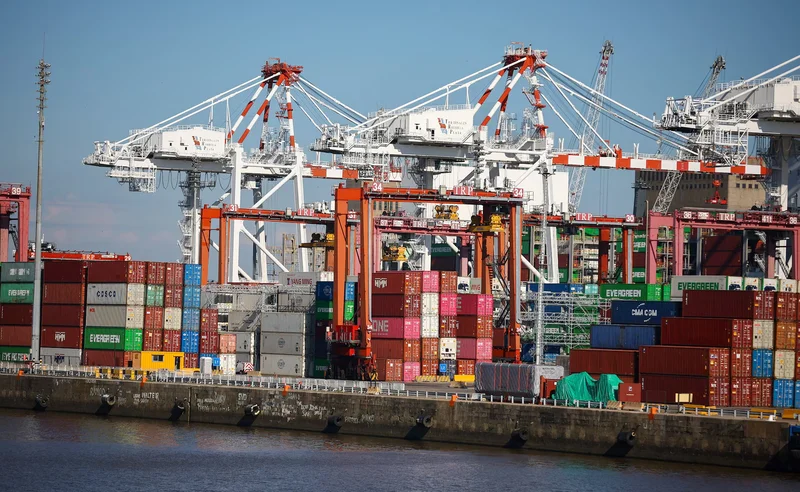
Argentina Trade Surplus Hits Near-Record US$13.9 Billion. (Photo internet reproduction)
One-stop reference
Company Intelligence
Every listed company in Latin America — financials, ownership and structure for 1,450+ companies across 26 exchanges, in one place.
RTAsk Rio TimesCost of living, safety, visas across Latin America›
What Is Driving the Surplus in Argentina
The headline figure from INDEC, the national statistics institute, showed exports hitting US$49.454 billion while imports stayed at US$35.531 billion. That gap of US$13.923 billion was built on two pillars: the Vaca Muerta shale formation and the country’s vast farm belt.
Fuel and energy shipments posted a surplus of almost US$6 billion, the highest of the century, with volumes rising roughly 167 percent year on year. Primary agricultural exports climbed 56.2 percent in the first quarter alone, lifted by a strong soybean harvest.
How Imports Amplified the Result
Imports did not simply hold steady—they contracted 3.9 percent from the same period a year earlier. That restraint reflects a domestic economy still adjusting to President Javier Milei’s stabilization program, which has squeezed public spending and peso liquidity.
When exports surge while imports shrink, the arithmetic delivers an outsized surplus. June alone brought in US$2.194 billion, down from May’s record US$3.5 billion but still exceptionally high by historical standards.
What It Means for Reserves and the Peso in Argentina
A trade surplus generates the hard currency that the Central Bank of Argentina needs to rebuild reserves. Every dollar from exports that enters the formal banking system eases the acute shortage of foreign exchange that has haunted the country for years.
Yet the International Monetary Fund estimates that net reserves remain negative at around US$10 billion once liabilities are counted. The trade boom is closing that hole faster than expected, but it has not yet filled it.
The Bigger Picture for Foreign Investors
For foreigners watching Argentina, the trade figures matter because they reduce the risk of a disorderly peso devaluation. A growing supply of genuine export dollars makes it easier for the central bank to manage the exchange rate without burning through scarce reserves.
The Milei administration is using the numbers to argue that its orthodox fiscal and monetary framework is delivering tangible external results. Whether that narrative holds will depend on keeping exports high and imports from rebounding too quickly as the economy stabilizes.
Background: The Vaca Muerta Factor
Vaca Muerta, a vast shale oil and gas formation in Patagonia, has become the centerpiece of Argentina’s energy ambitions. Years of investment by state-controlled YPF and international firms are now translating into exportable volumes, particularly through pipelines to processing hubs and ports.
The fuels and energy surplus of almost US$6 billion reflects not just higher global prices but a structural shift in output. For expats and investors, this means Argentina is slowly transforming from an energy importer into a net exporter, a change that could reshape its long-term dollar-earning capacity.
What Happens Next for Expats and Investors
The trade surplus is strengthening the government’s hand as it negotiates with the IMF and manages the official exchange rate. A healthier external balance could lead to a gradual easing of currency controls, which have complicated daily life for expats and business planning for foreign firms.
However, the negative net reserves show that Argentina is not out of the woods. Anyone moving money in or out of the country should watch for policy shifts around the peso, as authorities may use the trade cushion to adjust the crawling peg or relax import restrictions in the months ahead.
Frequently Asked Questions
Why is Argentina’s trade surplus so large right now?
A surge in energy exports from the Vaca Muerta shale formation and strong farm shipments combined with a 3.9 percent drop in imports, pushing the first-half surplus to US$13.9 billion. The import decline reflects a domestic economy still adjusting to President Milei’s austerity measures, which have reduced public spending and limited demand for foreign goods.
Does the trade surplus mean Argentina’s reserve problem is solved?
Not yet — the surplus generates foreign exchange that helps rebuild reserves, but net reserves remain negative at roughly US$10 billion once liabilities are counted. The trade boom is narrowing that gap faster than expected, though full recovery needs sustained surpluses and progress on external debt.
How does the surplus affect the Argentine peso?
A steady flow of export dollars reduces pressure on the peso by supplying the central bank with hard currency to manage the exchange rate, lowering the risk of a sharp devaluation. For expats and tourists, this could mean more stability in the official and parallel exchange rates, though currency controls remain in place for now.