Inner Planets
Mid-Flight Checklist
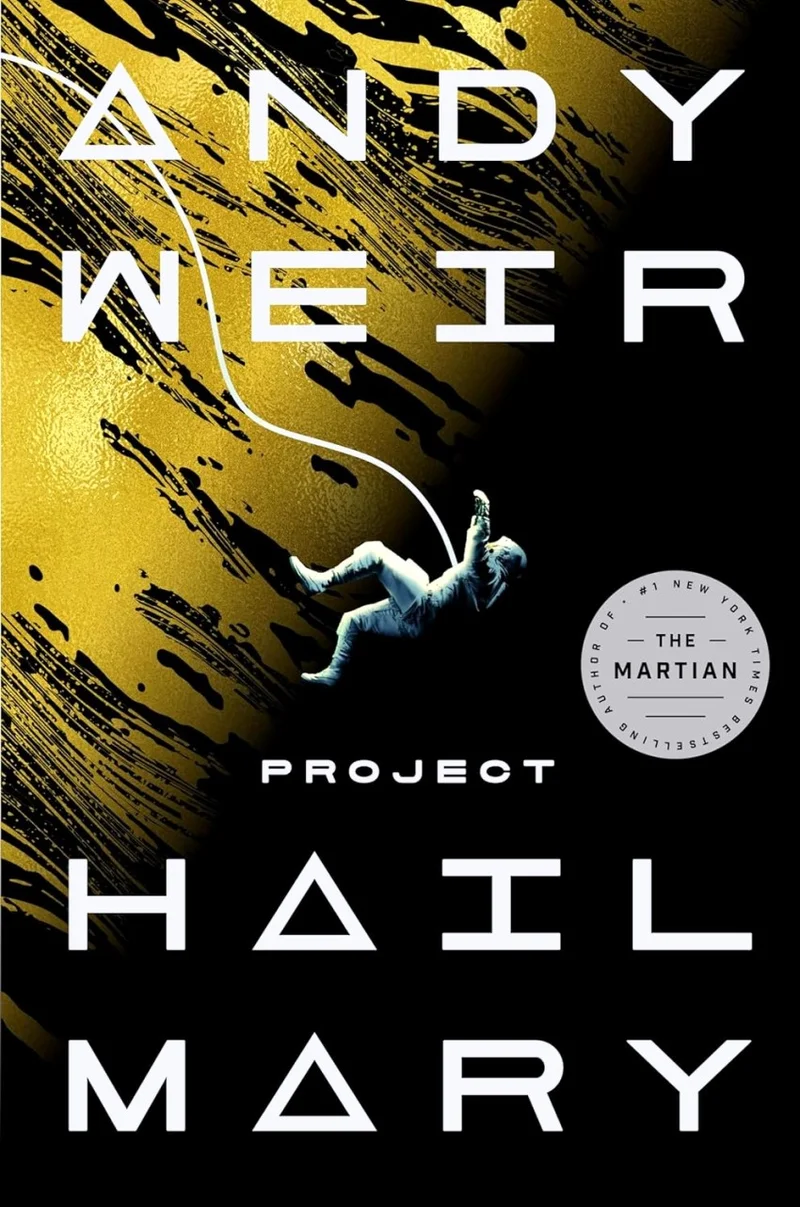
What follows is a continuation of my observations and ideas inspired by “Project Hail Mary”, which I began back in part 1 of the series. Once again, I will warn readers that if you haven’t read the book and/or watched the movie (and I highly recommend you do!) and you don’t want it spoiled, you should probably stop reading, bookmark this page, and come back later.
Science (and tech) happens in steps, not leaps
There’s a wonderful 2-part series on YouTube where Mathematician Terence Tao discusses how each discovery about the space around our planet gave us the tools to discover the next step – something he calls the “cosmic distance ladder”. (You can watch that video here). As wonderful as it is to hear this history, we need to keep in mind that this is often the way all science happens. Not by a single sudden leap or breakthrough, but by the sum of small individual discoveries, sometimes put together in novel ways.
That more or less describes the entire plotline of “Project Hail Mary”. A small accidental observation leads to the discovery of the Petrova line. Combined with the growing concern about the dimming of the sun, this leads to the collection and analysis of astrophage. And so on and so on, throughout the story.
On days where the problems we encounter far outweigh the solutions we find, it’s important for us to remember this lTITLE: Telemetry: The Gatheringesson. Every step – even mis-steps – are part of the process. As long as we keep at it, we’ll hit on a solution eventually.
the “lone genius” myth is just that – a lie.
Near the start of the story, Grace is the only human who has interacted with Astrophage. The reason for this is that Stratt is concerned it could infect or otherwise harm humans, and doesn’t want to unwittingly unlease a worse catastrophe (she’s seen a disaster movie or two, apparently). But Grace doesn’t know this, and chafes that he’s all alone in his work:
Grace: Hey, how much longer am I going to be the only person working on this?Stratt: Until you stop discovering new stuffGrace: One guy alone in a lab? That’s not how science works,” I said, “There should be hundreds of people all over the world working on this.”
Despite the image popularized in books, movies, comics, and even the self-promoting and largely fictitious origin stories of real-world tech leaders, the hard work of testing, revising, learning, and building doesn’t happen by “one guy alone in a lab”.
Nobody “does it” alone. Nobody has all the answers. There’s a famous quote by Kenneth Blanchard:
None of us is as smart as all of us.
The irony is that even that quote isn’t the work of a single person, but is ascribed to Mr. Blanchard along with Don Carew and Eunice Parisi-Carew.
“Project Hail Mary” – both the book and the movie – repeatedly make the point that * everyone* can contribute to scientific breakthroughs.
I am repair Eridian. I not science Eridian. Smart smart smart science Eridians died.
Despite claiming that he’s not a scientist, there’s no denying Rocky’s contributions to the mission was essential.
The movie made a wonderful choice to include Carl, ostensibly a member of Stratt’s security team. But he’s the one who asks some of the key questions that get Grace un-stuck in the very first tentative steps to understanding Astrophage.
And even Grace’s middle-school students provided a massive contribution, in that THEY asked him questions as part of his regular teaching that required him to learn (and memorize) various facts – from the distance of various stars to the mass of certain objects and beyond. The students made Grace a better teacher by pushing him to know more, just to satisfy their curiosity.
The same is true for us. How many times have we been in a conversation – like a team meeting, a brainstorming session, or a severity 1 emergency call – and felt like we had nothing to contribute?
I am here to tell you that is simply not true. Even as a a beginner, as a first-day student, you can do something that the so-called experts often fail to do: You can ask questions that require others to show their work, to explain their ideas.
And that is the place where, more often than not, discoveries are made.
Talk it out.
In an interview, Andy Weir (the author) describes Grace’s inner dialogue as a “narrative cheat”, where he didn’t have to show as much happening because readers were engaged with the character’s thoughts.
Setting aside the idea of whether that’s a cheat or not, it’s a wonderful example of talking through a problem.
“Rubber Duck” problem solving is a technique that’s been around for many years now, although most don’t know the origin story of it, which involved a new employee, a sprinkler system, a grumpy boss, and a stuffed duck (you can read that story here as long as you promise to come back to this article once you’re done). What we get in the book version of “Project Hail Mary”, however, are amazing examples of this technique. Both on his own, especially awakening on the ship with no recollection of who he is or how he got there, and later with Rocky, we get a front row seat for Grace’s attempts to talk through each obstacle, throw out ideas, and explain his way through each challenge.
I don’t need to belabor this point, except to say: As IT practitioners, our work is more effective, reliable, and repeatable when we take the time to think out loud. And maybe even write those thoughts down as documentation.
Duct tape solves MANY problems
Moving from rubber ducks to taping ducts…
Both the movie and the book (although in the movie it’s much more apparent) show the ubiquitous silver tape being put to use in multiple situations, both on the ground back on earth and in the ship orbiting Tau Ceti.
Along with the obvious lesson that you should always have a roll in your backpack, I think IT folks can understand the larger metaphor: We need to understand what our “duct tape” is. What tool (or combination of tools) are our go-to resource that seems to fit into almost every situation.
It’s important to recognize that we’re under no obligation to change for the sake of changing, or because some folks would consider our toolset unsophisticated. Sneer all you want, but the most-used corporate database is Microsoft Excel. Is it a particularly robust database? Of course not. But for millions of folks in offices across the globe, it gets the job done. For many of us, “good enough” is good enough.
But as IT professionals, we also have to be very clear that our personal ‘duct tape” can’t fix everything, any more than Grace could have patched the astrophage tanks with it. We need to understand the limitations and have alternatives in place for those circumstances. Whether that’s something like the nearly-indestructible xenonite, or a more modest square of sheet metal and a welding torch.
Each Discovery Leads to Another
The story of Grace and Rocky is too big to be contained in just 2 short blog posts. Stay tuned for my next installment where I explore the lessons “Project Hail Mary” holds about culture, security, boundaries, and more.