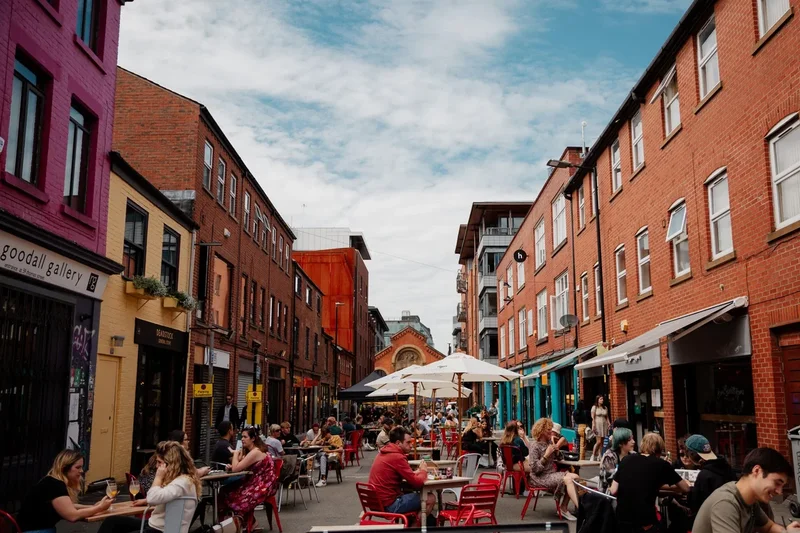
Manchester is one of my favourite UK cities to visit. It is just an hour away from where I live in the Lake District, which makes it perfect for a quick shopping and foodie trip when I want a change of scene.
It’s a city with a big personality, shaped by its industrial past, music history – with its famous links to the punk scene and Northern Soul – football culture, and an ever-evolving food scene. There’s so much to do, whether you want independent shops, galleries, markets or rooftop drink.
For wheelchair users, though, a city break is never just about what there is to see. You need to be able to find reliable access information before you travel, and for it to hold up beyond the obvious tourist spots.
So how does Manchester stack up to the likes of London, Glasgow or Edinburgh as an accessible destination?
Read more: How accessible is Eurostar? I tested the journey from London to Paris as a wheelchair user
Getting around
Manchester Piccadilly has direct rail connections to London, Birmingham, Liverpool, Leeds, Sheffield, Glasgow and Edinburgh. Services into the city offer wheelchair spaces, accessible toilets and the option to book boarding assistance through Passenger Assist, although I would always recommend checking your route and train operator in advance.
Manchester Piccadilly has step-free access throughout, with lifts connecting platforms and the main concourse. When you roll out of the station, you are already in the city, without needing to navigate complicated exits or secondary routes.
From there, several central neighbourhoods sit close together. The Northern Quarter, Spinningfields and Deansgate can all be combined in one trip. Distances are manageable enough that you can adjust your route as you go, rather than committing to a fixed plan.
For longer distances, the Metrolink tram system is one of my favourite ways to get around independently. Platforms are step-free with level boarding and only a minimal gap, so getting on and off does not require precision or assistance. There are clear, designated spaces for wheelchair users on board.
Accessible taxis, including black cabs, are easy to hail across the city centre if you want a sure-fire option.
What to see and do
Northern Quarter
The Northern Quarter sits between Piccadilly Gardens, Shudehill and Ancoats, with many of its independent shops, cafes and bars clustered around Oldham Street, Tib Street and Thomas Street. It is one of Manchester’s most creative neighbourhoods, known for vintage fashion, record shops, street art and small businesses you won’t find on the average high street.
Manchester Craft and Design Centre on Oak Street is one of the more interesting shopping stops. Set inside a former Victorian fish market, it brings together independent makers selling jewellery, prints, and homewares. Both entrances are step-free, with an accessible toilet, workshops and several studios on the ground floor. There is no lift to the first floor, although staff can bring products downstairs if something catches your eye from one of the upstairs studios.
From an accessibility point of view, the pavements in the Northern Quarter are mostly level and wide enough to move through comfortably, though some streets can feel busy at peak times. It’s a good area to explore slowly, with plenty of places to stop for coffee, and it’s easy to alter your plans plans if the weather turns.
Spinningfields
Spinningfields, the city’s financial centre, is the place to go to see the glossier side of Manchester. This part of the city is known for its restaurants, cocktail bars, outdoor terraces and after-work buzz. It’s a good option for dinner, drinks or a livelier end to the day, with great venues close together.
Access is generally straightforward, because many of the restaurants and bars are newer, with level entrances from the street, wider doorways and outdoor seating areas. It’s easy to browse options, rather than committing to a venue before you know whether you can actually get inside comfortably.
Afflecks
Indoor market, Afflecks, is on Church Street in the heart of the Northern Quarter, a short distance from Market Street and Manchester Arndale. Spread across several floors, it’s packed with small independent businesses.
Part of the fun comes from never quite knowing what you’ll find. The Manchester Shop on the ground floor sells locally inspired clothing, gifts and the city’s famous bee merchandise, while Mad for Art specialises in vintage prints and retro advertisements. Panino 23 on the first floor is a great lunch stop, serving Italian sandwiches and handmade desserts.
Access is better than you might expect from an older, multi-level building. There is step-free access via a portable ramp, a lift to all floors and an accessible toilet on level one. Some individual units are compact, so you may need to pick your route carefully. The entrance ramp is steep, but staff are incredibly helpful.
Manchester Arndale
Manchester Arndale sits at the heart of the city centre, with entrances from Market Street, High Street and Corporation Street. It is the practical stop on a shopping day, with high street favourites from Apple to Lego and Sephora, alongside more niche fashion, beauty, tech and homeware stores.
The range makes it useful when you want choice, shelter and a predictable layout. Halle Place on the lower level also has several places to eat, including Archie’s, a colourful Manchester-born burger and shake restaurant, and Barburrito, where burrittos can be customised with your choice of fillings.
Accessibility is straightforward throughout, with step-free routes, wide walkways and enough space to move at your own pace. There are accessible toilets within the centre, as well as a Changing Places toilet, which adds extra reassurance if you need more space, support or equipment during a longer visit.
Manchester Art Gallery
Manchester Art Gallery is free to visit and has collections spanning six centuries of fine and contemporary art, as well as sculptures and decorative art. It’s particularly known for its Victorian and pre-Raphaelite paintings. You can wander through the permanent collection, spend time in a temporary exhibition, or simply use it as a quieter place to pause between exploring busier parts of the city. Currently on (until February 2028), Worn: The Life Within Clothes, explores the stories of clothing through a slow fashion lens.
Accessibility is refreshingly easy here, with level-entry, generous circulation space and seating throughout. The gallery also offers accessible toilets on the ground and first floors.
For blind and partially sighted visitors, some tours and events include audio description, while BSL tours and interpreters are available for some events. Find out more about the programme before you visit at manchesterartgallery.org
Read more: The best wheelchair accessible hotels in London in 2026
Where to eat and drink
Freight Island
Freight Island is one of Manchester's most distinctive food and drink destinations, bringing together independent kitchens, bars and entertainment in a huge former railway depot next to Piccadilly Station. Whether you fancy pizza, tacos, burgers, Asian street food or cocktails, there is plenty of choice, making it a good option if everyone in your group wants something different.
The scale of the venue also works well from an accessibility point of view. There is step-free access throughout, wide routes between seating areas, accessible toilets and plenty of space to move around without feeling squeezed between tables.
The Foundry Project
The Foundry Project is a relaxed Northern Quarter spot that works well for anything from brunch to an early evening meal. The menu covers crowd-pleasing comfort food, including burgers, pizzas, small plates and cocktails, so is ideal for a casual meal.
Access-wise, it feels spacious and easy to settle into, with comfortable movement between tables, accessible toilets, and plenty of allergy-friendly food options on the menu.
Runyon’s Bar and Restaurant, voco Manchester
Runyon’s Bar and Restaurant sits on the ground floor of voco Manchester hotel, close to Manchester Piccadilly, Oxford Road and the city centre. It’s smart but relaxed, and serves breakfast, lunch, dinner or cocktails. The menu combines British comfort food, including fish and chips and burgers, with internationally inspired dishes such as honey gochujang pork belly and Keralan cauliflower curry. It feels polished without being too formal.
Level access from the spacious reception takes you through to the bar and restaurant, and accessible public toilets are available.
Where to stay
voco Manchester
voco Manchester shows what can happen when accessibility is considered as part of the design, rather than an afterthought. Formerly Hotel Brooklyn, the hotel retains its distinctive New York-inspired style, with dark wood features, rich velvet furnishings, brass details and monochrome bathrooms creating a boutique feel.
The hotel has 18 adapted bedrooms, including nine wheelchair accessible rooms and nine ambulant accessible rooms. Two of the wheelchair accessible rooms have ceiling track hoists, which are still rare in UK hotels and can make a huge difference for guests who need them.
Bathrooms are level access wet rooms that feel luxurious rather than clinical, with fittings positioned to make the space practical to use. The whole experience removes some of the usual negotiation that comes with accessible hotel stays.
Price: From £70
The Reach at Piccadilly, Manchester
The Reach at Piccadilly is a newer addition to Manchester's hotel scene, sitting just a few minutes from Piccadilly Station and within easy rolling distance of the Northern Quarter. Its central location makes it a great base if you want to explore without relying on taxis or public transport.
The design reflects the hotel’s canal-side setting and Manchester’s industrial heritage – with natural materials, warm finishes and subtle narrowboat-inspired details creating a stylish sense of place.
The hotel offers accessible bedrooms with step-free access and spacious layouts, as well as roll-in showers and practical bathroom fittings. Public areas are easy to navigate, with lifts serving all floors and level access throughout.
Price: From £110
So is Manchester accessible?
Not perfectly so, but it stands out among many of the UK cities I have visited. There are step-free routes, accessible transport options, spacious culture stops, practical shopping areas and enough cafes, bars and restaurants close together that one inaccessible doorway does not have to derail the whole day.
Manchester still has its older, inaccessible buildings, busy streets and occasional access compromises, but it also gives you options. For wheelchair users, that can be the difference between a trip that feels managed and one that is genuinely enjoyable.
Carrie-Ann was a guest of voco Manchester and The Reach at Piccadilly, Manchester
Read more: What luxury cruising looks like when you’re a disabled traveller