Young grizzly bear with limp killed in Nelson, B.C., sparks rally
The status of the remaining sow and 2 yearlings is unclear
A rally took place in Nelson, B.C., on Thursday to protest the B.C. Conservation Officer Service's decision to kill a young grizzly bear.
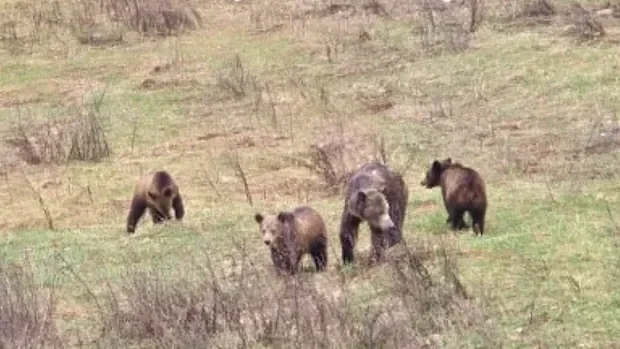
The bear belonged to one of two families of grizzlies whose images have been shared widely as they travel in and around Nelson.
"There were a lot of tears and a lot of hugs at the rally," said Katie Graves, founder of the non-profit Ursa Project Society.
Graves said the grizzly — a yearling with either a leg deformity or leg injury — shouldn't have been killed.
She said the wild animal was mobile, kept up with its family and was able to feed.
“Especially as it got older, you could see it running, and it would run so fast, but it would really hold up that leg, basically run on three legs.
"There are many, many bears in the wild that are what we call tripods and they live full lives."
In a statement issued Wednesday, the B.C. Conservation Officer Service (BCCOS) said the bear's age, injury and history of conflict made it unsuitable for rehabilitation or relocation. It did not provide details about any conflicts.
"It is always unfortunate if an injured, sick or conflict bear needs to be safely and humanely put down," the BCCOS said. "These decisions are not made lightly."
Graves said the mother bear brought cubs to the area in 2023, was relocated and returned shortly afterward.
The conservation service has not replied to requests about the status of the other grizzlies — a sow and two yearlings — but said any captured bear will be assessed to determine next steps.
The incident has sparked hundreds of comments in community Facebook groups, most of which have been critical of any decision to kill a grizzly.
A number of other people noted that conservation officers are trying to protect the public and don't want to have to shoot bears.
There was widespread agreement that people could do a better job of securing their garbage and keeping the bears at a distance.
WATCH | Ban on grizzly bear hunting should remain, said conservationist:Wildlife biologist Clayton Lamb said that to prevent more bear deaths, the province and municipalities need stronger policies to reduce attractants.
“At the heart of it, we as people that live in these mountain landscapes are at times attracting bears in the town … whether it's unmanaged garbage or not picking your apple tree or not putting an electric fence around your chickens,” he said.
“It's really trying to harden off the attractions of those communities and reduce those conflicts before they start.”
Lamb said once a bear becomes habituated or food conditioned, it’s very challenging to rehabilitate and relocate them, especially when they are comfortable being in town.
“At the end of the day, she still is a grizzly bear. Her cubs are still grizzly bears, that base instinct to protect your cubs and to ... defend your space and yourself is in that bear’s DNA.”
Managing attractants, he said, will prevent more grizzly bear families from entering towns in the future.
The City of Nelson said in a statement on Thursday that it’s working to prevent conflict and keep bears wild. That includes helping the community install bear-resistant garbage cans and providing public education programs.
It also said bylaw services are working to ensure waste and wildlife attractant rules are being followed and will address unsecured garbage and unmanaged compost when necessary.