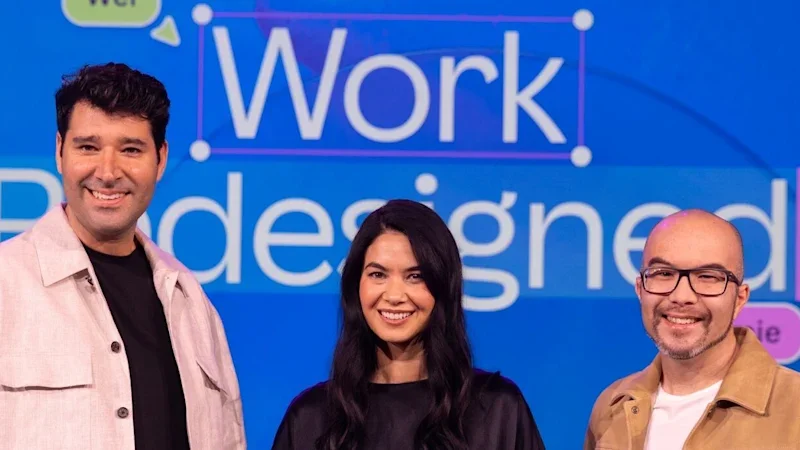
Sydney design giant Canva has cut its internal valuation by a fifth, telling staff an independent assessment now values the business at $43.9 billion, a cut of more than $10 billion from its most recent valuation a year ago.
The markdown delivers a sobering reality check for Australia’s largest privately owned company and biggest tech hopeful. For years, Canva has been the undisputed darling of the local start-up scene, carrying the expectations of an entire industry as it grew into a genuine global heavyweight.
Its biggest Australian backer has moved, too. Blackbird Ventures has marked the company down to $US34.9 billion ($49.5 billion) after a fresh independent valuation, a cut of about $10 billion from the $US42 billion price set in a share sale which Canva arranged a year ago. Updated fund valuations went to Blackbird’s investors on Friday.
The number Canva gave staff is a 409A valuation, an independent price US tax rules require before a private company can hand shares to employees. It is designed to sit below what investors would pay because staff shares cannot easily be sold.
Canva will use it to price this year’s share grants to its roughly 5500 employees, due within a fortnight. Many hold options once expected to make them millionaires when the company floats.
Behind both revisions is the fear that AI will cannibalise the software platforms it was meant to enrich. Anyone who can write a decent prompt can now ask a chatbot to generate a poster or a pitch deck, which is close to Canva’s core business.
Investors have already punished the listed companies in that position. Adobe is down about 23 per cent over 12 months and HubSpot about 45 per cent. Figma, which listed to a rapturous reception a year ago, is down about 68 per cent.
Canva’s own business has weakened, with the company telling investors this month it now expects revenue growth of 20 per cent this year, down from earlier guidance of 30 per cent. It grew 38 per cent in 2025 and 45 per cent the year before.
Its monthly active users then fell below 208 million in the first week of August, flat year-on-year for a month that is historically its weakest. Canva said the dip reflects northern hemisphere school holidays and a user base that skews more heavily towards education.
Canva said the internal assessment was shaped as much by market conditions as by its own performance, and would have fallen regardless of the revenue downgrade. Blackbird partner Rick Baker said his firm’s revaluation followed Canva’s recent results and forecasts.
“The Canva valuation was completed in line with our valuation policy, by our independent valuers on a mark-to-market basis, and our updated fund valuations were sent to investors today,” Baker told this masthead.
Canva’s answer to the AI threat is that it is an AI company that happens to do design. It has bought a string of AI start-ups, built its own design model and says it has cut the cost of serving AI products by 90 per cent.
Canva co-founder and chief operating officer Cliff Obrecht said the company was built for a longer horizon than its critics allow.
“We’ve always been focused on building a generational company, and that means making deliberate decisions for the long term rather than optimising for short-term valuations,” he said. “Being private gives us the freedom to make big bets and think with a much longer time horizon rather than simply managing quarter to quarter.
“We’ve seen markets move in both directions over the years.”
Baker said he shared that view.
“We back Canva’s judgment to think long term,” he said. “This will unlock the ability to deliver AI at real scale with unit economics that actually stack up. The Canva AI product is looking great and early signs from users are strong, and that gives me a lot of optimism in what’s next.”
Canva said its core business remains strong, pointing to a ninth consecutive year of profitability on a free cash flow basis and revenue growth of 25 per cent in the most recent quarter.
The immediate casualty appears to be the company’s float. Canva had long been expected to list on the Nasdaq, a debut that would have ranked it among the 10-largest companies on the ASX had it happened here. Those plans are understood to have been shelved over the valuation concerns.
Multiple Australian super funds hold Canva through Blackbird and Airtree funds, meaning millions of Australians own a slice of the company through their superannuation without ever having opened it. The regulator, APRA, criticised funds for being slow to mark Canva down during the 2022 tech downturn.
The Business Briefing newsletter delivers major stories, exclusive coverage and expert opinion. Sign up to get it every weekday morning.