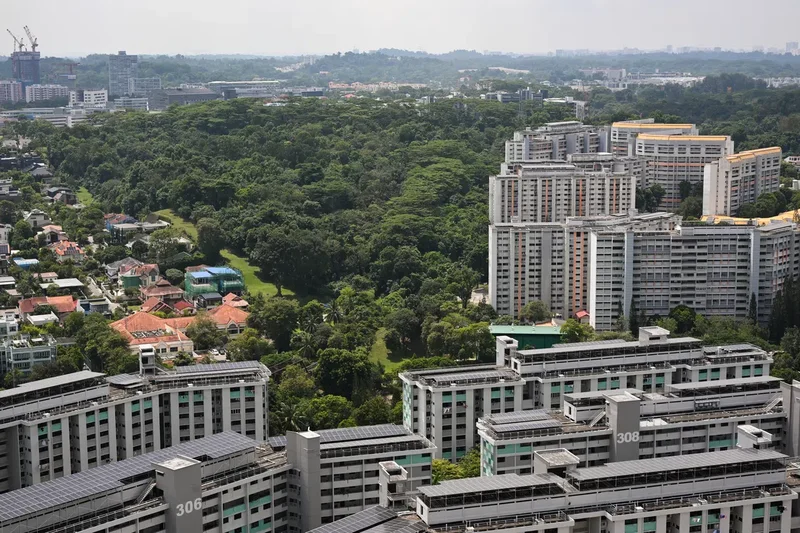
More green spaces to be retained in Gillman Barracks, Maju Forest: Alvin Tan
SINGAPORE - More green spaces in Gillman Barracks and Maju Forest will be retained following public feedback on plans for the sites.
But this will mean fewer homes can be built there, Minister of State for National Development Alvin Tan told reporters on Aug 14.
“With the changes, we will have even more greenery in both areas than originally planned. We will work out exactly how much more, but we will have to accept that this means we can build fewer homes on both sites for fellow Singaporeans.”
Public feedback had closed on Aug 6.
The authorities will continue to engage Singaporeans and aim to finalise the plans over the coming month, he added.
Initial plans for the sites retained 40 per cent of green spaces in Gillman Barracks and 35 per cent in Maju Forest, he said, noting that these were developed with the involvement of nature groups.
“The current plan was never final,” Tan said.
Tan said nature groups asked for a wider central green corridor for Gillman Barracks for better connectivity towards other green spaces like Telok Blangah Hill Park, Labrador Nature Reserve and HortPark.
For Maju Forest, these groups have asked for the green corridor to be widened for a more continuous vegetated area for animals to forage. Nearby residents and the general public have also asked for more greenery to be retained.
“We will take these suggestions into consideration as we make the adjustments,” Tan said. He did not take questions from reporters.
Leong Kwok Peng, president of Nature Society Singapore, said he hoped the authorities would retain two-thirds of Maju Forest, up from the current plan of one-third.
The freshwater stream in the northern part of the forest could be merged with the south for a bigger forest, he said.
But even then, it could impact biodiversity negatively, he added.
Leong added that the outpouring of sentiment for Maju Forest shocked him.
“It’s quite heartening to see the youth and the MPs being very active and engaging the residents about it,” he said.
Tan had told Parliament earlier in the month that plans for the sites have not been finalised, but these areas need to be developed to meet Singapore’s housing needs over the next decade.
Nineteen MPs had asked about a range of issues, including balancing of housing needs with environmental preservation, the effectiveness of public feedback and the transparency of the planning process.
Singaporeans, especially those living near the affected areas, have raised concerns about the loss of the spaces that they consider key to their neighbourhoods, with some crafting proposals, organising dialogues and petitioning their MPs to raise the issues in Parliament.