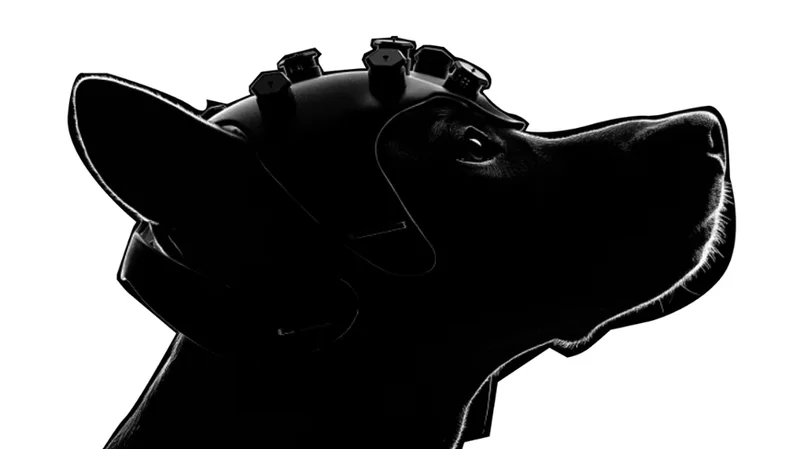
Dognosis pairs trained sniffer dogs with artificial intelligence to flag cancer from a breath sample. It is a charming idea aimed at a real problem, with equally real caveats: this is prescreening in trials, not a proven diagnostic.
A dog’s nose has long outclassed most laboratory kit, and a two-year-old Bengaluru startup called Dognosis is betting it can turn that biological talent into a screening tool.
The company pairs trained sniffer dogs with sensors and artificial intelligence to flag early signs of cancer from a single breath sample, the latest entry in a busy field where AI is being pointed at cancer detection.
The process is disarmingly simple at the patient’s end. You breathe into a mask, which is then couriered to Dognosis’s facility, a farm outside Bengaluru, where beagles, labradors and Dutch shepherds sniff the sample.
As they do, sensors and AI read the animals’ movements, respiration, brain activity and body language, translating a pause or a wag into structured data. The premise is that tumours leave a chemical signature in exhaled breath, one a dog can smell long before conventional tools can see it.
There is no imaging, unlike the systems trained to spot breast cancer on an X-ray, no blood draw and no biopsy. The AI layer is meant to do the unglamorous work of standardising an animal’s reaction into something repeatable.
Founded by Akash Kulgod, Dognosis says its approach targets more than 20 cancer types across seven groups, including breast, oral cavity, lung and cervical.
In Phase 2 trials published in the Journal of Clinical Oncology, the company reports roughly 90% sensitivity for early-stage cancers.
Dogs trained on 10 cancer types, it adds, went on to identify an 11th they had never been shown. Those accuracy and detection figures are, for now, reported by the company and its researchers rather than independently confirmed.
The pitch makes most sense against India’s grim cancer arithmetic. The country logged about 1.5 million new cases and more than 900,000 deaths in 2024, one of the world’s heaviest caseloads, yet screening rates are strikingly low.
Roughly 1.9% of women are screened for cervical cancer, and fewer than 1% for breast or oral cancers. Much of that gap is a matter of cost, distance and the discomfort of invasive tests.
A cheap, non-invasive tool aimed at preventative healthcare could reach people the formal system never touches, which is precisely the market Dognosis is chasing.
Dognosis raised a $1.5m pre-seed in 2024 and has since closed a further, undisclosed round, with Accel India and Caffeinated Capital among its backers. Neither has put a figure on the latest round.
The roadmap is ambitious. Kulgod plans an at-home, multi-cancer prescreening test in India next year, priced at a few thousand rupees.
A Phase 3 trial began in April across 10 hospitals, aiming to enrol about 10,000 participants, and the company is targeting a million tests a year with a one-week turnaround, run by around 30 dogs. A US facility is pencilled in for late 2027 or early 2028.
There is a regulatory wrinkle worth flagging. Kulgod notes that Dognosis needs no Indian regulatory approval, because a prescreening tool is not classed as a diagnostic device.
That lowers the barrier to launch, but it also means the technology could reach patients without clearing the bar a formal diagnostic would have to.
A positive result is a prompt to see a doctor, not a verdict, and the distinction is one the company will need to communicate carefully.
The caveats matter. This is a prescreening tool designed to flag who should seek further tests, not a replacement for diagnosis, and the trials remain early.
There is also a certain irony in the endgame, since Dognosis eventually wants to replace the dogs with sensors, distilling the nose into hardware.
Whether or not that works, the underlying idea is a serious one: using the dog’s nose as a biosensor standardised by AI, and aiming it squarely at a screening gap conventional medicine has struggled to close.
Get the TNW newsletter
Get the most important tech news in your inbox each week.