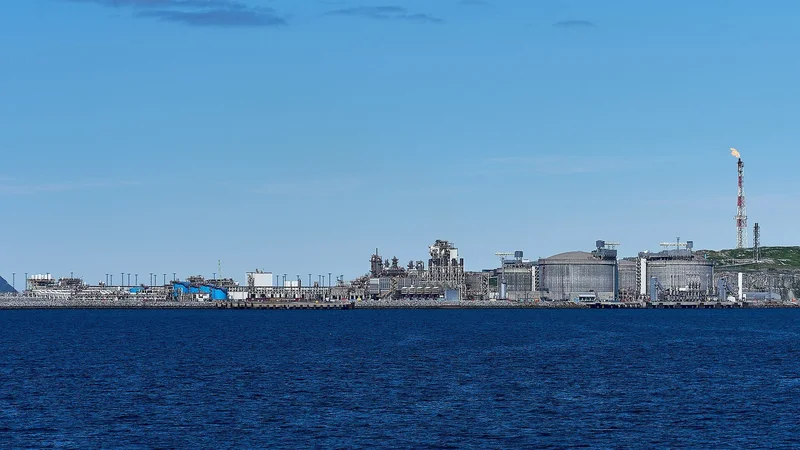
YPF Files US$51 Billion ‘Argentina LNG’ Project Under the RIGI Investment Regime
Argentina · Business
Behind the headline number sits a simple bet: turn shale gas trapped under Patagonia into cargoes the world will pay dollars for.
YPF has filed its roughly US$51 billion Argentina LNG project under the country’s RIGI investment regime. The state-controlled energy company calls it the largest private investment in Argentina’s history.
And it landed in the same month YPF reported a record quarter.
What YPF Just Announced
YPF has asked to register its Argentina LNG project under RIGI, Argentina’s incentive regime for very large investments. The company puts the total figure at about US$51 billion.
That headline number is not spent all at once. It covers the full build-out of the project over its life, not a single upfront cheque.
YPF describes it as the largest private investment the country has ever seen. That framing comes from the company itself, so it is a claim to note rather than an independent ranking.
What RIGI Actually Is, in Plain Terms
RIGI stands for Regimen de Incentivo para Grandes Inversiones, or the Incentive Regime for Large Investments. It is a deal Argentina offers to attract giant, long-term projects.
In exchange for the money, qualifying projects get long-term stability on taxes, customs duties and access to foreign currency. The idea is to remove the surprises that have long scared off big investors here.
It is not open to everyone. The general regime sets a minimum investment of about US$200 million, with higher floors for certain sectors such as gas export projects.
Live Company IntelligenceYPF Sociedad Anonima — the full investor dossier
Wall Street view
8Buy
4Hold
0Sell
$58.60· +40% vs 200-day
Valuation & profitability
Price & risk
$22.8252-wk high
$57.49
Revenue trend · 6y
$26.53T
Ownership
Dividend
What YPF Sociedad Anonima does.YPF Sociedad Anónima, an energy company, engages in the oil and gas upstream and downstream activities in South America and Argentina. The company operates through the Upstream, Midstream and Downstream, LNG and Integrated Gas, and New Energies segments. It is involved in the exploration and exploitation of hydrocarbon fields and production of…
Why US$51 Billion Is Such a Big Number
For a country that has struggled to attract long-term capital, a sum this size is unusual. It signals confidence that Argentina’s rules will hold steady for years.
The figure is also why RIGI matters so much to the plan. Without those tax and currency guarantees, backers would be far more nervous about committing tens of billions of dollars.
It is worth separating this from another YPF filing. Earlier in 2026, the company also sought RIGI backing for a distinct US$25 billion oil project, which is not the same thing.
From Vaca Muerta Gas to LNG Exports
Vaca Muerta is the vast shale formation in Patagonia that holds Argentina’s oil and gas riches. The problem has always been getting that gas to buyers far away.
Natural gas cannot easily be shipped as a gas. Chilling it to liquid form, as LNG, shrinks it enough to load onto tankers and sell across oceans.
That is the whole point of Argentina LNG. It is a chain that takes gas from Vaca Muerta, turns it into a liquid, and sends it out to global markets.
Who Is Building It
The confirmed core of the export phase is YPF alongside Italy’s ENI and XRG. XRG is the international investment arm of ADNOC, Abu Dhabi’s national oil company.
Other well-known names circle the wider LNG story in Argentina. Shell has been linked to a separate phase.
While Golar LNG and Pan American Energy sit in a different venture called Southern Energy. That is why partner lists can look confusing.
Argentina LNG is really an umbrella for several export efforts, and not every company named belongs to the same phase.
How Big, and How Soon
The ENI and XRG phase is designed around two floating liquefaction units. Each would produce six million tonnes a year, for a combined twelve million tonnes.
There is room to grow beyond that. YPF has pointed to a possible expansion toward eighteen million tonnes a year as later stages come online.
None of this happens overnight. The most consistent reporting points to first export cargoes around 2030 or 2031, once the plants and pipelines are built.
The YPF Record Quarter Behind the News
The LNG filing arrived just as YPF reported strong results. Its adjusted EBITDA for the second quarter of 2026 reached about US$2,804 million.
YPF and market analysts described that as the highest quarterly adjusted EBITDA in the company’s history. In plain terms, EBITDA measures the cash a business throws off from its core operations.
The company also reported net income of about US$1,205 million and revenue of about US$6,574 million for the quarter. Results were released on August 10, 2026.
Adjusted Versus Reported: One Honest Caveat
The record figure is adjusted EBITDA, not the plain accounting number. Adjusted means the company has stripped out certain one-off items and specific lease effects.
That is a common way for energy firms to show underlying performance. It is not misleading, but it is worth knowing it is a chosen measure rather than the raw one.
The direction of travel is still clearly positive. Even so, the honest label is a strong quarter on an adjusted basis, which is how YPF itself presents it.
Why Any of This Matters for Argentina
Vaca Muerta is slowly turning Argentina from an energy importer into an exporter. That shift means fewer dollars spent on fuel abroad and more earned by selling it.
The output is already climbing. Gas production has run near 5.5 billion cubic feet a day, close to the July 2025 record of 5.7.
While Vaca Muerta oil hit about 600,000 barrels a day in 2025. Officials talk of energy exports worth around US$30 billion a year by 2030.
For a country short of hard currency, that is the real prize behind the LNG push.
The Bottom Line
The US$51 billion filing is a statement of ambition as much as a spending plan. It bets that RIGI’s guarantees will finally unlock Vaca Muerta’s export potential.
The record quarter gives that ambition some ballast. A company generating this much cash is better placed to help fund a project of this scale.
Plenty still has to go right, from financing to construction to first shipment. But for now, YPF has put Argentina’s biggest energy bet firmly on the table.
Frequently Asked Questions
What is YPF’s Argentina LNG project?
It is a plan to turn Vaca Muerta shale gas into liquefied natural gas for export. YPF values it at about US$51 billion and has filed it under the RIGI regime.
What is RIGI?
RIGI is Argentina’s Incentive Regime for Large Investments. It offers long-term stability on taxes, customs and foreign-currency access to qualifying projects above a set investment threshold.
Who are YPF’s partners on the project?
The confirmed core of the export phase is YPF with Italy’s ENI and XRG, the international investment arm of Abu Dhabi’s ADNOC. Other firms are linked to separate phases.
How big was YPF’s record quarter?
YPF reported adjusted EBITDA of about US$2,804 million for the second quarter of 2026, which it called a company record. Net income was about US$1,205 million.
This article was produced by The Rio Times’ automated newsroom system. How we use AI · Report an error