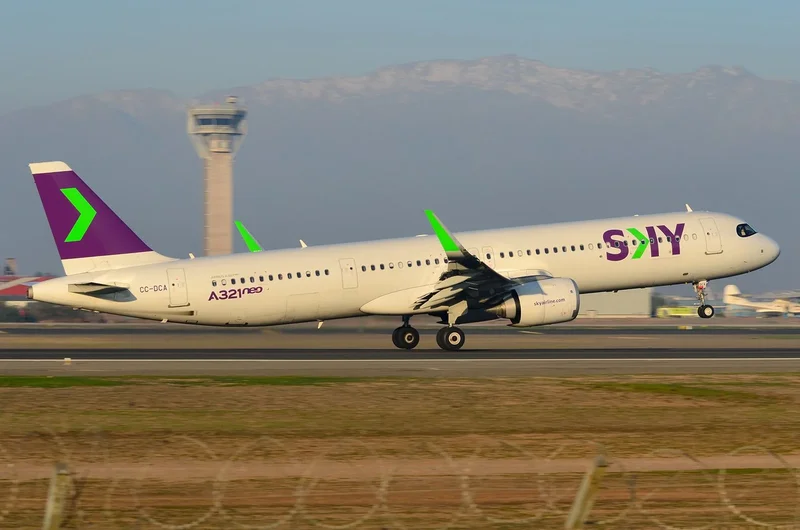
Peru Clears Abra Group’s SKY Airline Takeover, With Conditions
Chile · Business
The nod from Peru’s watchdog was the last one Abra needed. Handing the owner of Gol and Avianca a low-cost carrier that flies millions of Chileans and Peruvians.
Peru’s competition watchdog Indecopi has approved Abra Group’s takeover of SKY Airline. It was the last regulatory sign-off the deal needed, and it came with conditions.
What Peru’s Regulator Decided
Indecopi is Peru’s competition authority. On 13 August 2026, its free-competition commission approved Abra Group’s purchase of control of the Chilean carrier.
The decision came in the second, deeper phase of review. Because the regulator saw possible concerns, it looked at the deal more closely before saying yes.
In the end the commission found no significant harm to competition on the routes it studied. Therefore it cleared the deal, though it attached conditions.
The Conditions on the SKY Airline Deal
The conditions are not about selling planes or giving up airport slots. Instead, they target certain clauses in the contract between the two companies.
Indecopi flagged non-compete and non-solicitation clauses in the paperwork. Because such clauses can be too broad, the regulator asked for limits on how long they last and how far they reach.
Abra must now show that those changes made it into the final documents. As a result, the remedies are behavioural rather than structural.
Why Lima-Miami and Cusco-Miami Mattered
The competition concern centred on two international routes. These were Lima-Miami and Cusco-Miami, where the airlines’ interests overlapped.
On busy long-haul routes, fewer competitors can mean higher fares. That is why regulators watch overlaps so carefully before waving a merger through.
Indecopi concluded the tie-up would not meaningfully dent competition on those routes. Still, the conditions are meant to keep the market open and contestable.
The Last Regulator to Say Yes
Peru was the final piece of the puzzle. Chile’s competition body, the FNE, had already approved the deal on 6 June 2026, with its own mitigation measures.
Brazil’s antitrust authority, CADE, cleared the transaction around the same time. Because those two had already signed off, only Peru’s answer was still outstanding.
With Indecopi’s nod, the last hurdle is gone. Therefore Abra can move to close the takeover, as its chief executive had signalled it would by August.
Who Abra Group Is
Abra Group is a UK-based holding company set up in 2022. It controls two of Latin America’s best-known airlines, Colombia’s Avianca and Brazil’s Gol.
The group also holds a stake in Spain’s Wamos Air. Between them, its carriers reach more than 25 countries and over 140 destinations.
The strategy is to knit its airlines into one wide regional network. Meanwhile, each brand is expected to keep flying under its own name, at least for now.
What SKY Airline Is
SKY was founded in 2001 and became Chile’s first low-cost carrier. Today it is the country’s second-largest airline, behind LATAM.
It is also a big player in Peru. In earlier years it reached about 17% of the Peruvian market, ranking as the second-largest airline there.
In Chile it competes with LATAM and with JetSMART, another low-cost rival. So its move into a bigger group is a notable shift in the market.
How Abra Already Had a Foot in the Door
Abra is not a stranger to SKY. It already held convertible debt in the carrier, a stake that dated back to a financing deal after the pandemic.
That instrument was a bond of about US$70 million. It carried an option worth roughly 41% of the airline, so Abra already had a large potential share.
This deal turns that position into full control. Because the groundwork was laid years ago, the takeover is more of a next step than a surprise.
What It Means for Travellers and Fares
A merger approval does not change ticket prices overnight. For travellers, the near-term effect is mostly behind the scenes, in ownership and planning.
Over time, joining a larger group can bring smoother connections and shared booking systems. However, fewer independent airlines can also soften the pressure that keeps fares low.
That tension is exactly why Indecopi looked hard at the overlap routes. As a result, the conditions aim to guard competition even as the group grows.
What Changes for Passengers Day to Day
For now, little changes at the check-in desk. SKY is expected to keep its own brand, staff and culture, rather than being folded in overnight.
In practice, passengers may notice benefits first through the network. For example, easier links to Avianca and Gol flights across the region.
Loyalty schemes and codeshares often follow such deals. Still, any big changes to routes or prices would take time to appear.
Part of a Wider Airline Shake-Up
The deal fits a broader trend across Latin American aviation. Because the region’s carriers face thin margins, many are grouping together to share costs and networks.
Abra itself was built on that logic, bringing Avianca and Gol under one roof. Adding SKY extends its reach down the Pacific coast of South America.
For rivals, a bigger Abra is a stronger competitor. As a result, expect other airlines to weigh their own partnerships and mergers in response.
What to Watch Next
The immediate step is closing the deal, now that every regulator has agreed. After that, the slow work of integration begins.
Watch whether Abra keeps the SKY brand and its Peru network intact. Because the carrier is strong there, its Peruvian routes are worth following closely.
Also watch fares on the Lima-Miami and Cusco-Miami routes. Since those were the focus of the review, they are the clearest test of the conditions.
Frequently Asked Questions
What did Peru’s Indecopi approve?
It approved Abra Group’s acquisition of control of SKY Airline. The decision came on 13 August 2026, with conditions attached.
Who is buying SKY Airline?
Abra Group, the UK-based owner of Colombia’s Avianca and Brazil’s Gol. It is not JetSMART, which is a separate low-cost rival.
What conditions did Indecopi attach?
It required limits on the duration and scope of non-compete and non-solicitation clauses. These are behavioural conditions, not sales of planes or slots.
Do other regulators still need to rule?
No. Chile’s FNE approved the deal on 6 June 2026 and Brazil’s CADE also cleared it. So Peru’s nod was the last one needed.
This article was produced by The Rio Times’ automated newsroom system. How we use AI · Report an error