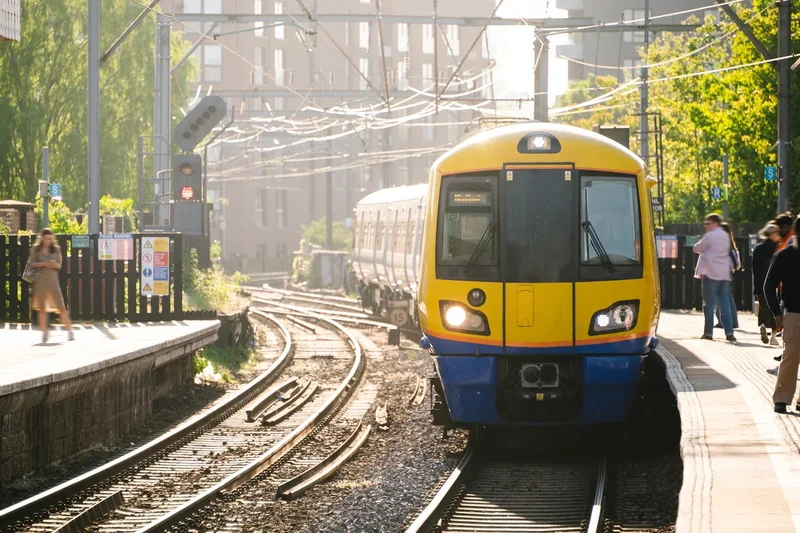
“Buckling” occurs when steel rails expand as they get hotter and can start to curve.
Thousands of miles of steel track make up the UK’s rail network, absorbing heat up to 20C hotter than the air temperature, said Network Rail.
It added that most of the network can operate when track temperatures reach up to 46C (roughly 30C air temperature) and rails have been recorded at temperatures as high as 51C.
As steel expands when it gets hot, rails lengthen, causing tension against their neighbouring pieces of track.
When this happens, trains are stopped for safety, as “if there is no room for the rail to expand, the rail can buckle and we need to close the line to fix it before trains can run again,” says Network Rail.
John Lawrence, chair of the Institution of Engineering and Technology Railway Technical Network, said: “Ambient temperature and solar gain combine to push temperatures very high at track level and in trackside equipment. Track buckles and dewirements are what really worry engineers – despite years of focus, investment and improvement, rails can still buckle in extreme heat.
“That brings derailment risks, and overhead lines can sag and catch on pantographs, halting train movements or forcing lengthy reroutes.”
He added that “hidden failures” resulting from heat stress include signalling control, power supplies, and trackside telecoms.
“Lineside fires, sparked by anything from discarded rubbish to passing trains, can cause further disruption,” said Lawrence.
According to Lawrence, rail operators can tackle overheating tracks by painting them white – something which can lower track temperatures by 5C – and lubricating rail joints to allow for expansion.
Several operators already use temperature sensors on the rails and thermal imaging drones and helicopters to spot overheating equipment and carry out repairs overnight.
According to Network Rail, hot weather can also affect overhead power lines and the ground on which the track sits.
Around 44 per cent of all passenger trains in the UK are powered by overhead lines, according to the Office for Rail and Road (a further 26 per cent of trains – mostly in the South East – get power from a live “third rail”). As mapped by data website Rail Maps, routes electrified by overhead power lines include the East and West Coast Main Lines and routes from London to Cardiff.
In hot weather, the overhead lines can expand and sag, which means temporary speed restrictions have to be imposed to reduce forces on the track, which can lead to delays and cancellations.