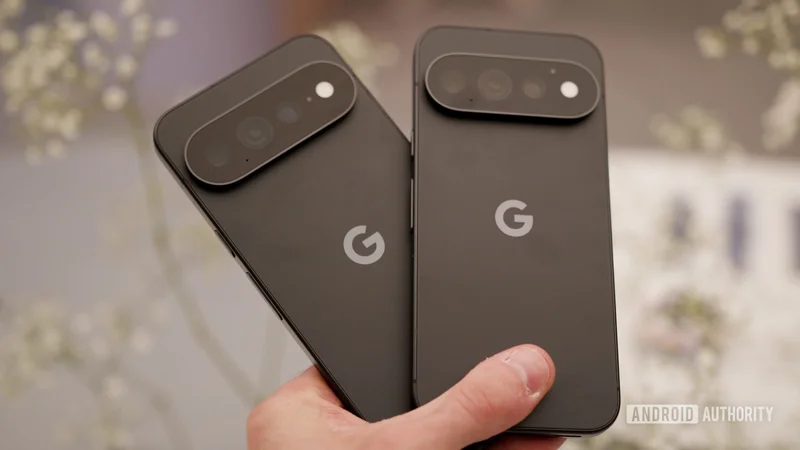
The Pixel 11 Pro is a slap in the face to Android enthusiasts everywhere
Aug 14, 2026 — 6:30 AM ET
The Pixel 11 announcement felt like watching a car crash in slow motion. For months, we’ve heard rumors of Google price hikes, but I hoped that would be the only significant change. We already witnessed Samsung raise prices on some models, but with decent upgrades. Motorola kept the specs relatively unchanged but raised the price. Unfortunately, Google opted for the worst of both worlds, raising prices while giving buyers a RAM downgrade.
The battle for the soul of Pixels was lost by enthusiasts years ago, but they refuse to leave the field. It’s why there is always so much noise surrounding the devices. There are still enough buyers around who remember the Nexus phones and the early stock Android experience on Pixel phones, and there was a time when Google devices were a haven for enthusiasts.
In case it wasn’t already obvious, the company is shouting it in your ear with the Pixel 11 Pro and 11 Pro XL. Google’s moved on from enthusiasts, and it’s time they move on, too.
Google Pixel 11 series: Hot or Not?
12GB is tough to swallow for $1,300
By chance, I watched an old Jeremy Clarkson car review on the Bugatti Chiron last night. Clarkson made a phenomenal point about Bugatti as a company. It knew precisely who the customer it was targeting was, and it acted accordingly. Clarkson pointed out that if you told a Chiron buyer that the car generated 2G of force in the corners, they wouldn’t care. However, if you told them there were $3,000 worth of diamonds in the speaker grilles, their ears would perk up.
Google’s been making this shift for the last few years, ever since the Pixel 9 series, and the Pixel 11 is the most blatant example. The company hopes that if you tell a Pixel 11 Pro buyer that the phone comes with 12GB of RAM this year instead of 16GB, they won’t bat an eye. However, Google fully expects them to be excited by features like HiLight and Quick Share compatibility with Apple’s AirDrop.
Unfortunately for enthusiasts, Google’s strategy seems to be working. Sales figures have improved in recent years, and anecdotally, whenever I come across Pixel buyers, I never hear any talk of Tensors, overheating, or modems. Their phones work, and they are pleasant to use — period.
The Galaxy S26 Ultra is waiting in the wings
While I don’t think 12GB of RAM will noticeably impact the Pixel 11 Pro’s performance, it does bring the phone in line with a familiar and formidable foe — especially at the same price. In previous years, I could defend Google’s flagship phones against Samsung’s best in several ways. It’s easy enough to highlight Google’s fantastic user experience, excellent cameras, and more RAM. The phones even came in at a touch cheaper than Samsung’s flagship devices.
With the pricing advantage gone, the Pixel 11 Pro has a lot to answer for. The Galaxy S26 Ultra is a known quantity, with its fantastic Snapdragon 8 Elite Gen 5 chipset, excellent One UI software, and impressive cameras. For the same money, Google has no choice but to counter point for point. The cameras are improved on the Pixel 11 Pro, and Android 17 is running well, but the Tensor G6 absolutely must deliver.
The Pixel 11 announcement emphasized AI capabilities over raw horsepower, but for $1,300 for the 11 Pro XL (or $1,100 for the 11 Pro), the Tensor G6 must do more. Gaming performance has to be on par with the Galaxy S26 Ultra. I’ve spent the last three years being a huge Tensor defender, but even I realize that there comes a point when the software experience alone doesn’t bridge the value gap.
Google never wanted to compete directly with phones like the Galaxy S26 Ultra, especially when it came to specs. However, circumstances have forced the company into a battle it wasn’t geared up for, and enthusiasts will be the ones left behind.
The Pixel 11 Pro isn’t completely helpless
I mentioned Google understanding the new Pixel 11 Pro buyer earlier, and the upgrades the company made to the lineup HiLight (get it?) that perfectly. The phone features a new 48MP 5x telephoto lens and bigger sensors. As a result, the company claims low-light photos will improve and that Night Sight will process images more quickly. Buyers love cameras, and if you can make that dinner plate look a little better in a dimly lit restaurant for Instagram, there’s a segment of buyers who will respond.
I have no complaints about HiLight. I bemoaned the loss of notification LEDs, and even though Google’s revamped version is on the back of the phone, I still look forward to the functionality it will provide.
Google mentioned that the Tensor G6 should deliver better sustained performance, which should help with longer gaming sessions and more intensive app usage. And I do appreciate the enhancements to Qi charging, which I’ve grown to love on my Pixel 10 series.
I’m not saying the Pixel 11 Pro will be a bad phone. In fact, I’m expecting to enjoy it a great deal. However, I’d be a fool to ignore that it has a lot more to answer for this year, which makes the buying decision much tougher than it should be. The Pixel 11 Pro might still be the phone I recommend to first-time Android users, but it’s no longer the device Android enthusiasts should call home — and Google just made sure you understand that.