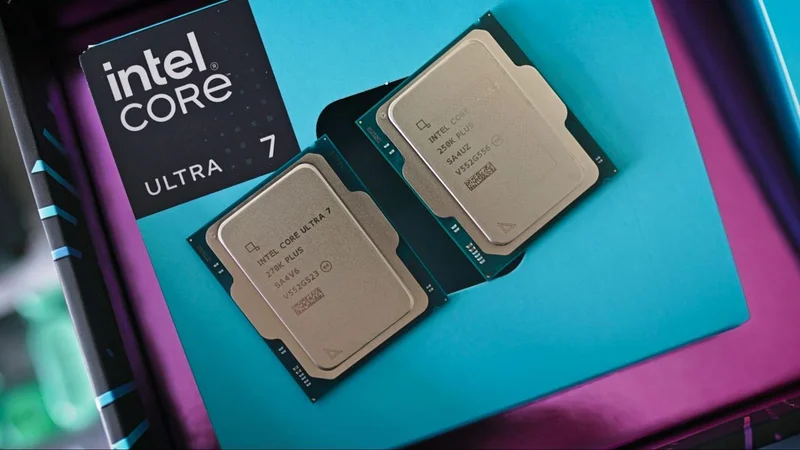
This week, we managed to sit down with Robert Hallock, Intel VP and General Manager of Enthusiast Channel Business, in a rare interview that catches the company during a curious time, between product cycles and several months after the launch of the Core Ultra 200S Plus lineup of CPUs. With the company’s data center business booming, have consumer products been left behind, or will Intel continue to step in the right direction in regaining trust with a core audience that it’s appealed to for decades: the humble enthusiast?
The following is a transcript of our interview with Hallock, which has been lightly edited for flow and clarity. We hope you enjoy this unredacted look, exclusively available to Tom’s Hardware Premium subscribers. You can also catch session transcripts from earlier in the year, featuring Intel, AMD, Nvidia, Valve, and more.
Jake Roach (Senior CPU Analyst, Tom’s Hardware): I appreciate you doing this outside of a typical product cycle.
Robert Hallock (VP & GM Enthusiast Channel Business, Intel): Of course.
Roach: I really just wanted to get your read on a lot of things because things are crazy in the enthusiast desktop space right now.
Hallock: They are.
Roach: So, how are things going in enthusiast desktop land given memory shortages, NAND shortages, everything going on right now?
Hallock: I think the market's experiencing a tale of two kingdoms. Yeah. For the folks who have a significant amount of discretionary budget, they can absorb the cost impacts of what's going on in the industry, and most other people cannot. Right? And that's having a very different impact, as you can imagine, on different parts of the market. Low-end mainstreams really taking a beating. Enthusiast and premium, not so bad. You could, depending on the device class, maybe even be growing positive. So it's a very starkly divided market at the moment.
Roach: I guess I hadn't heard that kind of take on it before. I guess it makes sense that you have more discretionary spending, or if you already were kind of invested in a certain ecosystem. I haven't heard that before.
Intel’s flexibility in the consumer market
Roach: I'm curious about the position of Intel right now. There's AMD, Intel, and Nvidia, right? And you've seen a kind of big shift for AMD and NVIDIA. Nvidia doesn't even break out gaming as a business category anymore; it's embedded now, and I think AMD is now coming up on close to double the data center revenue that they have from their client business. But for Intel, the majority of your revenue still comes from the client business. Does that put you in kind of a unique position right now with so much focus on the data center?
Hallock: I think that it does. I like to believe that it does, and I'm hoping, selfishly for myself, that it does. One of the things that I believe that Intel, that people truly sleep on about Intel when talking about the big fight of this company versus that company, just how big Intel is, how many resources Intel has. As I look at, for example, you know our desktop enthusiast roadmap, I don't have to trade supply with a data center part; I don't have to worry about it. I don't have to think about it.
I can build a roadmap and a plan for the market that is sized against purely what is going on in the client market. And that kind of freedom is very empowering when you're trying to run an enthusiast desktop business for enthusiasts, and it doesn't mean that we're immune to what's going on in the market. It doesn't mean we're immune to supply fluctuations upstream of us. That happens too, right? But at a fundamental level, I can sit down with my team and my partners and build a plan for a product for the year, and not have to worry about what's going on with Xeon, as an example, and vice versa, right? That's their luxury too, right? I can do my thing in client land, and they can do theirs in data center land, and it's okay. And so the size of Intel is what allows that to happen. And at it is at its best, it allows us to maximize the investment and the return on multiple product categories. It's a nice one that works out that way.
Roach: I think it's been maybe a few earnings calls back. There were some mentions in a couple of earnings calls about wafer allocation moving toward the data center to meet demand for Xeon. But you're saying that's not really a concern when it comes to future launches.
Hallock: No, and so, just to give a little inside baseball. It depends on what era you're talking about. If we're just coming into the sudden AI boom, where prices are multiplying very, very rapidly. That was a surprising moment for everyone in the industry. Like we kind of felt it coming.
We heard the rumors, but the size and scale were very abrupt. It was immediate. That is still surprising. It was immediate, and in those cases, yeah, you’re probably going to have to trade some supply around. But once you’re in, like once you’re in it, now you know the plan for it.
Roach: Okay, so that was a temporary measure, gotcha.
On Intel’s enthusiast roadamps
Roach: So, shifting back to the desktop, I know you've mentioned several times about this ambitious enthusiast roadmap, presumably that centers around 18A and Nova Lake. So far, what we've seen out of 18A has been more premium offerings. Obviously, we have Panther Lake; we have Wildcat Lake. Wildcat Lake [is] not a premium offering, but it makes some pretty big concessions to reach that budget price point of single-channel memory and all of that. So I'm curious, given that there is such a large divide between this enthusiast premium category, this budget category, do you think that the DIY PC market can be served by a single product stack, especially on this kind of cutting-edge node?
Hallock: I truly believe that what the market is going to see going forward, and this is just an industry-level comment, is, and I want to stress this is not just Intel...You're probably going to see a split. You'll have a premium socket and a mainstream socket from everybody. If you're playing in desktop space, that is probably what you'll do because the supply chain costs, the upstream costs, have the same costs that are currently harming the entry-level and mainstream market; I don't see those abating anytime soon, right? And so it means that in order to continue providing affordable computer hardware, you're going to have to make some design concessions.
You're going to have to make some concessions in your product stack, and that's purely to control costs and give people an option that they can actually afford. Otherwise, if you don't do it, the other alternative is it just disappears because it's unaffordable. So, seeing a split is likely the outcome for everybody.
Roach: I was telling Thomas yesterday when Gamer Days first came out, I think there was a day when the Core Ultra 250K Plus was $150. I’m like, ‘Man, at that price, that is one hell of a deal.’
Hallock: Hell of a CPU? Yes, it is.
Roach: So obviously we have Arrow Lake Refresh. Arrow Lake Refresh is great, very positive reception. But we've also seen this… One of the stories we really heard a lot from the motherboard guys at Computex was spinning up older DDR4 boards with LGA 1700. I think Gigabyte just reintroduced one a few days ago, and that's great to see because there weren't a ton of those boards even when Alder Lake launched.
But, one of the things that has been concerning for me – covering CPUs – is a lot of volatility in pricing on 13th- and 14th-gen processors, oftentimes selling for much more than comparables from AMD or even for certainly from from Arrow Lake. I'm wondering: are there any plans to maybe improve supply, or some sort of effort to stabilize the pricing of those so it's a bit more consistent?
Hallock: Well, I think what you're seeing is the fact that those 10nm parts are still phenomenally good. We don't spend a lot of time talking about them in the media or at Intel. It's old stuff, and we've all moved on. But they're still phenomenally good CPUs. And if you look at the sort of bucket of options that you can buy for these older DDR4 platforms, it is very likely that Alder Lake or Raptor Lake are the fastest of the bunch in that mix.
Roach: They are. I just recently did a whole DDR4 vs DDR5 article.
Hallock: And so what you're seeing is just like if people are going to go to more affordable hardware, they still want the fastest available for their money, and that happened to be Alder Lake and Raptor Lake. So there was a sudden inrush of demand into these parts that was certainly not anticipated when you start your wafers and your builds long before that moment ever happens. So it's very hard to predict. But going forward, 10-nanometer products like Raptor Lake – that is a core part of the portfolio that I want to offer to people for years to come. LGA 1700 is still a good socket. Lots of people are still interested in DDR4, so keep offering. And you'll see it smooth out over time. It'll come back to normal. That's the plan.
Roach: Yeah, it was really interesting going back because obviously with Alder Lake’s launch, there was a bunch of discussion about DDR4 versus DDR5, but seeing how it scaled all the way up to 14th-gen. You have the 14700K with DDR4 at parity with a 5800X3D in gaming, and obviously much faster in applications. So yeah, I’ve been hoping for a $300 14700K that I can recommend to people.
On Intel's approach to AI in the enthusiast segment
Roach: I wanted to shift a little bit away from desktop. I know that is your, well. I guess maybe not desktop, but the kind of traditional view of just a single-socketed processor. Intel has this kind of breadth of IP, great graphics IP, lots of experience with memory and advanced packaging. And honestly, it's been surprising to me that we haven't seen what I like to call the 'big chip’ out of Intel yet, a consumer 'big chip' out of Intel. Between Strix Halo, I guess Gorgon Halo now, the M-series from Apple, and of course RTX Spark. I appreciate that that's not directly under your purview, but do you think that's an important area of the market, or is this a way to kind of capitalize on this sudden rush in demand for kind of these AI developer workstations?
Hallock: Tricky to say. I'm not sure about that part of the roadmap, but it's an interesting place because in a before time, a big integrated graphics device would have been pitched for gaming, right? It would have been pitched for gaming.
And the market has not always responded positively to that sort of setup, like whether or not the performance is right or the power is right, and oftentimes it's better than the CPU plus discrete option you can get for the same price and the same power. It's better.
Just, there's something about it people just don't take it, and then this whole AI thing came along in a real way – the agentic AI component of it – and certainly renewed demand for that kind of hardware. Now, does that sustain? I don't know. Do people come out of this seeing the value for gaming again – that I also don't know. But you know, we are looking at it, we are exploring it. It's certainly an interesting part of the market. A lot of excitement. People love to talk about it. But interestingly, I don’t think the actual run rate is all that high. So, it’s something we’re cautious about.
Roach: I will tell you every single event I have been to where they've had one of these agentic 'buy your box and run an agent forever’ demos, I don't think I've ever seen a single person actually sitting and watching one of those demos. I don't know what that says, but interesting to note.
Hallock: Just on AI software in general… It's an evolutionary process. Businesses can absolutely benefit now, like Intel has. I personally have agents running for me at work to do processes that honestly took a lot of my time. Sure. And now they're completely automated, and I just have to fact-check them, and that's great. I've saved a lot of time doing this, but you know, the transition to an average consumer – I don't know if we're there yet, right? We're not there yet, and I suspect that's probably informing the demo interest. But it is also a bit of a chicken-and-egg thing.
If you are not AI-aware or AI-ingrained, if you haven't just been dunked in the AI bucket because of your job or your profession or whatever, it is difficult to imagine what you could use it for, right? So now you're caught in this trap, 'well, I've heard about it, I don't know what I could use it for, but then I can get my hands on it, and now I don't know what to do with it.' It's like learning a search engine when we all had to do that, right? But on steroids.
Roach: It’s funny having conversations with friends and people who aren’t in this world because… recording and transcription, right? Like, that’s a super great use case of just, I mean, it’s not even an agentic or an advanced thing. I’ll explain that to them. They’re like, ‘Oh, that’s a great use case.’ I mean, for most people, AI is the sloppy AI images and things like that. That’s AI. They see no other use case for it.
Hallock: That's the great injustice in this industry, right? There are so many things that we all call AI. They all have the same name. And some of them are just like a sticker on a toaster, and some of them are legitimately useful, and they run on your computer, and you have custody over your information and your privacy. That's not bad, but that's quite a spectrum. Yeah, one word, and it's such a shame.
Roach: It is a shame too. With the hardware advancements, it's a bummer being at Tom's Hardware, being mostly a consumer-facing brand, and talking about things like Vera, things like Venice. I'm sure later this month, things like Diamond Rapids. You know, and all that stuff is very interesting from a hardware perspective.
Challenging AMD with new consumer hardware
Roach: I was interested to hear your perspective on this. I was at Advancing AI last month for the Venice launch, and I don't know how long it's been, but it's certainly been since Ryzen, since the original Zen, that AMD's leading with Zen 6 in the data center instead of on client. I just wanted to get your reaction to that.
Hallock: I think it's a natural reaction for them. Makes a lot of sense. What I would say is, as we think about our own roadmap, I have a new core. chuckles It's coming to desktop first. I hope enthusiasts do the math about that one, and… That's all I'm going to say.
Roach: Okay, perfect. I would expect no less of a diplomatic response, but I appreciate the response nonetheless. That is, it is exciting to hear that there's still a focus on consumers, because I know for GPUs especially, but even some questions with CPUs about, are we even going to get new hardware? Like, is that a thing?
And I think this goes to a bit of an extreme that all of our local compute's going to wither away, and then it's all going to be cloud instances or whatever that we rent from some data center somewhere. I don't think that's the case, but it is encouraging to hear that there is at least some focus on launching new enthusiast products. I'm wonderi–
Hallock: Not just some focus; I have new CPUs all the way out to 2030. I have a back-to-back-to-back-to-back cadence for gamers, for desktop built for that purpose. Obviously I can’t go into what any of that is, but I’m accelerating for the gaming market. We are moving faster than we ever have in product and release cadence. We’re very serious about this.
Yeah, I understand people are skeptical after the last couple of years. I truly get that. But the signal Intel is trying to send is like… We’re gearing up for one of the most significant desktop CPU launches we have ever had.
We took a team that was time-shared with other businesses. And now this slice of the market has a full org structure inside Intel, and if you're not in corporate America, what that means is the company is so serious about it. They're putting real people, with a lot of budget behind it, right? And having an owner, a sponsor, people that care about it, looking after it – custodians of that work – it makes a real difference.
Just... The difference between Arrow Lake and Arrow Lake Refresh. That’s the difference.
Roach: Oh man, that was a big difference. Oh. Different teams on those? Okay, I hadn’t realized because when we talked about Arrow Lake Refresh, it was… You had made mention of like ‘Hey, we’ve updated our roadmap, and this is our first, maybe peace offering after Arrow Lake.’
But I didn’t realize it was a completely different, or not completely different, but a different team.
Hallock: Yeah, well. Pretty much completely different. Marketing people, different product managers, different business people, and simply, we have a different philosophy on how this market should run, and what people should get for their dollar. And I’m glad that people appreciate it.
A post-Arrow Lake shakeup
Roach: Okay, so there was a big shakeup after. That was one of the questions I had. What were the key takeaways from Arrow Lake? But it sounds like those takeaways were addressed immediately.
Hallock: A couple takeaways that you saw manifest in the [Arrow Lake] refresh launch: The software experience for DIYers, which nobody likes to admit that we all need software for our CPUs because they all have a lot more cores than any game typically expects these days. And so the resilience of that software experience. How do people obtain it? How do they install it? How can they validate your performance? How can they verify that they're getting what you are promising? All of that was kind of open-loop in the Arrow Lake original timeframe.
We had some aspects coming from motherboard vendor websites, some from Windows updates, some from Intel.com. It's too complicated for people, so that directly led into the Intel platform performance package- like, kind of crazy- but put all your useful bits in one spot and tell people to download it.
Well, when you lose sight of this enthusiast DIY space and how people consume software and hardware in this part of the market, it's easy to get turned around. OEMs have a very different strategy. They go through these massive validation efforts and have huge QA labs and can set up a system image with point releases, and… Normal people don't have those resources.
You have to make it very easy for them. So, software resilience was a big one. And then when you look at a pile of IP, some engineer says, ‘Hey, your CPU can do this to this.’ That's your range of capability, and inside you open the box. You've got some stuff you can smudge around, like frequencies or voltage or core counts or specs on and off. You can decide to remix those very differently too. You decide to price it differently.
So what you're seeing is Intel got healthy on its software foundations for DIYers. Intel got healthy on its respect for performance per dollar for customers. We set up some really healthy internal processes for future platforms. Arrow Lake was a tough, tough lesson to learn, but a good one, because it drove some really, really useful changes inside Intel.
The importance of CPU software optimization
Roach: You've really beaten the drum on the importance of software; software is just as important as hardware. Just this past week I was testing out the BC-250. If you're familiar.
Hallock: Yeah.
Roach: The PS5 APU that was repurposed. And if you need a crash course in the importance of software to a gaming experience, just boot up one of those things. But can you explain, from your view, what the importance of software is, especially given Intel's… This is pretty ancient history at this point, but you know, use of specific compilers and things like that. What is your view about the importance of software to an overall performance package?
Hallock: I am scared to open this box, lest I get misinterpreted. So, here’s the deal. From the perspective of a software developer, it's actually really tough to be a professional software developer, especially if you are not self-publishing, especially if you have a publisher breathing down your neck. Because it means that your publisher is picking the release time, not you.
That's time crunch number one. Time crunch number two is… What hardware are we targeting? What CPU do I have at my desk as a developer? What does our QA lab have? What has the publisher allowed us to buy with our budget for QA? What does my historical install base look like for other games? And every time you open the box on any of those, you find more subdivision of compatibility that you need to worry about. That's time crunch number two.
Time crunch number three is, did you start on a console, or did you start on PC? Which were you targeting first? Probably console. So now you have to do a port, which is a time crunch. Some publishers outsource this. There are companies that all they do is console ports to PC.
Roach: A lot of Sony games.
Hallock: You know, I’m thinking of Nixxes. What a great developer! They've been amazing over the years at doing these kinds of ports. So all you're really doing is budgeting a decreasing amount of time as a dev, and then you're like, okay, well, my game has to run on a CPU anywhere from four cores to, gosh, like 32 threads, 24 threads, depending on the vendor. It's a lot.
And so what ends up happening is they just draw a line in the sand. This is the hardware we have in QA. This is what's on my desk. This is what's in the console, and that's what we have time to look at. And maybe we'll look at other stuff later. And a lot of the time, one thing that many gamers still don't quite understand is, like, it's not even really the Windows scheduler or the OS scheduler that's determining how these CPUs get used when you're running a game-they have their own layer.
It's called an affinity mask, and they tell the OS how to use the CPU. So the game is in control of how to do the scheduling, sending all these hints to the operating system. What if those hints are wrong? What if those aren't the right hints for the CPU you have in the socket? What if the game is newer than your hardware, or substantially older than your hardware? Or the developer never looked at your combination?
These are all moments where the game can easily give up huge chunks of performance, or just not run. And everybody has to deal with this, right? Every CPU vendor has to address these challenges somehow. We call it the Intel Platform Performance package; AMD calls it the chipset driver.
Right, we've all got this, and it's so important because it can reach into the operating system, or reach into the application, or reach into the firmware of the CPU itself, and make those real-time adjustments to get the performance back. Gamers would not like how this industry looks without this software from the CPU vendors. It would be a much, much less performant, much slower, higher frame time, more stuttering, sort of environment.
Roach: Yeah, it’s already quite surprising to deal with.
Hallock: Yeah, software cannot replace the CPU, and that is not what we're proposing, right? We're not saying, 'hey, I'm going to give up 10% on the hardware and give you 10% back on the software because it's cheaper.' No, I want 10% of both.
That it’s not trade; it’s both. And that is why we’re interested in pursuing it, and why I think it’s so important, because I’ve now spent serious time at two processor companies and have seen the performance gains that come from this kind of software, and what they contribute to the experience, including my own gaming system that I’m talking to you on right now.
And so, that’s why I’m big on software, because the performance would be much, much worse without it – not insurmountably, but it would functionally limit the kind of hardware that you can produce if everything has to fit in this lowest common denominator of software. That’s the other outcome, and that would be even worse. We cannot have the hardware be stagnant because of the software.
Roach: Gotcha. Yeah. That’s certainly giving up. It’s not the 10% hardware for 10% software. Leaving stagnant software gives up a lot more.
Hallock: That’s right.
Roach: Yeah. You know, we did a story probably a couple of days ago. This guy who, we call him a hardware researcher, but he really just does memes. He made a C compiler that would compile completely with Move and Assembly, and then he made a leaderboard of… it was the x86 Hall of Shame, where he tried to find a single assembly instruction, how to make it run as slow as possible, and he got one up to 189 billion cycles.
Yeah, it was ridiculous. He basically found the two slowest areas in the fabric, the two highest-latency areas in the fabric. Ran the instruction on one of them, and then had the other one make a bunch of frivolous four-byte reads, and like lock it up. Yeah. Anyway, just a great example of how you can make hardware–
Hallock: What people don't understand, every CPU architecture is like the fine art of intelligent compromise, and it's like, okay, well, just as like a random example, could you make the read and write link the same size? Sure.
But what if the reads are like 10 times more common than the writes? Do you really need them to be bidirectionally the same size? Like it's going to show up on a micro benchmark. Someone's going to complain about it, but in real performance, day-to-day, do you actually need it? Yeah, probably not. And there's stuff like that all over a modern CPU based on decades of just, like, learning how people are likely to use this thing; it actually does shape the microarchitecture itself somewhat, like a reflexive principle, right? We speak it into existence by using our processors in a certain way. It's fun.
Checking in on IBOT
Roach: On software, I think I'm probably much higher on IBOT personally than you know. We've seen some interest in it. We did some testing for it. I think it's this thing that probably becomes more important as time goes on. I'm just wondering how it's going. We've had one update, I believe, one game update. I just wanted to check in on how IBOT’s coming along.
Hallock: Going well. You know, we continue to work on multiplayer support, which was kind of in the initial scope. It's taking, I think, longer than the public may have expected, because we certainly do not want people to get in trouble using this technology. And that means you have to talk to a lot of people to do it. We're actively working on non-gaming workloads.
We are working on another upcoming release. I don't have the exact date for this, but we're working on the bits for the next update. And then we're also thinking about, for Nova Lake, you know, what is version 2.0, for lack of a better phrase? What do we want to build into that release based on the new hardware capabilities? Which I know is both some details and not a lot of details, but it's very important to us; it is a long-term, permanent aspect of our roadmap.
Roach: Yeah, I think the game selection has been interesting to see. Obviously, when we spoke around Arrow Lake refresh, you had mentioned, ‘Hey, there's going to be a lot of games where there's no benefit whatsoever, or a lot of workloads in general where there's no benefit whatsoever. We just want to improve where we can.’
I'm curious how you go about finding those improvements, because surely it can't be just throwing everything at the wall and seeing what sticks.
Hallock: No, well, sometimes it is. Okay. Sometimes it is. It’s a multi-part process. We do have a team that proactively goes out and evaluates things that are very popular, high profile in the community. Just because it's so obvious to go grab those and take a look. We also have automated systems that go through workloads and try to find opportunities. That does a lot of heavy lifting. Dirty word, but we have AI tools that can also help us analyze and find opportunities. So it's one part manual and a lot of automation to find these, and we go from there.
Adressing Nova Lake rumors
Roach: I wanted to ask something a little bit more direct about Nova Lake because speculation around Nova Lake has been going on for a while. I wanted to focus on the high-end, there's been kind of these endless rumors about a 52-core part. You have teased previously scaling up Thread Director to deal with these higher core-count CPUs. I'm wondering right now: What does something like this ultra-high core count, or like a high-end desktop processor, what is that offering right now to the market, in your view?
Hallock: My view has always been that the market will initially go. ‘Ah, what am I going to do with this kind of hardware?’ And then they figure it out. And my most recent example of this comes from my time at AMD. I was sitting at Computex, and at the time we were unveiling our first 12-core CPU. So that would have been the 5900X, I think, maybe the 3900x. It's been a while, and I was sitting in the room with a bunch of journalists who – 18 months ago – had been like, "Why eight-core in consumer? What are you even talking about? Why? Why does this exist?” Same people sitting in front of me. I'm talking about a 12-core CPU, and they're like, "Where's your 16-core?" Like a poorly, poorly kept secret at that point, right? Like it was only like a week away from getting announced, and everybody knew it existed.
How quickly perspectives change. Suddenly, we went from four-core to eight-core, to 12, to 16 in three years. And man, how quickly people’s opinions changed about the value of [higher] core counts. I don’t think, in the history of the PC industry, [that] bigger bar better, more performance better. Never a bad answer. And that does inform my thinking about the roadmap, and Intel’s thinking about the roadmap going forward. It’s never a bad idea to offer more hardware to people.
Roach: The irony. About that, I think it was Zen...It must have been Zen 2. The irony about that is that the 12-core SKUs are always significantly worse than the eight-core and the 16-core. I guess there are some workloads where it makes sense, but yeah, it's interesting to hear.
I think, you know, one of the big hopes for Nova is a competitor to V-Cache. I know this is something you're well aware of, and you know has been brought up numerous times. I watched some previous interviews that you did, I believe, with a recent one with PC Games Hardware, and you had mentioned ways to improve cache locality as something like, ‘Hey, we don't just need to stack a bunch more cache on the chip. We have other levers we can pull to find this performance or to offer something that the X3D chips offer.’
I'm curious what those levers are, because you've made reference to them before, and I just wanted to get a little bit more of a technical explanation.
Hallock: We will have to wait for the fullness of time, won’t we?
Roach: Yes, we will. Hey. You can’t knock me for trying.
Hallock: No, you have to try, and I appreciate and respect that. You know, my bottom line is this is going to be both an answer and a non-answer. Sorry. But I want to try to answer the question for the public more generally. We understand and appreciate there is a like a lot of hope, a lot of expectation, and a lot of desire surrounding Nova Lake. We get it.
And in some ways... selfishly. We’ve lived through it. Every negative comment, every bad tweet, every crappy article. It wears on you. It really does. And we want to deliver a product with Nova Lake that meaningfully addresses these criticisms.
Yeah, just pick one [CPU from Intel or AMD]. I’m not going to confirm anything else, but pick one. I think the Nova Lake product will do the job.
Roach: Okay. Well, that's good to hear. I have to imagine, especially with Nova Lake in particular, given how much they're, you know… There's probably a story on Videocardz or WCCFTech, probably a lot on Tom's Hardware every two or three days. So, yeah, it's a lot.
Hallock: Well, I think it’s reflective of how excited people are, how much anticipation, how much demand is pent up for this moment.
Roach: I know we're almost out of time, but I did want to share with you real quick. It was a big thing that we talked about this year at CES. Actually, I was talking to AMD PR, and they were getting reactions [to AMD’s new announcements]. And I told them, I was like, man, there is a Dark Knight sentiment. You live long enough to see yourself become the villain…happening right now in the industry. I think there's certainly a lot of that reaction that we've seen at least. So, for what that's worth…
Hallock: I have read those comments. Yeah. You know, a product like Nova Lake cannot address every single slice of the market. It just can't, given the current market that we're in. But I, I do hope and do believe that people will look back and go, ‘damn, you know, that was pretty, pretty freaking good.’ Yeah, that's what we were hoping for. And if Intel just keeps going, we're gonna be okay. And that's the trajectory we're on. That's who I want to be, as a business for gamers.
Roach: Yeah, I've heard you say that numerous times, which is encouraging to hear. So I appreciate it, and yeah, thank you so much for taking the time to do this. You know, I always enjoy talking with you, and I'm excited to see what comes next.
[Session ends]
Jake Roach is the Senior CPU Analyst at Tom’s Hardware, writing reviews, news, and features about the latest consumer and workstation processors.