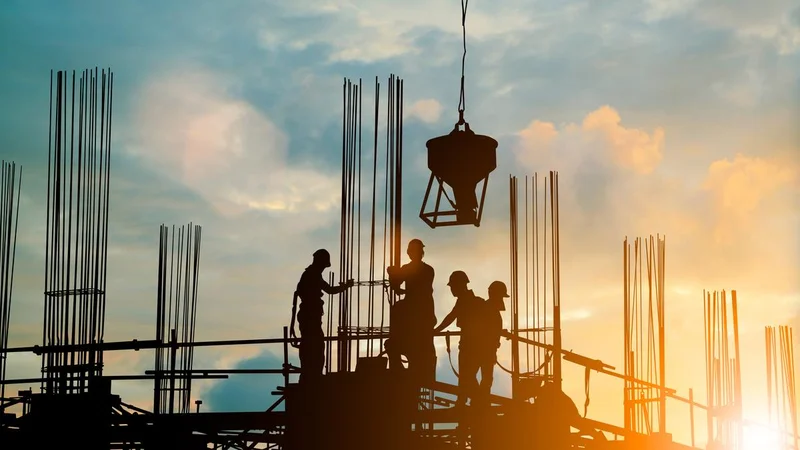
The Centre has advised the state Real Estate Regulatory Authorities (RERAs) to enforce a four-month extension for housing projects due to the ongoing conflict in West Asia, which has caused material shortages and supply chain disruptions. According to the advisory, issued by the Ministry of Housing and Urban Affairs, this extension applies to projects registered on or before February 28, 2026.
This move has been appreciated by developers and builders, who collectively believe that the temporary pause will help in absorbing the damage and speed up pending projects.
However, homebuyers are in a difficult position as they feel left out and bear the additional costs of construction.
“The market is already facing challenges with both sales and delivery execution, and now, with this four-month extension, it seems there will be more challenges to come”Snehith Reddy MedaPartner at E-infra
Fallout of the move
According to Snehith Reddy Meda, partner at E-infra, who is currently developing Moonglade Apartments in the Kokapet-Narsingi-Manchirevula belt and Skyven Apartments in Narsingi, this move has adversely affected the construction of all major materials, including steel, PVC, tiles, wiring, pipes and glass. “The market is already facing challenges with both sales and delivery execution, and now, with this four-month extension, it seems there will be more challenges to come. Year-on-year housing sales in the top seven cities fell by 7% in Q1 and another 6% in Q2, and over 5.4 lakh homes will be delivered this year.”
Homebuyers have a lot to plan with regard to applying for loans, getting interior work done, relocating based on when the house will be ready, and, most importantly, financial planning. Sanjay Chugh, city head and director, ANAROCK Property Consultants, Chennai, says, “There could be some impact on possession timelines in projects genuinely affected by supply-chain disruptions, and consequently, some buyers may have to manage EMIs and rentals for a slightly longer period.”
“Before they commit, buyers will look at how far the development has moved, whether the physical backbone such as roads, power, and water are actually in place or, at least, on schedule”Hardik ShahDirector of Shyam Group-Dholera SIR
Impact down south
This delay hits closer home. “I had to extend my stay in the rented house for more than three months, which cost me additional rent and bank loan EMIs,” says Deepak Subramani, who works in HCL Technologies in Malaysia and was buying a house in NCC Urban Signature Towers in Shollinganallur, Chennai. He expects revised timelines and regular updates from the developers.
“In a nascent market, buyers aren’t only buying a unit, they’re basically buying a timeline and a kind of promise. Before they commit, they’ll look at how far the development has moved, whether [infrastructure’s] physical backbone such as roads, power, and water are actually in place or, at least, on schedule. They will also check how disciplined the developer has been in meeting prior milestones, not just in theory but in the real flow of things,” says Hardik Shah, director of Shyam Group-Dholera SIR.
Delivery pipeline
According to an ANAROCK report, a prolonged West Asia war is expected to test housing delivery timelines across India in 2026 amid supply-chain disruptions and rising cost pressures in India. The report said Mumbai, Pune and Bengaluru account for around 70% of homes due for completion in 2026 and may face the biggest execution challenges. The National Capital Region (NCR), meanwhile, has around 39,000 housing units scheduled for completion this year.
Large-scale disruptions have historically affected housing delivery schedules. During the pandemic-hit year of 2020, around 4.66 lakh homes were scheduled for completion across the top seven cities, but only 2.14 lakh units, or 46% of the planned pipeline, were ultimately delivered due to lockdowns, labour migration and supply-chain disruptions, according to the report.
This year, the Mumbai Metropolitan Region (MMR) and Pune together account for about 57% of the homes scheduled for delivery. MMR alone is expected to see around 2,07,300 units completed, while Pune has about 1,00,300 units lined up for delivery.
Among southern markets, Bengaluru is expected to account for around 69,000 units, followed by Hyderabad with 63,700 units and Chennai with 35,600 units. Kolkata has about 22,500 units in the pipeline.
Homebuyers are seeking transparency and regular updates on their projects and will need to ensure that there are no additional and unexpected costs. While developers have the much-needed breathing room as supply-chain disruptions continue to affect construction, it is the homebuyers who are left to shoulder the additional costs, EMIs and uncertainty.
The real question is whether the extension will help projects get back on schedule or whether possession timelines will continue to be pushed further.
This is the second in a two-part series on the four-month extension for housing projects given by the State RERAs.
Published - August 14, 2026 05:49 pm IST