Your support helps us to tell the story
From reproductive rights to climate change to Big Tech, The Independent is on the ground when the story is developing. Whether it's investigating the financials of Elon Musk's pro-Trump PAC or producing our latest documentary, 'The A Word', which shines a light on the American women fighting for reproductive rights, we know how important it is to parse out the facts from the messaging.
At such a critical moment in US history, we need reporters on the ground. Your donation allows us to keep sending journalists to speak to both sides of the story.
The Independent is trusted by Americans across the entire political spectrum. And unlike many other quality news outlets, we choose not to lock Americans out of our reporting and analysis with paywalls. We believe quality journalism should be available to everyone, paid for by those who can afford it.
Your support makes all the difference.
Read more
We are on just day four of Andy Burnham’s premiership and already he has announced his third mini giveaway.
The new prime minister is doing a series of dawn raids on the news agenda with 6am announcements aimed at underlining his mission to be heading a “cost-of-living government”.
It started on day two with him scrapping VAT from energy bills from October, costing about £800m and saving homeowners £45 a year on average.
Then on day three we got the £500m announcement that bus fares in England would be capped to £2.
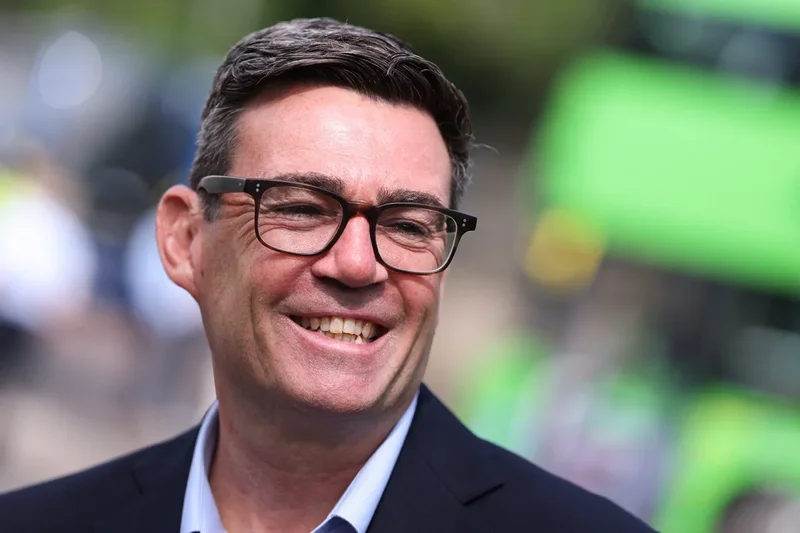
Prime Minister Andy Burnham (Toby Melville/PA) (PA Wire)
Now he is providing £100m worth of relief for pubs, music venues and clubs with a 20 per cent reduction in their business rates.
All these things may seem like small beer in the greater scheme of things but they are cumulative not just in terms of “giving breathing space” for Britons and some businesses but also in the amount stacking up for the Treasury to pay for.
The real question being asked is how Mr Burnham will pay for these and other giveaways as well as some of the much bigger ticket items coming down the line.
He has already pledged to stick to 2024 Labour manifesto promise of not raising income tax, VAT or employee national insurance contributions and he has said he will stick to Rachel Reeves’ strict borrowing rules. That leaves little room for manoeuvre. So, how could he pay for it all?
A wealth tax
The new chief Treasury secretary Emma Reynolds notably refused to rule out a wealth tax when she was discussing the latest giveaway on Wednesday morning. Mr Burnham previously hinted in an interview with the former footballer and pundit Gary Lineker that he could look at a wealth tax.
There will be a £2 bus fare cap (Getty)
Funnily enough, Mr Lineker was one of ovcer 100 UK millionaires to sign a letter to Mr Burnham asking him to tax them more.
This could take one of three forms or indeed all three. First is a simple increase in the top rate of income tax from 45p to 50p. While this would technically break the manifesto commitment, Mr Burnham may see that as a viable option.
This may only have a limited impact raising an extra £750m because of people leaving the country or diverting income to other taxes.
Second is a 2 per cent levy on people holding very valuable assets including houses, works of art, high end jewellery and the like. This according to experts would raise £10bn.
Finally, a move backed by Mr Burnham’s deputy Louise Haigh and former leader Neil Kinnock, would be to equalise capital gains tax with income tax.
This could raise between £10bn and £14bn but end up destroying investment in the UK.
Raiding other departmental budgets
Already, there is a suggestion that Mr Burnham is doing this with his early giveaways. He said that taking VAT of energy bills was funded by cancelling the unpopular digital ID scheme.
Former chancellor of the Duchy of Lancaster Darren Jones, sacked on Monday by Mr Burnham, disputed this as being realistic because he said that the scheme was “unfunded” at the time of being cancelled.
There are reports though that Mr Burnham is raiding Ed Miliband’s old climate fund, which he set up when he was energy secretary under Sir Keir Starmer, to fund the £2 cap on bus fares.
Louise Haigh is the new Chancellor of the Duchy of Lancaster and favours wealth taxes (Yui Mok/PA) (PA Wire)
Certainly, with smaller items such as the ones being announced there is an accounting measure which can take place to redirect money to different resources.
This will not hold up though as the bill for measures increases and when bigger ticket items are put forward.
The ‘Amazon tax’
Mr Burnham made it clear in an interview with Andrew Marr on LBC that he wants to reduce business rates not just for pubs and clubs but also high street shops, in some cases eliminating the rates altogether.
He said that he would look at imposing a new tax on the giant warehouses springing up across the country used by major online retailers such as Amazon.
The proposal has in the past been called “the Amazon tax” as a means of moving the tax pressure off high streets and on to those who pay very little at the moment because they operate online.
It is uncertain how much this would raise though.
Moral taxes
One of the options would be to go after higher rates on businesses which are seen as not good for people’s health or socially questionable.
This includes higher rates on vape shops which have sprung up around high streets in the UK but also could see extra rates being levied on casinos or arcade machine shops.
The idea of moral taxes could also extend to pushing more on things like a sugar levy for food and drink with high sugar content.
Newly appointed Chancellor of the Exchequer John Healey (AFP/Getty)
Again, it is not clear how much these taxes would raise but it is the type of measure that appeals to Labour.
New ways of borrowing
This is a difficult one because Mr Burnham insisted on day one when he briefly spoke to journalists that he has “always been prudent” with public money.
As mentioned earlier, he has said that he will stick to the now former chancellor Rachel Reeves’ fiscal rules on tight borrowing limits.
However, there is quite a big “but” to that statement, because Mr Burnham has also said he will use the flexibility within those rules to borrow as much as he can.
Added to that we now know that the new chancellor John Healey is in favour of joining Canadian PM Mark Carney’s Global Defence Bank and raising war bonds to pay for billions of extra military funding.
As Ms Reeves said, defence bonds are just another form of borrowing, but it could be a good way of easing the pressure on other budgets and allowing Mr Burnham to focus his spending elsewhere.