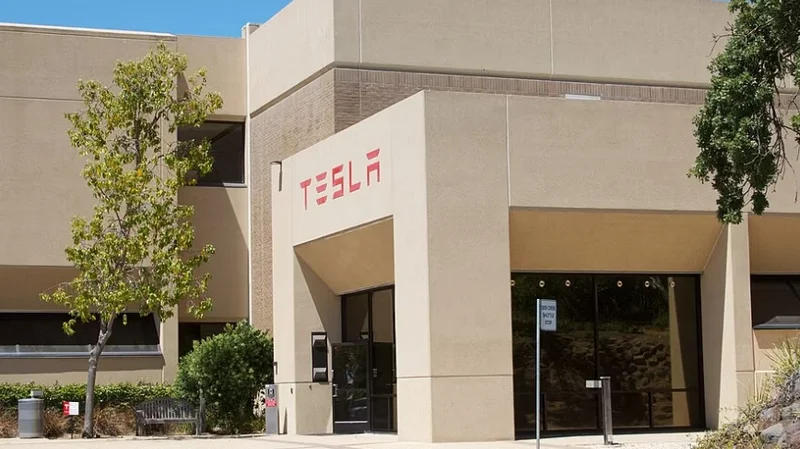
The union announced it on 13 August. Its own statement sets the end at one minute past midnight on Wednesday 19 August.
The strike began on 27 October 2023 with about 120 mechanics across seven Swedish workshops, Electrek noted. It became the longest industrial conflict in modern Swedish history.
Tesla never signed a collective agreement, which is what the mechanics struck for.
How it ended
IF Metall gives one reason, and it is arithmetic. Tesla bought out its striking members until none were left.
The number is about 80 people. Malmö lost all its strikers, and only a handful remained in Stockholm and Uppsala by this month.
Simon Petersson, the union’s agreement secretary, put it plainly. Tesla opposes collective agreements so strongly, he said, that it would rather buy employees out than give them secure conditions.
A strike needs strikers. Once the last member signed a buyout agreement, the action had nothing left to withhold.
The union chair on losing
Marie Nilsson did not soften it. “Det är klart vi har misslyckats,” she told the union magazine Dagens Arbete, meaning of course we have failed.
She added that the union did not win this round. It is an unusually direct thing for a union chair to say on the day an action ends.
Her statement to members took a different register. “Våra medlemmar på Tesla är fackliga hjältar”, she said, calling them union heroes.
The union says its goal has not moved. IF Metall remains ready to fight for collective agreements “oavsett var eller när”, regardless of where or when.
Petersson made a sharper historical point. Systematic strikebreaking of this kind, he said, has been off the Swedish labour market since the 1930s.
What Tesla says
The company has never accepted the premise. Its communications manager told Sweden Herald that employment at Tesla “includes all regular terms and conditions specified in Swedish laws and regulations”.
Those terms named occupational pension, working hours and safe working conditions. The argument is that Swedish law already supplies what the agreement would.
Tesla did not respond to Reuters for comment on the strike ending. Elon Musk has called the action insane in the past.
Investors read it as a win. Tesla shares closed about 4% higher on Thursday, with a further 1% after hours.
What the Swedish model actually is
Sweden has no statutory minimum wage. Pay, hours and pensions come from collective agreements between unions and employer federations, which cover most of the labour market.
This is not a quirk, it is the system. Parliament left those terms to the two sides of industry, and the agreement does the work a wage law does elsewhere.
That is why a single workshop dispute escalated the way it did. The agreement is the regulation, so refusing one is not a private matter between an employer and 120 mechanics.
Sympathy action is legal in Sweden and it arrived quickly. Dockworkers refused to unload Teslas at Malmö, Gothenburg and other ports.
Danish, Norwegian and Finnish transport unions joined the port blockade. Postal workers stopped delivering number plates, electricians stopped servicing chargers, and cleaners stopped cleaning showrooms.
The blockade that went to court
The number plate blockade produced the strangest legal fight of the dispute. Tesla sued the Swedish Transport Agency and PostNord over undelivered plates.
It won an interim order in November 2023, then lost on appeal in December. The plates stayed blocked.
Sweden already has a record of ruling against large American technology companies. A Stockholm court ordered Google to pay Klarna’s PriceRunner unit nearly $2bn in July.
None of that changed the outcome here. The courts were never going to compel a signature, and the strike was the only instrument that could.
Why Tesla could afford it
The union names the reason directly. Veli-Pekka Säikkälä of LO, the Swedish trade union confederation, said Tesla has “gigantiska ekonomiska resurser” and used them to buy out the strikers.
The scale of the company against the scale of the dispute is the whole story. Tesla reported $28.24bn of revenue in the second quarter alone.
Profit is another matter. Operating income fell 57% to $398m as the company spent on AI and robots.
Even on that reduced figure, buying out 80 people is a rounding error. The cost of holding out was never the constraint.
What it means for the rest of Europe
Tesla is not retreating from the continent. The Netherlands approved its FSD Supervised software in April, the first European country to do so.
The market it sells into is growing. Electric vehicles passed a quarter of European sales for the first time in June.
Atle Høie, general secretary of the global union federation IndustriALL, framed the result for other employers. “There seems to be no limits to the length Tesla would go to keep unions out,” he said.
He added that the company “managed to pay their way out in Sweden”. He also noted the buyouts left former members with more money in their pockets, and the collective agreement still unsigned.
Labour disputes over technology are running in parallel elsewhere. Hyundai workers voted to strike in June over the deployment of humanoid robots.
What would settle it
Two things, and the first is whether anyone tries again. IF Metall says it is ready, but it now has no members inside Tesla to strike with.
Recruiting new ones is possible, and it starts from zero. The mechanics who carried the action for nearly three years have taken settlements and gone.
The second is whether the tactic travels. Buying out strikers individually is legal in Sweden and, per the union, unprecedented there.
The dispute has ended without the thing it was about. Tesla still has no collective agreement in Sweden, and after 1,021 days it no longer has anyone asking for one.
Get the TNW newsletter
Get the most important tech news in your inbox each week.