An audit of passenger amenities and sanitation by the Comptroller and Auditor General (CAG) of India has revealed persistent and widespread deficiencies across Indian Railways.
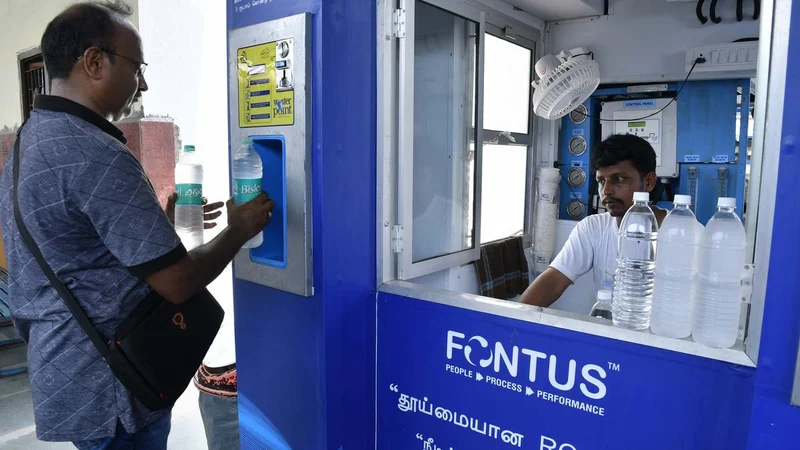
A joint team of CAG and railway officials conducted an audit of 512 stations, of which 458 stations (nearly 89%) were deficient in one or more minimum essential amenities, including fans (42%), water coolers (40%), drinking water taps (27%), urinals (22%), seating arrangements (15%), platform shelters (13%), latrines (12%) and clocks (12%). “Only 54 stations (11%) had no shortfalls,” the report noted.
Of the 512 stations audited, 325 were non-Amrit Bharat stations. The Amrit Bharat Station Scheme is an ongoing initiative of the Railway Ministry, launched in 2022, to modernise over 1,300 railway stations across the country.
The CAG audited non-suburban stations handling long-distance passenger traffic of at least 150 km. The sample sizes were drawn from 5,908 stations across 16 railway zones running 7,424 passenger trains daily and serving 292.4 crore passengers as of 2023-24.
Shortfalls in seating arrangements, sanitary facilities (urinals and latrines), dustbins, and electronic train indicator boards were observed at select stations. This included major terminals categorised as NSG-1 stations (where earnings exceed ₹500 crore and/or outward passengers exceed 20 million annually) such as Chhatrapati Shivaji Maharaj Terminus, Howrah, Sealdah, New Delhi and Mumbai Central, indicating gaps in the maintenance and monitoring of essential facilities.
Other stations where shortfalls were observed include Naihati, Gaya, Bhagalpur, Bhopal and Rajkot. Interestingly, the CAG pointed out these shortfalls in three previous audits in 2007, 2013 and 2016.
“Persistent shortfalls in amenities were attributable to inadequate monitoring of implementation of the Railway Board Circular dated April 9, 2018, absence of time-bound action plans, weak oversight of fund utilisation under Plan Head and inconsistent prioritisation of works at zonal level,” the report stated.
In September 2012, the Railway Board had instructed that platform shelters should cover the area where general second-class coaches stop. However, the audit noticed that this was not ensured at 379 stations. “Thus, passengers remained exposed to vagaries of weather,” the report noted.
“All stations must be provided with clocks. However, in 60 stations no clock was provided. Also, dustbins were not provided as per norms at 149 stations,” the report stated.
A review of 395 passenger amenity works across 325 non-Amrit Bharat stations showed that 59% of works were delayed (from one to over four years) and only 41% were completed within stipulated timelines, thus depriving passengers of timely access to essential facilities.
The CAG has observed that there is a risk that lower-priority works may be undertaken under the guise of redevelopment in the Railways, while long-pending compliance with mandatory norms continues to be compromised or diluted.
The CAG report stated that deficiencies in monitoring, enforcement and accountability at all levels diluted the objective of ensuring minimum essential passenger amenities and sanitation standards at stations, despite the availability of means and resources to address the issues.
Systemic failure
The report noted the persistent underutilisation of budget grants for providing passenger amenities, ranging between 36% and 44% during 2019-20 to 2023-24, even in non-COVID years, revealing deficiencies in planning and execution rather than financial constraints. Funds are allocated annually to each zonal railway for passenger amenity works.
While the fund allocation largely remained stable at ₹3,207 crore (2019-20), ₹3,875 crore (2020-21), ₹3,414 crore (2021-22) and ₹3,351 crore (2022-23), it shot up to ₹14,072 crore in 2023-24. The CAG report noted a significant year-on-year underutilisation of budget grants — ₹1,403 crore (44%), ₹1,499 crore (39%), ₹1,423 crore (42%), ₹1,198 crore (36%) and ₹5,956 crore (42%) during the five-year period.
Meanwhile, passenger earnings increased from ₹42,190 crore in 2014-15 to ₹70,693 crore in 2023-24. Also, the number of originating non-suburban passengers declined from 3,719 million in 2014-15 to 2,924 million in 2023-24, largely attributable to COVID.
A further analysis of Passenger Amenities Management System (PAMS) data from February 2025 confirmed that deficiencies persisted across all station categories and zones, signalling systemic gaps rather than isolated cases.
The data analysis of 5,908 stations revealed shortages of latrines in 214 stations, urinals in 91 stations, water taps in 1,440 stations and public address systems in 1,983 stations.
Contrary to Railway Board instructions, the report stated that no time-bound action plans were prepared to bridge gaps in recommended and desirable amenities.
Inadequate facilities
The report also noted that accessibility infrastructure for Divyangjans (persons with disabilities) was inadequate and non-compliant, with substantial deficiencies in accessibility infrastructure, information systems, toilets, ramps, tactile pathways, lifts and announcements. For example, at Madurai Junction (SR), the tactile pathway was incorrectly laid instead of at the prescribed distance of 1,800 mm from the platform edge.
Out of 374 Divyangjans interviewed, 131 (35%) reported that the amenities were inadequate. The deficiencies cited included non-functional or closed toilets without information on key availability, absence of low-height drinking water facilities, parking, non-slippery pathways, lifts, portable ramps and low-height ticket counters, inconvenient platform heights, uncooperative battery car services, and lack of announcements regarding Divyangjans coach positions.
Also, availability of first-aid medical care for passengers was inadequate.
The CAG report noted that there were deficiencies in the implementation of station cleaning contracts. “Non-compliance to Standard Bid Document (SBD) by the zones and non-uniformity in adoption of SBD across the divisions were noticed,” the report said.
Also, inefficiency of the zonal railways led to non-utilisation of Corporate Social Responsibility (CSR) funds.
For instance, in Southern Railway, during 2020–2023, 187 pre-fabricated toilets were installed at a cost of ₹0.25 crore per unit. Out of these, 79 toilets remained non-operational due to the absence of service providers for operation and maintenance. Consequently, CSR fund investment of ₹19.75 crore by M/s Neyveli Lignite Corporation remained unutilised as of February 2025, the CAG report noted.
Similarly, in Eastern Railway, a bio-toilet complex installed at Plassey station in December 2022 remained non-functional due to non-availability of water and electricity. The audit further observed that the station authorities did not escalate the issue to the divisional level for arranging water and electricity supply as of March 2025.
In East Coast Railway, during 2021–2024, 92 pre-fabricated toilet blocks were provided at a cost of ₹0.25 crore per unit. Of these, 62 toilet blocks remained non-operational due to factors such as non-deployment of contractual staff, availability of existing Pay & Use toilets at stations, and delays in finalisation of bids through e-auction. As a result, CSR fund investment of ₹15.50 crore by M/s Mahanadi Coalfields Limited remained unutilised as of March 2025, the CAG report noted.
The CAG report proposed that the Railways prepare and deploy station-wise, time-bound action plans to address amenity concerns, including effectively implementing accessibility provisions for Divyangjans and strengthening sanitation and garbage management measures.
The CAG has also recommended that the Railways should ensure regular functioning of all consultative committees and Service Improvement Groups with effective documentation, supervision and follow-up on deficiencies.
The Railways should also strengthen passenger-centric monitoring by improving enforcement of anti-littering rules, enhancing grievance redressal and publicity of complaint registers to achieve tangible improvements at stations, the CAG report noted.
Published - August 14, 2026 08:46 pm IST