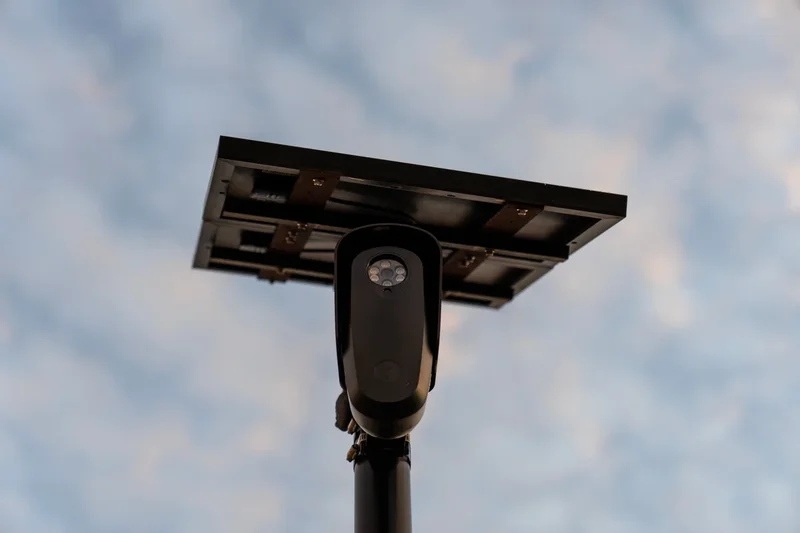
Surveillance technology company Flock Safety has unveiled major changes to its services amid a roiling controversy over its license plate-reader network.
The firm operates a sprawling network of automated cameras across the United States, with law enforcement customers in every state, excluding Alaska, being able to search Flock’s data for their investigations.
Some have described that as amounting to a Big Brother-like surveillance state, amid accusations that some law enforcement officers have used the service to stalk their partners and ex-partners.
Flock Safety CEO Garrett Langley told Newsweek on Tuesday that his company’s “end goal isn’t a dystopian future of surveillance; it’s one where we all feel safe.”
Langley also told the publication that the technology can help find missing people, recover stolen vehicles and solve crime. According to him, 1,000 missing people were detected through the system in July.
Have I been Flocked?
Flock, which was founded in 2017, says on its website that it is active in over 5,000 U.S. communities.
According to data seen by Politico, the firm has partnered with over 7,000 law enforcement agencies and over 6,000 private customers.
However, a slew of communities across the country have chosen to deactivate their cameras or cancel contracts with Flock, according to a website critical of the firm, named DeFlock.
An analysis of police and court records by The Washington Post found that authorities had charged or accused at least 50 law-enforcement officers of using license-plate readers for unauthorized purposes. Flock was used in 46 of the cases.
Prosecutors and investigators alleged that some officers used the technology to spy on their wives, girlfriends, exes, exes' new partners or women that they wanted to meet in 26 of the 50 cases, The Post reported.
A website titled “Have I been Flocked?” has become a popular way for some motorists to see if their number plate has been searched by police.
The webpage uses aggregated police logs accessed via public records.
Flock has unveiled a slew of changes
Flock has unveiled a series of new measures and changes to its services following the backlash.
On Wednesday, the company announced in a press release that it was shortening the default and recommended periods in which it retains its data from 30 days to seven. Data will be retained for a longer period if tied to a specific case number.
Law enforcement agencies that use Flock will also be required to use an audit tool that is designed to highlight abnormal search behavior. If flagged, a user would be locked out amid an internal review.
Law enforcement customers will also need to enter a code from their records tying each search to a specific case, with overrides used in emergency situations being marked for review.
Users will also be able to filter which types of searches will be permitted to be searched. For example, an agency could allow searches for murder investigations but block ones for immigration investigations.
The company also reiterated that their customers own the data captured by the cameras and that they can decide who accesses it.
“Abuse of Flock technology, at any level, is unacceptable,” the press release reads.
How have the changes been received?
The American Civil Liberties Union said in a press release that many of Flock’s operational changes “fall short,” but noted that shortening the data retention window was a “step in the right direction.”
“The constitutional concern is that the Flock system empowers the government to surveil every single person in the country and track their private location movements everywhere they go without any criminal suspicion and without a judicial warrant, which is a significant constitutional problem,” Chad Marlow, senior policy counsel at the ACLU, told Newsweek.
Meanwhile, Robert Frommer, a senior attorney at the Institute of Justice, also criticized the changes while speaking to The Guardian.
“This is yet more window dressing,” he said. “Flock suggest that police departments limit their retention periods to seven days, while admitting that the decision is still entirely up to the police departments themselves.”
The Independent has contacted Flock Safety for comment.