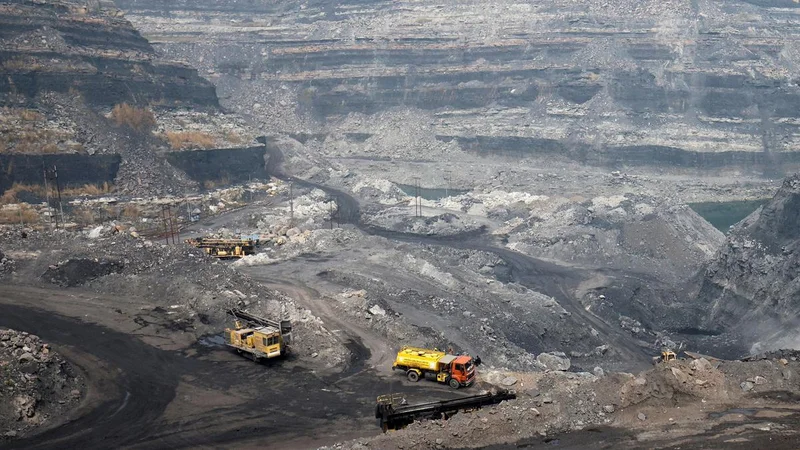
India's coal demand is likely to touch 1.6 billion tonnes per annum by 2030, a top government official said on Friday (August 14, 2026), underlining the need for transparent and market-driven pricing for the commodity.
Speaking at the Global Commodities Conclave Mumbai, Union Coal Secretary Vikram Dev Dutt said that the setting up of the 'coal exchange', a government-established platform designed to work as an independent marketplace, will be of help.
He said in each of the last two fiscal years, domestic coal production has crossed 1 billion metric tonnes and the demand is continuing to grow as the commodity is a mainstay of energy needs.
"Coal demand is projected to rise further to an estimated 1.6 billion tonnes by 2030," Dutt said, adding that we are at an "inflexion point" where we are shifting from a scarcity scenario to one of surplus.
Such a shift underscores the need for "more efficient, transparent and market driven mechanisms for coal trade", he said, pointing out that till now the state-run Coal India has enjoyed a virtual "monopoly".
"While this model did serve its purpose for the time that it was designed, it does not fully reflect the competitive, transparent and efficient price discovery that a market of India's scale and India's maturity deserves," he added.
The coal exchanges will provide commercial and captive miners ready and transparent access to a wider market, wherein buyers and sellers can bid simultaneously enabling efficient, competitive, and market-driven price discovery, he said.
The government plans to operationalise the coal exchange concept in "the months ahead", he said, without sharing affirm timeline.
The exchange will function as a central counterparty for clearing and settlement thereby improving risk management for both buyers and seller, he said, adding that it can also help lay the foundation for a derivatives market for coal over a period of time.
Coal exchange is a reform that reflects the government's commitment to enable and enhance ease of doing business, promote transparency and build a modern self-reliant energy ecosystem, Dutt said, hoping that it will strengthen India's energy security, support industrial growth and contribute meaningfully to the vision of Viksit Bharat 2047.
Published - August 14, 2026 10:17 pm IST