In a game park in South Africa just before dawn, the driver of our vehicle stopped, perplexed, and asked one of the passengers to nip out and see if the track he was driving on headed towards the cliff edge.
Obligingly, a young man climbed out, walked off into the mist ahead, then suddenly tore back, leaping into the truck faster than I’ve ever seen anyone move before.
“There are lions there!” he gasped. “Lions and cubs. I could have been killed!”
Of all the stupid things people do on an African safari, that was probably right up there among the dumbest. But it’s only one of the many misdemeanours African wildlife reserve authorities are trying to stamp out, for both the wellbeing of their visitors and, much more importantly, of their animals.
The message for visitors is: don’t exit your vehicle in a park, instead, sit quietly, speak only in hushed voices to not alarm the animals, turn your phone to silent, put your camera on silent shutter, do not take phone call. Listen to the bush instead. Bird “alarm calls” frequently provide clues to the presence of bigger prey.
The latest travel news, tips and inspiration delivered to your inbox. Sign up now.
In addition, don’t lean out of the vehicle. Animals recognise the shape of a vehicle and think of it as a harmless, non-predatory “animal”. But once anyone breaks the line, by standing up, leaning out, or sticking out an arm and a camera, the wildlife immediately feel threatened and can panic.
Most importantly of all, never ever try to feed the wildlife. Amazingly, some people still do.
Still, almost every time you go on safari, you’ll see someone leaning out of a 4WD, mobile phone in hand, trying to capture that magic Insta selfie shot of themselves watching an increasingly nervous critter.
Often, you hear people shouting to an animal, trying to get it to walk clear or, at least, turn its head to the crowd.
But now, alarmed by so much continuing bad behaviour, the authorities are biting back.
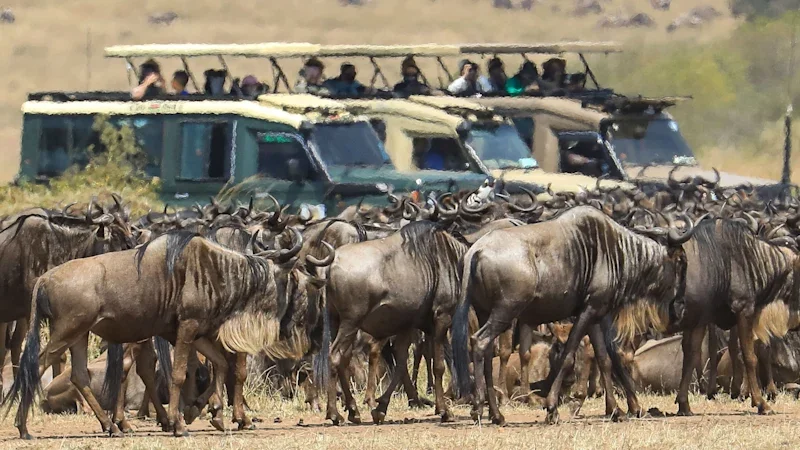
The Kenyan Minister of Tourism and Wildlife, for instance, has announced a legal crackdown on tour operators doing the wrong thing, after one blocked the path of migrating animals for better photos.
In Uganda and Rwanda, trekkers have strict rules on the use of phones around gorillas, and in South Africa’s Kruger National Park, they can’t be used on game drives.
Parks across the continent are also slapping tighter limits on the number of vehicles at sightings, and how close they can stop to watch the animals, while reducing the speed at which people can drive.
Many parks have also banned off-road driving to give wildlife some relief from their observers, noisy drones, night-time expeditions and flash photography, unless with trained, qualified guides.
The parks are yet to emulate the tiger reserves of India where visitors are required to put their mobile phones in a box before they enter, or to keep them in their bags, but that might only be one more ill-judged phone call away.