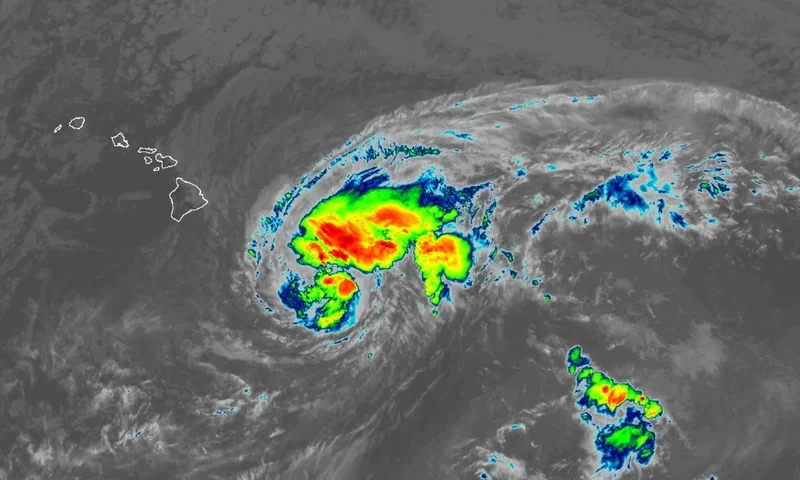
Tropical Storm Lala, a cyclone headed for the Big Island of Hawaii, is expected to strengthen into a Category 1 hurricane early on Saturday morning. There is the potential for “life-threatening” flooding and mudslides, the National Hurricane Center (NHC) said in a statement on Friday.
As of Friday, Lala is still considered a tropical storm, with wind gusts clocking in at about 60 miles per hour (about 95 kilometers per hour). To be designated a Category 1 hurricane, winds must reach at least 74 mph (about 119 kph).
The storm could make landfall this weekend or move just south of the Big Island, says Liam Tsamous, a meteorologist at the National Weather Service’s Honolulu office. Residents should expect “heavy rain” and “strong wind,” Tsamous says.
On supporting science journalism
If you're enjoying this article, consider supporting our award-winning journalism by subscribing. By purchasing a subscription you are helping to ensure the future of impactful stories about the discoveries and ideas shaping our world today.
“Preparations to protect life and property should be rushed to completion,” the NHC statement said.
“While the 50th state is no stranger to brushes from tropical storms and hurricanes, only 2 hurricanes on record (since 1949)—Category 4 Iniki in 1992 and Category 1 Dot in 1959—have passed directly over any of the main Hawaiian Islands (both struck Kauaʻi in the north),” wrote hurricane specialist Michael Lowry on his SubStack on Friday.
In other words, Lala could be the first hurricane to directly hit the state since Iniki, which made landfall when director Steven Spielberg was filming Jurassic Park on the islands. In fact, some of the movie’s storm scenes were footage of Iniki.
As of Friday, officials have issued a hurricane warning for Hawaii’s Big Island, indicating hurricane conditions are expected, including strong winds, rainfall of up to 25 inches and storm surge of up to three feet. Smaller islands in Maui County are under a tropical storm warning.
As Scientific American previously reported, the planet is currently facing an El Niño year. This climate event is driven by warmer waters in the Pacific, where it boosts favorable hurricane conditions, such as less wind shear, or a change in wind speed or direction with altitude. During an El Niño year, the opposite is the case in the Atlantic.