In an era when national symbols can feel confined to government plazas and ceremonial flagpoles, Korea is embarking on a modern civic experiment: bringing its emblem directly into everyday life.
On the occasion of the 81st National Liberation Day, marking the end of Japanese colonial rule in 1945, the Ministry of the Interior and Safety is launching a sweeping campaign Saturday designed to integrate the Taegeukgi — Korea’s national flag — into the rhythm of daily routines. Blending private sector partnerships, digital downloads and charitable initiatives, the government hopes to transform civic pride from a formal duty into an accessible habit.
As part of the initiative, Vice Minister of the Interior and Safety Kim Min-jae joined NongHyup Bank Vice President Lee Young-woo at Government Complex Seoul to hand out custom keychains featuring the flag and the Rose of Sharon (hibiscus syriacus), Korea's national flower. The accessories, designed to attach to backpacks or keyrings, reflect an effort to build familiar connections with national iconography among younger generations. The vice minister later presented the keepsakes to children at a local day care center inside the complex.
"On this 81st Liberation Day, when Korea reclaimed its light, we have prepared diverse activities to renew public affection for our national flag," Kim said. "Whether hanging a physical flag or holding one in your hand digitally, we hope citizens take a moment to reflect on the true meaning of independence."
The ministry also partnered with CU, one of Korea’s ubiquitous convenience store chains, for a month-long public awareness drive. Through its mobile app, Pocket CU, the retailer offers guidance on proper flag display etiquette and the historical symbolism of the Taegeukgi. Digital display screens and checkout counters across thousands of stores will feature campaign art encouraging civic participation.
Crucially, a portion of the sales proceeds from three specially branded taegeuk lunchboxes, rice balls and sandwiches will go toward supporting the Dr. Lee Tae-joon Memorial Park in Mongolia. Lee, a medical doctor and freedom fighter during the independence movement, provided modern medical care to Mongolians while secretly supplying housing, transportation and funding to Korean anti-Japanese independence fighters moving across China and Mongolia.
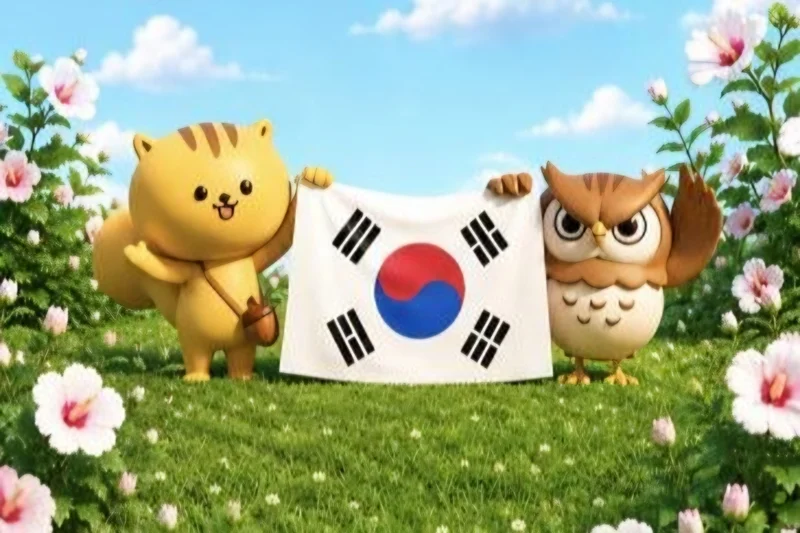
For those who live in modern apartment complexes without traditional flag brackets, the government is encouraging flexible display options — including window-mounted stickers and vehicle flags. Recognizing that many younger citizens connect through digital screens, the ministry has also released downloadable smartphone wallpapers featuring the national flag alongside government mascots Dahaeng-i and Buri-buri.
By blending history with retail culture and digital accessibility, officials said they wanted to offer a contemporary answer to a timeless question: how a country preserves its historical memory while keeping its symbols relevant in a fast-paced, modern society.
This article was published with the assistance of generative AI and edited by The Korea Times.