Kenya Shut Its Soda Ash Mine. Tanzania Is Selling the Replacement
EAST AFRICA · COMMODITIES
Tanzania opens the Engaruka soda ash project to investors
The National Development Corporation used a conservation forum in Arusha in early August to invite local and international investors into the Engaruka soda ash project. Proposals close on 18 September 2026.
The structure is a public-private partnership. Investors are being asked to design, finance, construct and operate the mine and processing plant alongside the state corporation.
Dr Yohana Mtoni, NDC’s Director of Heavy Industries, framed it as an open call. “I therefore use this opportunity to invite investors to work with the government in designing, financing, constructing and operating the Engaruka soda ash mining and processing plant,” he said.
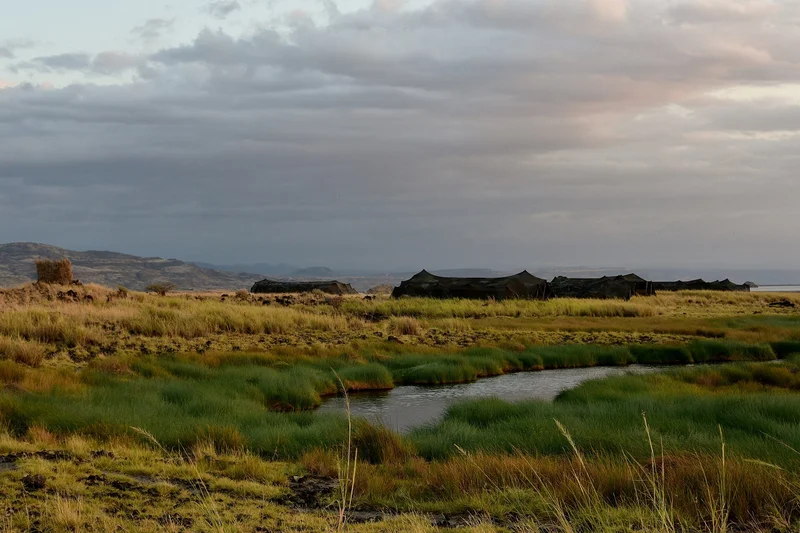
The site covers about 60,884 acres in Engaruka Ward, Monduli District. Initial output is put at more than 500,000 tonnes a year, with plans to scale toward 1 million tonnes as demand grows.
Why Tanzania wants it
The immediate argument is the import bill. Tanzania spends about US$121 million a year buying soda ash it could produce domestically, on NDC’s own figures.
The wider argument is industrial. Soda ash feeds glass, detergents, chemicals, paper, water treatment and mineral processing, which makes it an input to a great deal of manufacturing the country would like to host.
Mining was deliberately sited away from Lake Natron, the Ramsar-listed lake that is East Africa’s principal lesser flamingo breeding ground. That relocation is why the project took years to reach tender.
Compensation has already been paid to residents of four villages in the project area, though published accounts of how many people received it differ between reports.
Kenya shut its producer in the same fortnight
On 28 July, Kenya’s Cabinet Secretary for Mining, Blue Economy and Maritime Affairs, Hassan Joho, suspended operations at Tata Chemicals Magadi. The stated grounds were royalty arrears plus compliance failures across licensing, export reporting, community development agreements, local employment and procurement, beneficiation and environmental obligations.
Tata Chemicals Magadi says it is fully compliant with all requisite regulations and continues to work with the authorities. The government told the court the company does not currently hold a mining licence, its application still being processed.
The company went to the High Court and lost. In a ruling dated 7 August the judge declined to lift the suspension, noting that the decision had already taken effect and that the commodity at the centre of it was not perishable.
The case returns on 6 October. Kajiado County is separately pursuing the company at the Supreme Court over alleged land rates and royalty arrears for 2013 to 2018.
What the numbers actually support
Kenya produced an estimated 300,000 tonnes of soda ash in 2024, the latest year covered by the US Geological Survey, matching its 2023 estimate. Botswana produced about 270,000 tonnes in 2024, slightly less.
That matters because Tata Magadi is routinely described as Africa’s largest soda ash producer, and USGS country data put Kenya narrowly ahead of Botswana, its nearest continental rival, broadly bearing that out.
Globally, the United States produced about 12 million tonnes of natural soda ash in 2024 and Turkey about 11 million, on the same source. China is far larger still, but its output is overwhelmingly synthetic.
Tanzania at 500,000 tonnes would therefore be a significant natural producer rather than a global force. That is still well above Kenya’s current output.
What it means for buyers
Soda ash is the kind of input nobody notices until it stops. Glassmakers, detergent manufacturers and mineral processors buy it on long contracts and do not switch suppliers casually.
A regulator idling the region’s incumbent producer while its neighbour runs a tender with a September deadline is an unusually legible piece of industrial competition. Both governments are making the same bet, that value should be captured at home.
It also carries a warning for foreign operators. The Kenyan case turned on royalties, community agreements and local content, the same obligations tightening across African mining codes, a trend traced in Africa: The New Scramble.
Engaruka has been announced before. The 18 September deadline is the test of whether this time the money arrives.
Frequently Asked Questions
What is the Engaruka soda ash project?
It is a proposed soda ash mine and processing plant in Monduli District, Arusha region, covering about 60,884 acres. Tanzania’s National Development Corporation has invited investors to design, finance, build and operate it under a public-private partnership, with proposals closing on 18 September 2026.
Why did Kenya suspend Tata Chemicals Magadi?
The Cabinet Secretary for Mining, Blue Economy and Maritime Affairs, Hassan Joho, suspended operations on 28 July 2026 over royalty arrears and compliance failures spanning licensing, export reporting, community development agreements, local employment and environmental obligations. The company says it is fully compliant.
Did the court reinstate Tata Chemicals Magadi?
No. In a ruling dated 7 August 2026 the High Court declined to lift the suspension, noting the decision had already taken effect and that the commodity involved was not perishable. The case returns to court on 6 October 2026.
What is soda ash used for?
Glass manufacturing, detergents, chemicals, paper production, water treatment and mineral processing. It is a chokepoint input rather than a consumer product, which is why supply disruptions matter.
This article was produced by The Rio Times’ automated newsroom system. How we use AI · Report an error