Ghana Has Lost 8,900 Hectares of Forest to Illegal Mining
GHANA · MINING
The scale of Ghana illegal mining, measured from orbit
The 8,900-hectare figure is not an estimate. It comes from a Forestry Commission satellite remote-sensing verification covering 45 forest reserves and one national park, measured as at 31 December 2024.
The comparable 2021 figure was 5,253 hectares across 43 reserves. The area lost grew by about 70% in three years.
Ashanti region is worst hit, accounting for nearly 4,950 hectares across 13 reserves. Nine of Ghana’s 288 forest reserves are classed as severely affected.
Emmanuel Armah-Kofi Buah, Minister for Lands and Natural Resources, put the images in front of a policy dialogue in Accra on 14 August.
Presenting one of them, he said: “What you are looking at is not an earthquake. It is a forest reserve.”
Arrests are not the problem
Enforcement has produced numbers. As at July 2026 the state had seized or immobilised 234 excavators, 2,728 pumping machines, 1,724 changfan machines and 461 motorbikes and tricycles, and arrested 258 people.
The minister was blunt about what happens next.
“The challenge we are having is not the arrest,” he said. “It is the prosecution.”
A separate figure needs care. More than 4,000 excavators are currently held at Ghana’s ports, but those are imports awaiting clearance under a new documentation regime, not machines pulled off illegal sites.
About 2,000 Blue Water Guards have been recruited and trained to patrol rivers. Buah has acknowledged bribery allegations within that programme, which is its own comment on the enforcement model.
Why the lease term is the real reform
The eye-catching policy is duration. Cabinet approved amendments to the Minerals and Mining Act capping large-scale leases at 20 years, against the previous 30 years renewable for another 30.
The reasoning is about idle ground rather than mining itself.
“People are just sitting on concessions for 30, 40 years,” Buah said. “They are waiting for the next big investor to come so they can cash out.”
Concessions held speculatively are not mined, but they are also not policed, and unworked ground is where galamsey operators go. Shortening the term is an attempt to force use or release.
The reform is not law. Cabinet approved it on 15 July and the bill is still to be laid before parliament, which matters for anyone pricing Ghanaian mining assets.
What it costs, and what is still unmeasured
Ghana is Africa’s largest gold producer and gold is now the dominant line in its export receipts. Illegal mining sits inside that success rather than beside it.
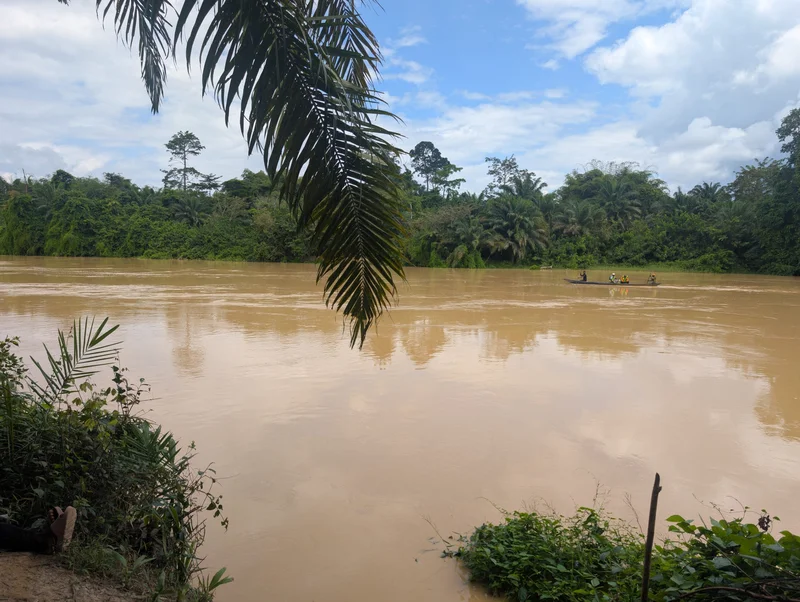
The rivers are the visible cost. The Pra, Ankobra, Offin and Birim carry heavy silt loads from mining, though no current official pollution measurement has been published.
Figures circulating for cocoa farmland destroyed and for the cost to the wider economy are not traceable to Ghanaian state sources, and are best treated as unverified. The forest number is the one that has been measured properly.
That gap is itself informative: three years after galamsey became a national political issue, the state can map the damage from space but cannot yet price it.
Why outside investors should care
A 20-year lease cap changes the arithmetic on any long-lived Ghanaian mining asset, and on the secondary market in concessions that the minister is explicitly targeting.
It also lands as regulators across the continent tighten terms, from Kenya’s suspension of a major soda ash producer to export bans on unprocessed minerals elsewhere in West Africa. The direction of travel is consistent.
Ghana is trying to keep more of the value of its own geology, a theme running through the competition traced in Africa: The New Scramble. The open question is whether prosecution capacity catches up with enforcement ambition.
Until it does, the satellite images will keep getting worse while the arrest figures keep going up.
Frequently Asked Questions
How much of Ghana’s forest has been lost to illegal mining?
About 8,900 hectares of forest reserve had been affected as at the end of 2024, across 45 forest reserves and one national park, according to Forestry Commission satellite verification. That is an increase of roughly 70% on the 2021 figure.
Is Ghana cutting the length of mining leases?
Cabinet approved amendments capping large-scale mining leases at 20 years, down from an initial 30 years renewable for a further 30. The bill has not yet been passed by parliament.
Why are 4,000 excavators held at Ghana’s ports?
They are being held pending compliance with a new documentation and clearance regime for imported mining equipment. They are not machines seized at illegal mining sites, where 234 excavators had been seized or immobilised as at July 2026.
What is galamsey?
Galamsey is the Ghanaian term for small-scale illegal gold mining, typically unlicensed and often using heavy equipment. It is associated with deforestation and with heavy silt and chemical pollution of rivers.
This article was produced by The Rio Times’ automated newsroom system. How we use AI · Report an error
LatAm Markets: Live Signals → — real-time movers, turnover leaders and FX across Latin America.