Marriage, parenthood workgroup advances early proposals to not 'lose time' on falling birth rates: Indranee
The announcements in the upcoming National Day Rally will be the "first wave" of measures to support families, with more to come after that, said Ms Indranee Rajah.
SINGAPORE: Measures to better support families will be brought forward instead of waiting for the Marriage and Parenthood Reset Workgroup to complete its full report, after several areas of “clear consensus” on the challenges faced by families emerged from its engagements with Singaporeans.
Speaking at a National Day dinner in her Pasir Ris-Changi ward on Saturday (Aug 15), Minister in the Prime Minister’s Office Indranee Rajah said the workgroup, which will release its full report in early 2027, has advanced a set of interim policy recommendations so that Singapore does not "lose time" addressing the important issue of falling birth rates.
These include taking a fresh look at the cost of raising children, access to affordable infant care and childcare, as well as other support for families.
Prime Minister Lawrence Wong will share more details at the upcoming National Day Rally on Aug 23, Ms Indranee said.
The Marriage and Parenthood Reset Workgroup was formed earlier this year to develop a roadmap to make marriage and parenthood more achievable, supported and valued in Singapore.
Ms Indranee, who chairs the workgroup, said its members have spent the past few months speaking to Singaporeans about their hopes, aspirations and concerns surrounding marriage and parenthood.
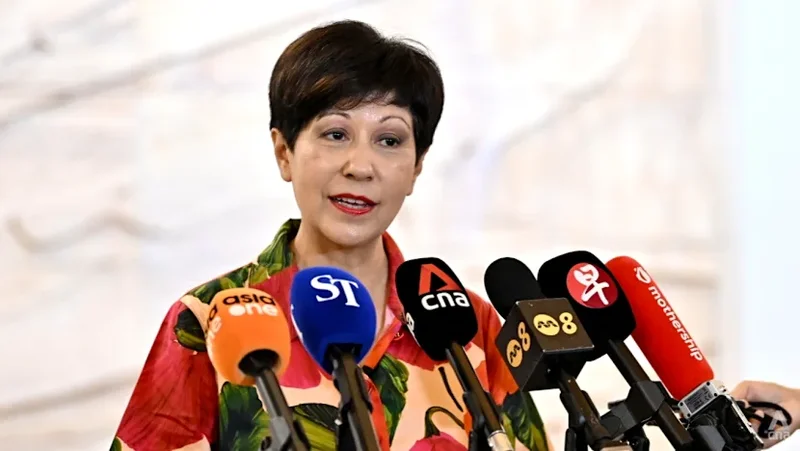
Asked why there was a need to advance the recommendations when the report is due in about six months, Ms Indranee said some issues were clearly on people’s minds and could already be addressed.
“Rather than wait ... because it’s an important issue, (we) might as well deal with this early and upfront,” she told reporters on the sidelines of the event.
"It's actually a huge review. We're leaving no stone unturned, and there are many other things that we have to look at.
"So we thought better to come up with these early, signal them early, and then after that we can focus on the other areas.
"FIRST WAVE OF MEASURES"
Ms Indranee said the upcoming National Day Rally would be the “first wave” of measures arising from the workgroup, with more to come.
She said the workgroup’s engagements had shown that the cost of raising children, childcare and other forms of support were “very much on people’s minds”.
“We felt that, given the nature of this issue, we can actually advance some of our recommendations, which we did, and that’s what (Prime Minister) will be speaking about at the National Day Rally,” she said.
“I think it’s fair to say he will be focusing on support, what greater support we can give to families.”
In his National Day Message, Prime Minister Lawrence Wong said a “major review” was underway of how the government supports Singaporean families not just at the point of marriage and parenthood, but throughout their life’s journey.
WORKPLACE CULTURE AMONG AREAS BEING STUDIED
One major area that will not be dealt with at the National Day Rally is workplace culture and norms, Ms Indranee said.
The workgroup has received feedback not only on work-life balance, but also on matters such as applying for leave and how flexible work arrangements are implemented, she said.
Ms Indranee said there was “clear consensus” that workplace issues needed to be tackled, but this would require more time because the workgroup was seeking to balance the interests and concerns of employers and employees.
She pointed to the role played by employers, human resource professionals and line managers in shaping employees’ experiences.
For instance, a parent taking shared parental leave could have a very different experience depending on the response of their supervisor.
“If your line manager is empathetic, happy for you that you have a child, it makes it so much easier,” she said.
But even if the leave is approved, a manager who reacts as though it is an imposition sends “a very different signal”, she added.
“So, learning how to create better workplace norms and cultures, I think, is a very important part of this.”
“There’s a combination of the more tangible measures, but you also need the intangibles, the software, and how people approach things, and that is actually quite hard to do.”
HOLISTIC SUPPORT
Ms Indranee said the review was taking a holistic view of a family’s journey, rather than looking only at support around the birth of a child.
“When a baby is born, it doesn’t stop there, right? A child has to go through childcare, goes through primary school, goes through secondary school,” she said.
“In the review, we’ve taken a holistic view at the whole journey of a family, and we want to make sure that families are well supported at all stages.”
Singapore’s total fertility rate fell to a record low of 0.87 last year. Fewer than 30,000 live births were recorded in 2025 for the first time in 60 years, an 11.4 per cent drop from 2024.
About 24,700 marriages were registered last year, down 6.2 per cent from 2024.
Ms Indranee said the latest figures had “sharpened” the focus on marriage and parenthood.
With fewer marriages in recent years likely to translate into fewer children, she said it was better to step up efforts.
“Those that we can do early, we do early. Those that take a bit longer, then we will take as much time as we need to do those properly.”
In her speech, Ms Indranee said that reversing the country's downward fertility trajectory requires a "whole-of-nation effort" beyond government policies.
She highlighted that everyday actions - such as understanding employers fostering family-friendly workplaces, supervisors granting flexibility for family matters, neighbours offering support, commuters giving up seats to pregnant women, and community volunteers stepping in - make a "meaningful difference" to families.
"What we must do at a national level is to build a Singapore where families are supported and cherished. Everyone has a role to play in this," she said.