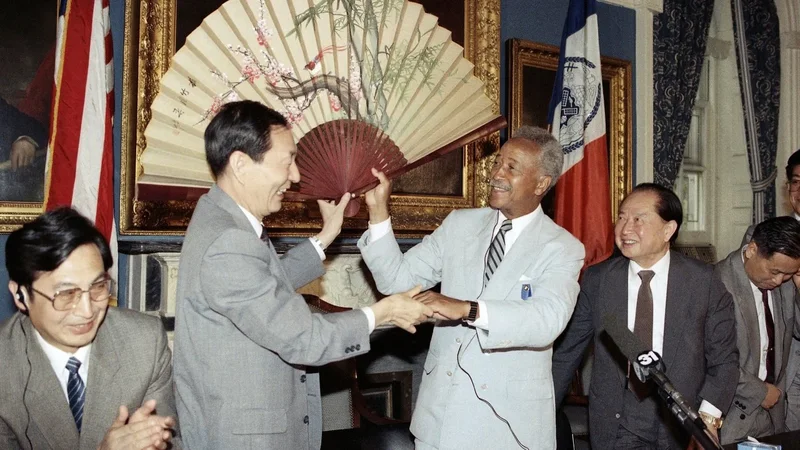
Zhu Rongji’s death a reminder of what US-China relations have lost
The current state of US-China ties shows the importance of leaders like Zhu, who was pragmatic, cosmopolitan and committed to constructive engagement
Making this journey at that time was a risk for him. He could have been publicly humiliated by the withering criticisms of Americans outraged by the June 1989 tumult. If he was too strident defending his government in America, he would fail in his mission to improve ties with US citizens and leaders. On the other hand, if he was perceived back home as a weak defender of China’s dignity, he would be vulnerable to nationalistic backlash.
American praise of him could be construed by his domestic detractors as criticism of China’s central leadership. He did not want to appear to be the darling of the West when his superiors in Beijing were prohibited from contact with US officials because of Washington’s post-Tiananmen sanctions. Zhu candidly hinted at his quandary, saying: “I wish they [the US press] would quit calling me ‘China’s Gorbachev’ – it’s killing me in China. I am not China’s Gorbachev, I am China’s Zhu Rongji.”