William Gibson’s 1984 novel Neuromancer helped establish the cyberpunk genre, laying the foundation for everything from The Matrix to Cyberpunk 2077. After spending decades in development hell, the book about a down-on-his-luck hacker teaming up with a cyborg to pull a heist on behalf of a shady benefactor will be turned into an Apple TV series in January 2027.
The streaming service known for imaginative, high production value sci-fi shows like Severance and Pluribus is the perfect home for an adaptation of the book, which alternates between cyberspace and the underworld of future Japan. You’ve got time to read (or reread) Neuromancer before then, and there are plenty of other options if you’re eager to explore the same vibes and themes that have only become more relevant in the past 40 years. For tales of cyborgs, rogue AI, powerful corporations, and clever hackers, these are the 10 best cyberpunk books to read now.
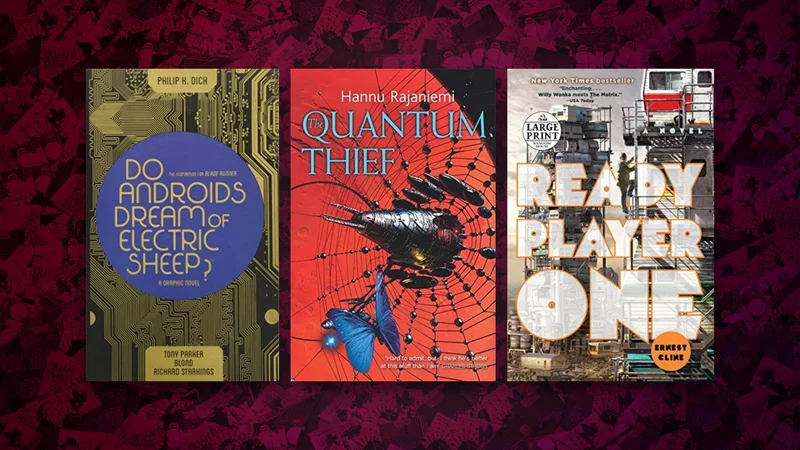
Philip K. Dick, Do Androids Dream of Electric Sheep? (1968)
Philip K. Dick is one of the most imaginative sci-fi writers ever, and his work has inspired numerous adaptations including The Man in the High Castle, Minority Report, and A Scanner Darkly. His short novel Do Androids Dream of Electric Sheep? was adapted into Blade Runner in 1982, with the book and Ridley Scott’s film establishing many of the tropes that Gibson would draw on in Neuromancer. Dick’s original is far weirder than Scott’s moody adaptation – the title is a reference to robot animals used as a status symbol – but well worth reading to understand the genre’s origins.
Neal Stephenson, Snow Crash (1992)
Snow Crash is a loving parody of cyberpunk tropes that became a foundational genre work in its own right. Stephenson coined the term "metaverse" for the book, where hacker and pizza delivery driver Hiro Protagonist investigates a computer virus that can cause brain damage, which winds up being connected to the origins of human language in ancient Sumeria. The novel is twisty and hilarious, establishing the themes Stephenson would continue exploring in other excellent sci-fi books like The Diamond Age and Cryptonomicon.
Richard K. Morgan, Altered Carbon (2002)
Richard K. Morgan’s first novel established his penchant for genre-bending detective fiction. Altered Carbon leans into cyberpunk’s themes of social inequality and transhumanism to imagine a future where the ultrawealthy can live forever by uploading their consciousness into new bodies. When one of these long-lived elites is killed, the mind of the interplanetary envoy turned criminal Takeshi Kovacs is pulled out of storage to investigate what happened. Morgan’s series was adapted into a slick and bloody Netflix show of the same name.
Max Barry, Jennifer Government (2003)
Max Barry taps into the humor of Snow Crash with Jennifer Government, which focuses on cyberpunk’s prediction that corporations would become far more powerful than nation states. In a world where everyone’s last name is given to them by their employer, Jennifer Government is investigating a rash of murders tied to a new line of Nike sneakers, even though she’s not actually getting paid for her work. The biting satire also involves America’s police force becoming a mercenary group for hire and a hacker trying to get revenge against ExxonMobil.
Hannu Rajaniemi, The Quantum Thief (2010)
Hannu Rajaniemi’s The Quantum Thief kicks off a trilogy putting a sci-fi spin on Maurice Leblanc's Arsène Lupin. A copy of the mind of the gentleman thief Jean Le Flambeur is downloaded from the prison where he’s being held and tasked with pulling off a heist to earn his freedom. That involves recovering his own memories from a Martian city where time is currency, and those who run out become robot servants. Rajaniemi goes heavy on transhumanism as he imagines how humanity might fragment after leaving Earth, skirting the line between cyberpunk and space opera.
Ernest Cline, Ready Player One (2011)
Ernest Cline’s Ready Player One is set in a dystopian future where people spend most of their time in the virtual world of OASIS. The creator of OASIS promised control of his fortune and the world itself to whoever can find a set of hidden keys, which requires extensive knowledge of Gen X movies and games. Wade Watts, an 18-year-old living in a trailer park, sees the quest as a way to change his fortunes, but he’ll have to face the agents of a corporation that will do whatever it takes to gain control of OASIS. The deeply geeky story was adapted into a 2018 Steven Spielberg film. Warning: Don’t bother with Ready Player Two, Cline’s uninspired retread of the story.
Marissa Meyer, Cinder (2012)
Marissa Meyer’s debut novel puts a cyberpunk spin on the tale of Cinderella. A cyborg mechanic living in New Beijing, Cinder discovers a royal conspiracy involving the denizens of the moon, who have the ability to manipulate people by controlling their bioelectricity. Lighter and happier than most cyberpunk stories, Cinder kicked off Meyer’s long-running The Lunar Chronicles series, which is being adapted into an animated TV show.
Martha Wells, All Systems Red (2017)
AppleTV previously demonstrated its skill at adapting cyberpunk novels with the 2025 show Murderbot, based on the first book in Wells’ The Murderbot Diaries. In a bleak future where megacorps regularly enslave and kill people, a cyborg security guard figures out a way to hack the controls its makers put in place to ensure obedience. When a group of naive explorers contract the SecUnit that calls itself Murderbot, it has to try to keep them alive while protecting its secrets. The book is an extremely fast and funny read and you can quickly breeze through the rest of the series, which features plenty of hacking, corporate conflict, and a super sassy AI.
Ken Liu, The Hidden Girl and Other Stories (2020)
Ken Liu’s short story collection hops between genres, from a quantum physics spin on a wuxia tale to a far too precienct examination of the intersection of gun control advocacy and digital manipulation. But the heart of the book is the interconnected stories that served as the basis for the dark animated series Pantheon. When Maddie’s father dies, she discovers that his mind has become one of the first “uploaded intelligences,” AI created from a deep scan of a human brain. Liu’s highly ambitious work predicted the explosive growth of data centers as corporations seek to control the future and unleash forces they cannot contain.
James Islington, Scion (2026)
You’ll have to wait a few weeks to read the latest book from The Will of the Many author James Islington, who has moved from fantasy to cyberpunk for his new series. Scion, which releases on Sept. 1, is an action-packed fast read about an enhanced assassin who targets people who would otherwise live forever. But when Azure is tasked with protecting a client, the challenging job reveals secrets about his employers and his own past. Along with the AI companions and shady dealings you’d expect from a cyberpunk story, Islington introduces the clever wrinkle of biosecurity — genetically modified monsters designed to protect people who can’t trust technology.