Positioning the Philippines for the next cycle of global capital
MANILA, Philippines — Southeast Asia had a strong year for foreign investment in 2025, with regional inflows passing $240 billion, up from roughly $222 billion. According to the United Nations Trade and Development’s figures, the Philippines moved the other way, easing around 4 percent to $9 billion and holding sixth place for another year.
The classification tables tell a different story. In July, the World Bank moved the Philippines to upper-middle-income status, ending close to four decades in the lower-middle-income group, on gross national income per capita of $4,850 against a threshold of $4,636. Its reasoning matters more than the milestone: broad-based expansion, with growth averaging 5.8 percent a year over five years across all major industries rather than one sector boom. That is not a claim about household prosperity, which is longer and harder work, but about the composition and durability of growth, which is what a long-term allocator assesses.
Capital also rotates rather than spreads evenly, concentrating on a theme and a market until the relative opportunity narrows, then moving on. Vietnam has had a manufacturing relocation cycle, Indonesia a resources and down-streaming cycle, the Philippines the outsourcing buildout that created an export industry from nothing in the 2000s. The question is never whether a market can attract capital, but what the next cycle is made of and whether the country is ready. Three areas suggest it is.
Article continues after this advertisement
Where the next cycle is already forming
The first is the industry that powered the last one. Philippine information technology and business process management generated more than $40 billion last year and employs close to 2 million people, targeting $42 billion and 2 million workers by the end of 2026. It is also import-light, so the full output accrues locally. More telling is the shift beneath the headline. Artificial intelligence is moving the industry from scale toward judgment, and the financing need with it, from floor space and headcount to compute, data platforms, power and skills, a transition global investors are funding everywhere else. Global capability centers are revitalizing it too, running beyond finance and operations into human resources and creative work, so the country imports offshore work rather than exports offshore workers.
The second follows directly, because digital infrastructure does not work without power. The Department of Energy plans to auction another 25 gigawatts of renewable capacity through 2035 under the Green Energy Auction Program, against targets of 35 percent renewables by 2030 and 50 percent by 2040, with full foreign ownership now permitted.
Results are there to see, for example, the MTerra solar and storage development in Luzon already synchronized to the grid. Long-dated, contracted energy assets are what infrastructure funds, export credit agencies and institutional allocators are mandated to own, and uniquely for an emerging market, the sector is privatized end to end, so market forces carry the transition.
The third is geography, the historical advantage now being repriced. The Philippines sits across the sea lanes and, more consequentially, across the subsea cable routes linking North Asia to Southeast Asia and onward to the Middle East, Africa, Europe and the United States, where route diversity and latency now bind, not land or labor. Cable landings, the data centers clustering around them, the power feeding them and the manufacturing that follows are decided on one map by the same investors, and on the cost measures behind those decisions, we remain among the region’s most competitive. The Luzon Economic Corridor adds spatial logic, linking Subic, Clark, Manila and Batangas so ports, power, and industrial land are planned as one system. Proximity to North Asia’s developed economies, whose demographics run opposite to ours, opens a further route to integrate in services and manufacturing.
The policy architecture deserves more credit than it receives. Successive reforms have opened sectors closed for decades, liberalized foreign ownership in renewables, rationalized incentives and given infrastructure sponsors a partnership framework that stands in comparison with anything in the region.
Article continues after this advertisement
From my engagement with fellow board members at the European Chamber of Commerce and IT and Business Process Association of the Philippines, international business is consistent on this. We have strong policies and a serious reform record, and the question that follows is execution, alongside how fast we climb the ease of doing business rankings.
Every market is asked that question, because capital is comparative. An investment committee in Tokyo, Frankfurt or Abu Dhabi is not deciding whether the Philippines is a good country in which to invest, but how a project here compares with an alternative elsewhere, on permitting timelines, offtake certainty, documentation quality and the credibility of the sponsor’s numbers. Cycles do not wait. They reward the markets already ready.
Article continues after this advertisement
Where a bank can close the distance
HSBC has been in the Philippines since 1875, financing this economy through many cycles, and the lesson of that history is that financing follows connection, as true now as in the late 1800s when we financed the country’s first railway, the Manila to Dagupan line. The bank works with American multinationals, Japanese manufacturers, European infrastructure funds and Middle Eastern sovereign investors in their own markets, and with corporates, developers and government agencies here.
Being on both sides makes it possible to tell investors what this market genuinely offers rather than what it is assumed to offer, and sponsors what those investors need to see before capital moves.
In June, the bank was joint lead manager and bookrunner for the Republic’s $2.5 billion global bond issue, covered more than four times, which answers any suggestion that international appetite for Philippine risk is thin. The network that places sovereign paper places corporate paper on the same relationships, whether for a water utility raising equity to expand its network or a power producer refinancing out of coal into renewables.
Convening matters as much as balance sheet. At a roundtable the bank hosted with the United States International Development Finance Corporation, the recurring theme was not a shortage of capital for Philippine infrastructure, which is available and interested. What slows investment is the string of permitting, approvals and coordination between national agencies and local government, where development finance institutions are well-suited to work alongside commercial lenders, so timelines hold. Better to stay agile and build as investment arrives than wait for a finished master plan, since investors will set the order in which opportunity appears as much as planners do.
That is the purpose of bringing clients, investors and policymakers together in Manila on Aug. 18. It’s not another conversation about Philippine potential, which has never been the constraint, but about specific opportunities that each enabler requires and the introductions that move them.
The next cycle of global capital is looking for digital capability, the infrastructure that supports it and the clean power that runs it. The Philippines increasingly has all three. What remains is to match the capital to the project, and to set the standard on execution. *—CONTRIBUTED *
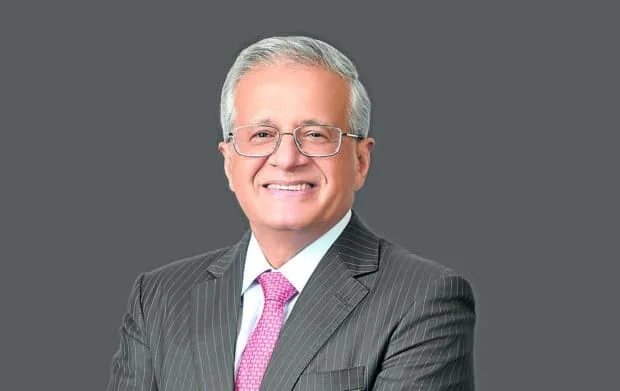
(Sandeep Uppal is CEO and head of banking at HSBC Philippines.)