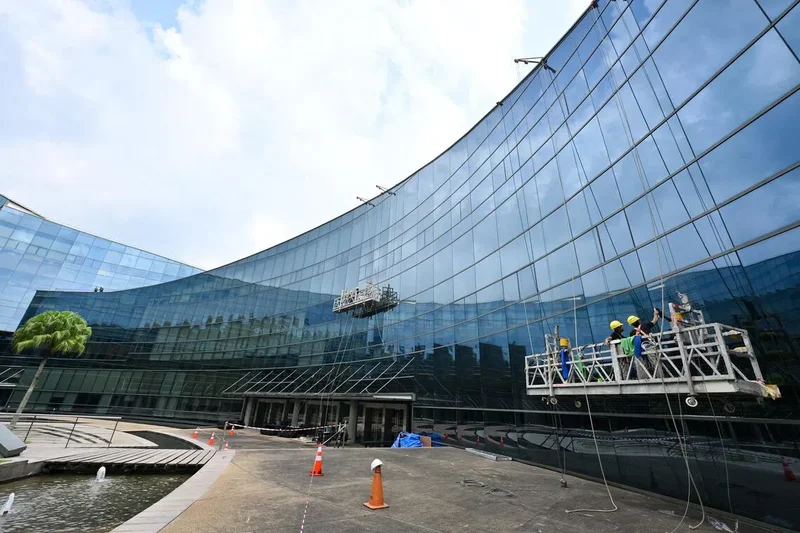
NTU retrofits building to prevent fatal bird collisions
AI generated
SINGAPORE - After years of advocacy by students, a Nanyang Technological University (NTU) building has undergone a critical makeover to prevent fatal bird collisions as the academic year begins this August.
Since the completion of the School of Art, Design and Media (ADM) building in 2006, students have watched scores of birds crash into the gleaming building on the fringe of the forested Western Water Catchment.
These range from the yellow-rumped flycatcher to the black-backed dwarf kingfisher and Japanese sparrowhawk.
This happened because the birds struggled to differentiate the reflective windows from the surroundings.
While the lucky ones survived the impact, the less fortunate succumbed to their injuries or drowned in a reflecting pool in the building’s courtyard.
Their deaths are part of a worldwide problem as urbanisation creeps into natural habitats. Annually, thousands of birds die from striking buildings. In Singapore, collision with man-made structures was named the top culprit of bird mortality cases logged since 2020.
At NTU, a student-led initiative named Project Avigate was launched in 2022 to reduce these fatalities, with students and alumni calling for the installation of anti-collision decals on the ADM building.
This came to pass on July 31.
Made possible by $119,009.92 in joint funding from a Project Avigate fundraiser and NTU, the patterned decals now cover about 800 sqm of the most dangerous glass panels identified by students.
The patterns remain largely invisible from a distance, preserving the building’s aesthetic facade, said a School of ADM spokesperson.
Installed ahead of the annual southward migratory season, when birds arrive in Singapore to flee winter in the northern hemisphere, the decals are expected to last about seven years.
The School of ADM spokesperson said there are no plans to apply decals to other parts of the school, as addressing the identified flight path resolves the primary area of concern for collisions.
Project Avigate co-founder Tang Kean Seng described the installation as “absolutely incredible and surreal”.
It marked the culmination of four years worth of patrols, documentation and a fundraising campaign that secured $60,000 from the public - double the target set by the university, said Tang. The rest of the project’s cost was covered by NTU.
This built on the efforts of several batches of seniors, who had raised awareness on the issue nearly 10 years ago, according to Tang.
He said: “Institutional change takes time, but with more concerned and informed voices, we can build a constructive environment to accelerate the process.”
He added that the team was pleased to observe that the decals had limited impact on the building’s aesthetic.
Tang noted that some $36,000 remaining after the decal installation will support future education, outreach, research, and maintenance. This includes buying patrol and monitoring equipment, such as gloves and containers, which were previously funded by member donations.
Moving forward, Tang said the Project Avigate team will prioritise monitoring the effectiveness of the decals.
They hope their findings will inform broader anti-collision strategies across Singapore, with Tang noting that the team has already received encouraging queries from members of the public hoping to learn from their experience.
Meanwhile, Jestac, the contractor which installed the decals, said it has observed an increase in enquiries about anti-bird strike film since 2022, when the National Parks Board released guidelines for making buildings safer for birds.
Jestac marketing manager Angelia Kay said the film is generally recommended for properties surrounded by significant greenery and featuring large, highly reflective glass facades, as these conditions significantly increase the likelihood of collisions.
While awareness is growing, Kay noted that overall adoption of the film remains relatively limited. She declined to specify which other properties in the country have installed the material.
Said Tang: “We once again call for the wider society, especially estate and building managers to treat bird-window collisions seriously, and it would be our absolute pleasure to share our expertise and experience if anyone is considering retrofitting their building.
“For architects and developing agencies, we urge them to be extra mindful of future building designs, especially given Singapore’s greening efforts within even the urban centre.”