“The Tale of the Heike”: Japan’s Military Epic
Guideto Japan
Culture HistoryThe Tale of the Heikeis a grand military epic known for its themes of transience.
Stirring Deeds and Pathos
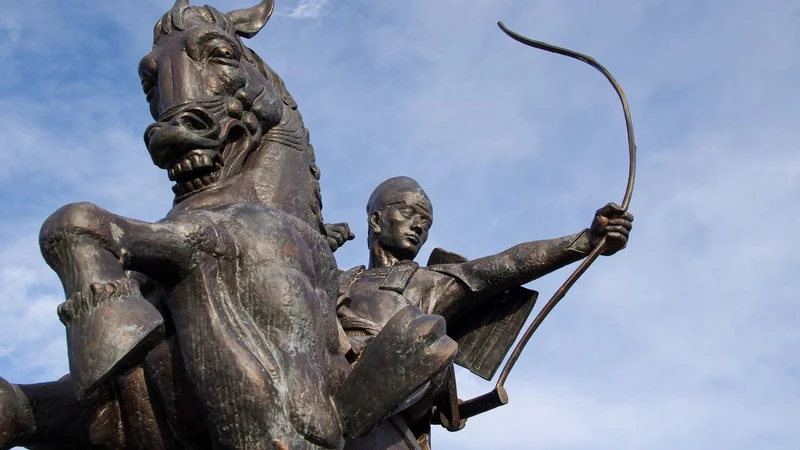
The Tale of the Heike is a thirteenth-century epic about the historical Genpei War of 1180–85, in which the Minamoto clan overthrew the ruling Taira clan. It is known for depicting stirring martial deeds, as when the archer Nasu no Yoichi shoots a fan on a distant boat, as well as moments of pathos, such as the death of a 16-year-old boy at the hands of a samurai who is moved to discover that his youthful opponent had brought a flute with him into battle.
The story became widely known through the performances of biwa hōshi, blind priestlike musicians who played the biwa, an instrument similar to the lute. The Tale of the Heike was highly influential on later literature, including particularly works for the nō theater. It has been translated into English several times, including the 2012 translation by Royall Tyler.
(Originally written in English. Banner image. A statue in Ōtawara, Tochigi, of the archer Nasu no Yoichi firing an arrow to hit a fan on a distant boat. © Pixta.)