Your Money and careers writer for the NZ Herald·NZ Herald·
Diana Clement is a freelance journalist who has written a column for the Herald since 2004. Before that, she was personal finance editor for the Sunday Business (now The Business) newspaper in London.
Subscribe to listen
Access to Herald Premium articles require a Premium subscription. Subscribe now to listen.
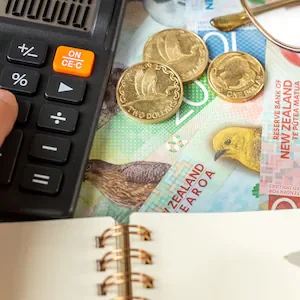
Small financial steps can break the scarcity mindset. Photo / Getty Images
Is it time to say goodbye to the “cost of living crisis”?
That doesn’t mean to say that prices are easing any time soon or incomes are going up.
Words matter. They shape how we think about problems and, just as importantly, how we respond to them.
The cost ofgoods and services is causing genuine financial problems across New Zealand. If you’re struggling to pay the rent, keep up with the mortgage, buy groceries or cope with a loss of income, the pressure is real and there may be very little room to manoeuvre.
The cost of living crisis has stretched into its fifth year. You could argue that the language of “crisis” has outlived the event that originally justified it.
Suggesting a change in language isn’t about pretending problems don’t exist. But continuing to frame the economic reality as a crisis leaves us waiting for conditions to improve instead of adapting to high living costs that may be here to stay.
A crisis is something temporary, not a permanent problem. Maybe it’s a permacrisis. But that language isn’t helpful either.
When I interviewed Professor Claire Matthews of Massey University’s School of Accountancy, Economics and Finance recently, she talked about the cost of living being high, but deliberately didn’t use the word “crisis” for very similar reasons to mine.
The way we frame problems is also very important. In behavioural economics, the framing effect is the idea that the way information is presented can influence how people perceive and respond to it, even when the underlying facts are the same.
A crisis is something we expect to pass. We endure it, wait for it to be over and hope that things return to normal. That makes sense when we’re talking about a natural disaster, a pandemic or a sudden economic shock. But what if there is no return to the old normal?
What if groceries, petrol, insurance, rent and rates simply cost more than they used to? Waiting for the “crisis” to end may not be a particularly useful financial strategy. At some point, we have to accept the new reality and work out how to live within it.
Diving into this, there is another well-established concept called the scarcity mindset. If we feel we don’t have enough money, our attention can become consumed by the immediate problem, making it harder to think about longer-term solutions.
So let’s drop the word “crisis” and approach the cost of groceries, petrol and other necessities in a different way. “This is the cost of living in New Zealand and what can I do about it?” That’s a good start. The answer may be “nothing”. But there may well be tiny steps people can take to deal with the increased cost of everything.
There are lots of other mental shortcuts and default narratives we programme our brains with that aren’t helpful. “The economy is terrible”, “the system is broken”, “everyone is struggling”, “I don’t earn enough to save”, and so on.
These may all contain an element of truth. “I can’t afford it” may be true. But these phrases can also become mental shortcuts that stop us looking for what we can change.
That’s true for everyone from low-income earners to middle New Zealand, who are also feeling the squeeze.
Breaking out of the short-term crisis mindset and turning the scarcity mindset on its head starts with reframing the narrative. “Small steps can help.” “What are my priorities?” “I have to start somewhere.” “I will focus on what I can control.” “What small change can I make today?”
These aren’t magic solutions. Changing the words we use doesn’t put more money in the bank or make the rent cheaper. But it can change where we direct our attention: from what we can’t control towards what we might be able to do and help us focus on the choices still available to us.
Small steps add up.
Catch up on the debates that dominated the week by signing up to our Opinion newsletter – a weekly round-up of our best commentary.