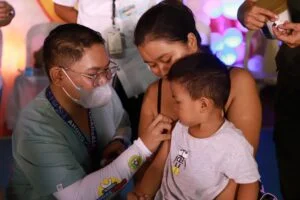
‘Protect your kids’: Governor Baricuatro bats for vaccination vs measles, rubella
LAPU-LAPU CITY, Cebu — Cebu Gov. Pamela Baricuatro has urged parents to have their children vaccinated against measles and rubella as a supplemental immunization campaign continues across the country.
In a statement issued Saturday, August 15, Baricuatro urged the public to be wary of vaccine misinformation and seek information from credible sources.
“Over the years, misinformation about vaccines has increased, and so has vaccine hesitancy. But when fewer children are protected, mas taas ang posibilidad nga mobalik ug mukatap ang mga sakit nga kaya unta nato mapugngan (the resurgence and spread of diseases that we would otherwise control become more likely),” Baricuatro said.
Baricuatro made the call as the Department of Health (DOH) carried out its Measles-Rubella Supplemental Immunization Activity (MR-SIA), which aims to reduce transmission of the diseases, especially among vulnerable populations.
She also encouraged parents who have questions about the vaccine to consult health workers rather than rely on unverified claims online.
“If you have questions or concerns, ayaw kahadlok mangutana sa atong (do not be afraid to ask) doctors, nurses, midwives, and health workers. Get your information from people who understand the science and who are there to protect your children,” she said.
Generations protected
Capitol health consultant Dr. Elisse Nicole Catalan also pointed to the success of the country’s decades-old immunization program in addressing concerns that vaccination is an experimental practice.
“It is a long-established public-health program that has protected generations of Filipino families,” she said in a social media post on August 13.
“We rarely see certain vaccine-preventable diseases today precisely because the generations before us chose to vaccinate.”
Catalan noted that the Philippines has had a National Immunization Program since 1976, with routine vaccination forming part of the country’s public health system for decades.
Supplemental drive
The DOH Central Visayas Center for Health Development launched the region-wide MR-SIA on August 10 to address gaps in vaccination coverage and help prevent the spread of measles and rubella.
The campaign runs until August 28 and covers children aged six months to just under 5 years old, with a target of reaching at least 95 percent of eligible children.
Previously, CDN Digital reported that the regional MR-SIA campaign covers all local government units in Cebu and Bohol, including the highly urbanized cities of Cebu, Lapu-Lapu and Mandaue.
The DOH targets around 630,000 children across Central Visayas for this year’s campaign.
Vaccination schedules vary by locality, with parents and guardians advised to coordinate with their local health offices or workers.
Dr. Shiela Faciol, Cebu provincial health officer, said all provincial and district hospitals will serve as vaccination sites, alongside rural health units across the province.
The Provincial Health Office will work with DOH-7 and local city and municipal health offices to bring the vaccination campaign to the barangays.
Why vaccination matters
The DOH said measles and rubella can cause serious health problems, particularly among young children, with severe cases potentially requiring hospitalization or resulting in death.
Both diseases spread through respiratory droplets released when an infected person coughs or sneezes, allowing them to move quickly through crowded settings.
Vaccination protects against both diseases and helps reduce the risk of their transmission within communities.
Cebu has also strengthened its immunization efforts through Executive Order No. 40, which Baricuatro signed to establish the Provincial Immunization Task Force.
The task force is mandated to coordinate agencies and support the implementation of the MR-SIA across the province.
Disclaimer: The comments uploaded on this site do not necessarily represent or reflect the views of management and owner of Cebudailynews. We reserve the right to exclude comments that we deem to be inconsistent with our editorial standards.