Sign in. It’s quick, free and it’s up to you.
An account is an optional way to support the work we do. Find out more.
IT’S A DAY of rest, and you may be in the mood for a quiet corner and a comfy chair.
We’ve hand-picked some of the week’s best reads for you to savour.
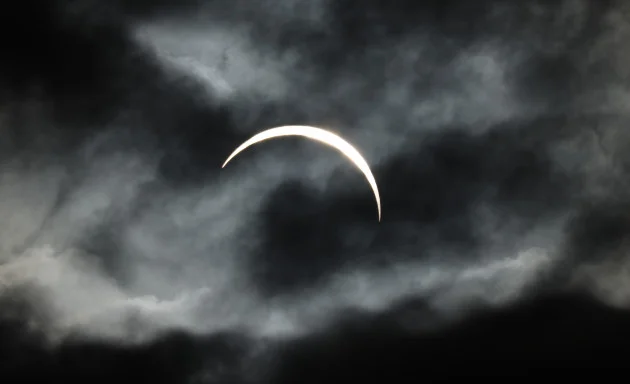
In case you missed it, an exceptionally rare solar eclipse was visible in Ireland Wednesday evening. This article from the BBC explores how the feeling of awe which may be inspired by events such as an eclipse can impact the brain.
(BBC, approx. seven mins reading time)
“There are few events more awe-striking than the series of celestial coincidences that allow us to experience a total solar eclipse. It relies on the Moon being the exact size and distance from Earth, and in the right orbit to pass in front of the Sun and completely block out its light for a few moments. Witnessing such an astonishing event could, according to the research, inspire us all to find greater humility and care for others.”
Inflammation is the body’s natural defence response to injury, infection, or harmful irritants. Recently scientists have discovered that chronic inflammation may not just be a response, but something which increases the risk of other disorders, including cancer.
(The New York Times, approx. 15 mins reading time)
“The problem is that inflammation isn’t a single entity — a virus or cell we can target with a particular drug or therapy. Instead, it’s the product of an incredibly complex regulatory network that we’re just beginning to understand. As Cohen put it to me: “Inflammation is basically a set of systems that says something’s going wrong.” Turning it off without knowing exactly why it’s present, then, risks doing more harm than good.”
The new biopic about the late chef and food writer Anthony Bourdain came to Irish cinemas this week. But is it properly honouring his life? The writer of this BBC review doesn’t think so.
(BBC, approx. five mins reading time)
“It evokes a good sense of mid-70s period detail, and there are compelling performances throughout from Sessa, Jones, her fellow Brit Leo Woodall as Bourdain’s disreputable co-worker and Antonio Banderas as the restaurant’s owner. But the latter two are both fictionalised characters, and it’s glaring how many of the real-life kitchen staff from the book are sidelined in the story.”
The Canadian queen of country pop has been releasing music since the early 90s, yet some of her biggest fans weren’t born until 2012. What is it about Shania Twain that appeals to so many different generations?
(The New York Times, approx. 15 mins reading time)
“At Wembley there were indeed gaggles of girls of all varieties: moms and daughters, dads chaperoning bunches of friends, roving packs of glitter-covered teenagers, young professional women in fannish cosplay. I saw plenty of Styles-inspired fashion — heart sunglasses, feather boas and ‘Respect Your Mother’ T-shirts, shorthand for the kind of Forever 21 feminism that’s part of his lingua franca. But there was also plenty of the leopard print that’s a Twain signature. ‘We cross audiences,’ she said. ‘We definitely do.’”
The Guardian has spoken to several women living under Taliban rule in Afghanistan to see what a typical day looks like in a variety of different roles, including an undercover journalist, an ex-soldier and a baker.
(The Guardian, approx. 25 mins reading time)
“I have already lived through two house searches by Taliban officers. Since then, every knock at the gate fills me with dread. What if it is the Taliban? What if they enter the house while I am working on a report about a killing, interviewing a transgender person or writing the account of a survivor of violence? A thousand scenarios race through my mind and fear consumes me.”
This longread from The Guardian questions why exactly we haven’t yet found other intelligent life.
(The Guardian, approx. 20 mins reading time)
“This expansion of human horizons raised an awkward question. Since the 16th century, when Copernicus showed that Earth is not the centre of the cosmos, modern science had learned to embrace the idea that there is nothing unique about our planet. And if Earth is statistically average, there is no reason why it should be the only home of intelligent life. Given the age of the universe – about 13.8bn years, according to current estimates – it should be full of species with technology far more advanced than what we have come up with in a few thousand years of civilisation. Yet we can’t find any trace of them.”
In 2011, a retired teacher was tending to his horse when he noticed a black bear and an African lion watching him. Not a usual sight in Ohio. It turns out the man’s neighbour, Terry Thompson, had freed his large private collection of exotic animals before dying by suicide. 48 of the animals were killed by local police, two were presumed eaten by the other animals, and six were relocated to a zoo.
(GQ, approx. 40 mins reading time)
“Her son remained trapped in the barn. From there, looking through a north-facing window, he watched the menagerie grow. Along came a wolf. And a second bear, this one much larger than the first. And there was the lion he had seen before, now pacing back and forth. And also a lioness, anxiously scuttering around. ‘And then,’ he says, ‘I saw a tiger. I’m telling you, the lion is bad enough, and the lioness is bad enough, and the wolf is bad, and the bear, but…don’t be around the tiger. The tigers are actually bigger than the lions if they’re fully grown. He started snarling, and went after the horses.’”
To embed this post, copy the code below on your site