- Snake Men by Zach St George (W. W. Norton £22, 272pp)
Physical copies of Hoser’s seventh issue of the Australasian Journal of Herpetology didn’t seem to be lodged in five large public libraries, as required by Article 8.6 of the International Code of Zoological Nomenclature.’ If that’s the kind of sentence that tickles your fancy, this is the book for you.
It features long-running battles between cranky misfits, all desperate to prove that their names for different types of Australian snakes are the right ones. They’re the kind of people who go looking for snakes just so they can go looking for a fight.
We usually think of science as a very precise calling, a world where lines are clearly drawn and facts are certain. But actually the opposite is true – the quest for new knowledge constantly casts doubt on old knowledge, and discoveries redraw the boundaries.
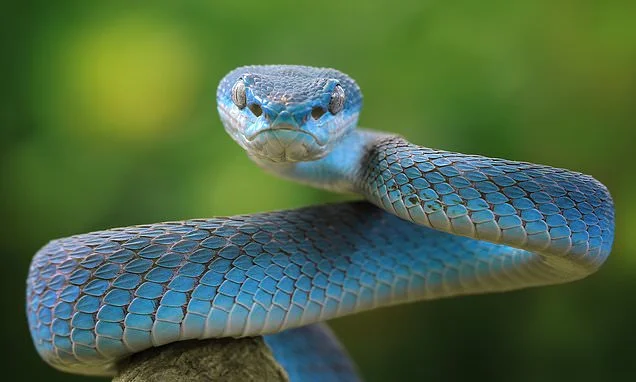
A snake by any other name: Taxonomists who are less inclined to create new species are called ‘lumpers’, while those keen to name as many as possible are called ‘splitters’
Where, for instance, does one species end and the next begin? How different does a creature have to be from its near-relatives before it stops being a relative at all? Taxonomists (creature-namers) who are less inclined to create new species are called ‘lumpers’, while those keen to name as many as possible are called ‘splitters’. The feuds between them can get vicious.
During the 1980s the work of Richard Wells and Ross Wellington provoked a furious reaction from the Australian Society of Herpetologists. (This body, incidentally, is not the Australian Herpetological Society. Of course it isn’t.)
The pair were viewed as splitters, and the society called for their list of names to be consigned to the Official Index of Rejected and Invalid Works in Zoology: ‘if their three papers… are not suppressed, the effects on Australian herpetology will be devastating’.
The problem is that pretty well anyone can call a species anything they like, and it’s a tradition that, to prevent confusion, subsequent scientists should stick to that name. Not everyone resists the temptation to be humorous.
There are flies called Carmenelectra shehuggme and Carmenelectra shechisme (after the Baywatch star). The same man also named flies Pieza pi and Pieza rhea.
The beginning of the alphabet inspires people too. The 1850s saw an orchid named Aa, then in 1906 a beetle was christened Aaata, while in 2013 another beetle became Aaaaba. You wouldn’t want to get stuck with these people at a party.
Snake Men is available now
Mind you, at least they have respect for their animals. They handle the snakes and reptiles that dominate their lives with love and care – one, Raymond Hoser, exhibits them at children’s parties, safe in the knowledge that it’s very rare indeed for a snake to bite anyone if it hasn’t first been provoked.
In the United States people killed by snakes are almost always associated with one or more of the ‘four Ts’ – tattoos, trucks, tequila and testosterone.
And the snakemen are showmen. Eric Worrell, the most famous herpetologist of his day, opened a bag during his first TV appearance in the 1950s to find that someone had trodden on and killed the snake he was due to handle.
He ‘milked’ it for poison anyway, jiggling it to make it seem alive. ‘Miraculously two drops of venom rolled down the glass beaker… As I bundled the body into the bag, I overheard one of the technicians: “Must take a colossal nerve to handle a snake like that.”’