- See more This is Money on Google - save us as a Preferred Source
When a family sees a product advertised at half price, the starting price must mean something.
That is why Prime Minister Andy Burnham is right to challenge fake 'was' prices, invented reductions and other promotions that make a deal look better than it really is.
Every supermarket should welcome clear rules and firm enforcement. Trust matters in retail, especially when budgets are under pressure.
Which? reported this spring that one in ten UK households was skipping meals to keep costs down, while 85 per cent of adults were worried about food prices. Against that backdrop, all supermarkets have a duty to do everything they can to keep prices as low as possible.
But the debate about misleading discounts should go further than checking whether a crossed-out price once appeared on a shelf.
There is another question worth asking: after every card has been scanned and every promotion applied, is the customer actually getting a low price?
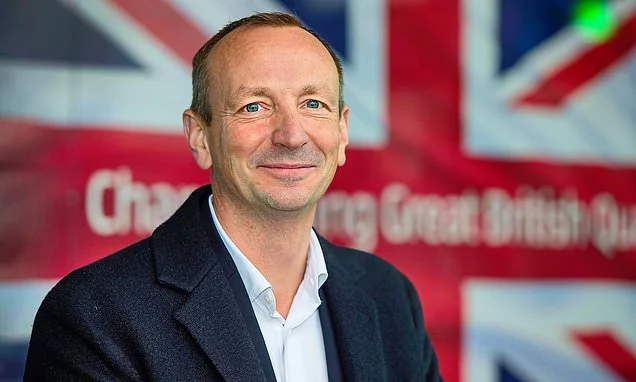
In charge: Giles Hurley is the chief executive of Aldi UK
Most of Britain's major full-price supermarkets now run huge promotional schemes badged as loyalty programmes.
Selected products are offered at a member price, while those without the right card or app pay more. Those shelf labels tell shoppers how much they are saving against a price set by the retailer itself. They don't tell them whether they could buy the same shop for less elsewhere.
There is an important distinction here. The Competition and Markets Authority found in 2024 that 92 per cent of the loyalty-priced products it examined offered a genuine reduction against that supermarket's usual price.
That is significant, but it only tells us part of the story. A discount can be genuine, and the final price can still be expensive. A loyalty badge is not proof that shoppers are getting the best value.
Independent comparisons make the point. In July, Which? priced a list of 93 everyday grocery and household items across eight supermarkets, taking loyalty discounts into account. The average total at Aldi was £158.05.
The same list cost £187.86 at Sainsbury's with Nectar prices and £188.45 at Tesco with Clubcard prices. In other words, even after the loyalty offers were applied, shoppers would have paid about £30 more. The result made Aldi the UK's cheapest supermarket for the ninth consecutive month.
A spectacular saving on one product can feel rewarding. But families don't pay their grocery bills one product at a time. What ultimately matters is the total at the checkout. A big discount from a high price can still leave you paying too much.
At Aldi, we start from a different place. Our everyday low pricing model is designed to make the core grocery shop affordable from the outset. The same low price is available to every customer, every day.
There is no card to remember, no app to download and no personal data to exchange before you can access it. Customers shouldn't have to plan their weekly shop around whichever products happen to be on offer that week.
We can do that because of the way Aldi operates. We keep our range carefully selected, buy in high volumes, build long-term relationships with suppliers and remove complexity from our operations.
That efficiency helps us hold down the price of thousands of products, rather than using a handful of eye-catching promotions to create an impression of value.
Of course, grocery prices can change as the cost of ingredients, energy, transport and labour changes. No responsible retailer can pretend otherwise. The point is that the pricing philosophy should remain constant: start low, stay competitive and make the price available to everyone.
That last point matters. Consumer groups have warned that millions of people can be excluded from some loyalty prices because of age, address requirements or limited digital access.
Nobody should pay more for an essential simply because they do not have a smartphone, cannot join a scheme or choose not to hand over their data.
The government's consultation should therefore be rigorous and targeted. Genuine promotions can help customers, and retailers that follow the rules should not be treated as wrongdoers.
But reference prices must be meaningful, savings claims must be clear and action against deceptive practices must be swift. Just as importantly, the public conversation about value should focus on the final bill, not the percentage printed on the loudest label.
Government cannot legislate every supermarket into being cheaper. It can make sure that claims are honest and comparisons are fair. After that, it is up to us as retailers to compete. Labels won't solve the cost-of-living challenge. Lower prices will.
Every supermarket should ask itself not how large it can make a saving appear, but how low it can make the total on the weekly grocery bill of families across the UK.
If our industry wants to demonstrate loyalty to British shoppers, it should put that loyalty where every customer can see it: on the shelf, in the basket and on the final bill. No card required.
Giles Hurley is chief executive of Aldi UK.
DIY INVESTING PLATFORMS
Compare the best investing account for you