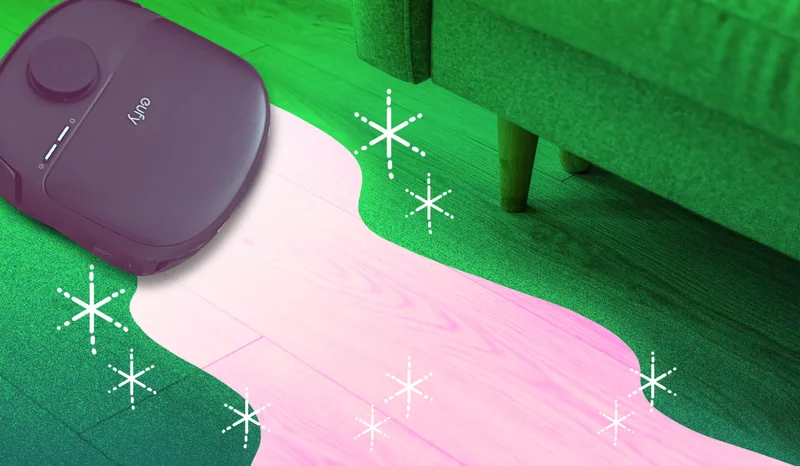
Budget-friendly robot vacuums are way smarter than they used to be. Even without all the fancy features, the best cheap robot vacuum can absolutely shave some time off your chore routine — if it works as it's supposed to.
While I do have some good tips for making any robot vacuum work better, how do you ensure a cheap vacuum doesn't suck? By taking a recommendation from someone who's tested them personally. I've spent years testing the latest robot vacuums in my own apartment, always keeping the "bang for your buck" mentality in mind. Here are my top three recommendations for an affordable robot vacuum in 2026, most of which often go on sale for less than $500.
Overview
These are the tech, tools, and products — from laptops to e-readers, from earbuds to robovacs, and more — that Mashable ranks best in class.
Table of Contents
Many of the suspiciously inexpensive robot vacuums cut corners so close to the sun that they quickly shift from helpers around the house to agents of chaos. The more basic the tech under the hood, the more likely you are to come home to a vacuum stuck under the couch (rather than a fully swept home).
Most cheap robot vacuums don't have the suction power or brush roll system necessary to pry crumbs or pet hair out of any carpet pile. That mediocrity extends to many robot vacuum and mop combo models, which don't "scrub" so much as feebly drag a damp cloth across the floor. At that point, it'd be less of a bother to get a decent stick vacuum and do it yourself.
Long story short: Buying a robot vacuum just because it's cheap puts that glorious hands-off cleaning experience in jeopardy. But after testing countless robovacs at home over the past few years, we can personally confirm that not all cheap robot vacuums are crappy. Smart mapping and self-emptying docks are easy to find for just a few hundred dollars, and more premium features like small obstacle avoidance and automatic mop washing and drying are often available below $500.
The Good & The Bad
- Can often be found on sale, despite being brand new
- Very compact self-empty dock/mop washing station
- Pressurized roller mop rinses itself in real time
- Square shape helps clean close to walls
- Competent laundry and cord avoidance for the price
-
Vacuums slowly and meticulously on second pass, especially along rug edges
-
Not very slim with LiDAR tower raised
- Kind of loud, especially when auto-emptying
- Navigation is shaky on occasion
My review
Who it's for
The new Eufy C28 is the cheapest roller mop robot vacuum out there in 2026, expanding the highly absorbent mopping technique to households that don't want to spend $1,000. The Eufy C28's heavy-duty scrubbing would be ideal for spill-prone households, perhaps from young kids or multiple pets. The fluffy damp roller is particularly good for pet hair on hardwood or tile floors.
Why we picked this
Roller mops are the most effective type of robot mopping pad for large liquid spills, but they were strictly a high-end purchase until Eufy threw the C28 into the ring in February 2026. This roller mop gets rinsed nine times per second as it's mopping as a buffer against smearing a spill or dirty water across the floor.
The Eufy C28 thoroughly sopped up a variety of liquids and chunkier splatters in my apartment, including wine and chunky salsa on hardwood and conditioner that exploded on the tile bathroom floor. Any residue left after the first mopping pass was cleaned up when I sent the C28 for a second pass (a setting I always toggle on for spot cleaning with any robot vacuum).
The roller mop is just as helpful for the pickup of fine pet hair on hard floors, as well as dry debris with a powdery texture like dust, protein powder, and cat litter tracked out of the litter box. I used my Dyson PencilVac's laser to test the Eufy C28's dusting skills, and very few specks were left behind. The C28's unique square shape actually does help it scoot closer to walls for better edge cleaning — a smart backup plan since the C28's roller mop doesn't extend into corners like the Roborock Qrevo Curv 2 Flow's does. When vacuuming rugs, the Eufy C28 picked up around 98 percent of crushed potato chips on a tufted rug and balls of lint and cat hair from a high-pile furry rug.
Details
The Good & The Bad
- Frequently on sale
- Five-digit suction power is rare under $400
- DuoBrush prevents hair tangling
- Extendable side brush helps in corners
-
LiDAR smart mapping is quick and accurate
-
Basic mopping
Who it's for
The Dreame D20 Pro Plus is an impressive, affordable robot vacuum for homes with multiple pets. It has stronger suction power than most robot vacuums in the $400-and-under price range and delivers commendable pet hair pickup, even on plush carpet. Even if shedding cleanup is a daily task, the upgraded dust bag should still last for four or five months before needing to be replaced.
The D20 Pro Plus dock is compact and quiet, and it self-empties, making it a good robot vacuum for apartments or homes with thin walls that need peace and quiet.
Why we picked this
Dreame has amassed serious clout from its ultra-premium flagship models like the Dreame X60 Max Ultra Complete. But Dreame actually puts a good amount of thought into its affordable robot vacuums. I recently tested the Dreame D20 Pro Plus and don't have much bad to say. It's been such a reliable little addition to my apartment. It doesn't take up much space, always gets to the right room without getting lost, and doesn't miss much when vacuuming. That's the prototypical bang for your buck.
The D20 Pro Plus' carpet performance particularly stood out to me. 13,000 Pa of suction power is quite mighty for this price range, and that was evident when tackling the medium- and high-pile rugs in my apartment. I can hear the D20 Pro Plus automatically boost its suction power when it detects a rug. Though you can schedule up to three back-to-back cleanings for good measure, the D20 Pro Plus has left my living room, kitchen, and hallway rug so spotless that extra passes aren't really necessary. It consistently aces everyday debris like crushed chips and small crumbs, cat hair, and cardboard flakes from a heavily used cat scratcher.
I appreciate how streamlined the user experience is here. The initial mapping run is accurate and color-coded, and tweaking room borders or drawing zones in the app isn't finicky. Manual maintenance isn't required on your end very often, either. The self-empty dust bag has a capacity of up to 150 days (compared to the 30 to 60 days that we typically see from most other self-emptying vacuums). The dual roller DuoBrush underneath uses a mix of spiraled brush materials to dig into carpet and loosen hair without it getting tangled around the rollers — another huge design perk for shedding.
Details
The Good & The Bad
- Almost always on sale
- Higher suction power than the Roomba i5 or Roomba 694
- LiDAR mapping correctly identifies specific rooms
-
Four versions mix and match mopping and automatic emptying
-
Doesn't always smoothly get over rugs
- No small obstacle avoidance technology
- Not enough suction power for shedding from multiple pets
UPDATE: iRobot filed for bankruptcy on Dec. 15, and has been acquired by Roomba manufacturer Picea. While Roombas are still available to buy like usual, I would recommend deprioritizing a Roomba in your robot vacuum search. There are robot vacuums with better features at better prices out there, and with iRobot's rocky future now layered in, even the best Roomba vacuums aren't worth it.
Who it's for
If you're someone who would simply prefer true Roomba street cred, the Roomba 105 series has a variety of models that would be solid for a small space with relatively light foot traffic.
There are four versions total to customize your purchase based on your home's needs: a standalone mopping and non-mopping version, and a self-emptying mopping and non-mopping version. They all have huge discounts quite often, dropping both standalone models below $200 and both self-emptying models below $300.
Why we picked this
There's no reason to still consider the outdated Roomba 694 or Roomba i5 when the new Roomba 105 exists. iRobot finally made some value-packed updates to the affordable end of the Roomba spectrum after years of charging way too much for cheap Roombas that couldn't compete with budget-friendly vacuum cleaners from other brands.
The biggest difference between the i5 to the 105 in suction power: The Roomba 105 has 60 times the suction of older 600 series Roombas (think Roomba 694 or Roomba 675) while the Roomba i5 has just 10 times the power of the 600 series. This translates to 7,000 Pa in suction power for the 105, a metric that iRobot never used before 2025. That suction power boost was evident in practice: On my apartment's hard floors, the Roomba 105 nearly perfectly cleared kitty litter, protein powder, and spilled seasoning like garlic salt. All but one or two heavier pieces of dry cat food were sucked up, which the 694 just pushed around. On rugs, most loose crumbs and surface fuzzies were grabbed, though embedded cat fur still needed the oomph of a stick vacuum.
The other big update involves the circular laser tower atop this Roomba. iRobot finally made the switch to LiDAR-based smart mapping with its 2025 Roombas. That ultimately means faster, more precise room mapping, despite the new Roomba Home app somehow feeling older and clunkier than the original one. Either way, the Roomba 105 successfully made it to my selected rooms and zones almost every time.
Details
The Good & The Bad
- An affordable self-emptier
- No half-baked bells and whistles
- Low profile helps it navigate under furniture
- LiDAR mapping works well on the first pass
-
Holds 60 days of debris
-
Not the strongest edge cleaner
- Can sometimes get stuck
Who it's for
Not everyone wants a $1,000 robot vacuum that can mop. Not only do those expensive bots come with an oversized dock, but they're overkill for lots of users, both in terms of price and feature set. For folks who live in apartments and smaller homes, the self-emptying Eufy C10 is sized (and priced) just right.
Why we picked this
Mashable Tech Editor Timothy Beck Werth tested this vacuum.
Compared to the flagship robot vacuums we're used to testing, the Eufy C10 suffers in comparison. But for its price, it offers everything you need to keep floors clean without regular elbow grease, including self-emptying. This bot reminds us of older ultra-thin Eufy models, and we like its compact self-emptying station, which can hold 60 days of dust and debris. Plus, its ultra-thin 2.85-inch size helps it navigate in tight spaces.
Unfortunately, this bot's 4,000 Pa suction power is pretty meager (especially compared to the 3i G10+), and its edge cleaning needs improvement. Still, Eufy robot vacuums have always had strong mapping capabilities, as well as a user-friendly app.
Details
Recent changes to this guide
August 2026: I removed the 3i G10+ due to relevancy and stock issues online. The Dreame D20 Pro Plus was added in its place as the best budget robot vacuum for pet hair.
March 2026: I added the Eufy C28 as the best budget roller mop robot vacuum. (It's also the only "budget" roller mop robot vacuum out there right now.) I consider this a replacement for the Eufy X10 Pro Omni, which was the best budget self-washing and drying station for much of 2025.
July 2025: I replaced the Roomba 205 DustCompactor with the 3i G10+. The G10+ has significantly stronger suction and better mapping than the Roomba, plus more advanced features like small obstacle and pet waste avoidance and a livestream pet camera.
Frequently Asked Questions
At any given time, Walmart and Amazon typically have a handful of robot vacuums from various small brands on sale for between $70 and $90. The cheapest robot vacuums from better-known brands like Shark or iRobot range between $149 and $199 on sale.
As a senior shopping reporter, I have been testing popular robot vacuums for Mashable since 2019. I currently test vacuums in a three-bedroom apartment with two cats, and it needs a lot of vacuuming. All the robot vacuums I review go through a series of standardized tests. In addition to overall bang for your buck, those tests cover the four main pillars of robot vacuum competence:
Each bot is sent out to tackle various spills, debris, levels of pet hair, and multiple floor types. The vacs that mop perform extra tests on stains and spills.
I keep tabs on navigational accuracy when it comes to smart mapping, finding specific rooms and zones, and identifying small obstacles.
The ideal robot vacuum will be a relatively seamless addition to your household. Because if it’s loud, an eyesore, or generally a pain to use, you're not going to want it in your house at all.
Anyone aiming to avoid manual sweeping may also want to avoid manual upkeep of a vacuum. Many robot vacuums automate their own dust bin emptying, mopping pad washing, and more — the more self-sufficient they are, the better.
Leah Stodart is a Philadelphia-based Senior Shopping Reporter at Mashable where she covers and tests essential home tech like vacuums, TVs, beauty devices, and eco-friendly hacks. Her ever-evolving experience in these categories helps her make thoughtful recommendations for how to spend your money during shopping holidays like Black Friday, which Leah has been covering for Mashable since 2017.