Statistics Canada numbers show Canadians becoming less accepting of gender diversity
Recent report says Sask. has the lowest acceptance rate in the country
A new Statistics Canada report says Canada is becoming less accepting of gender diversity.
In 2025, 77 per cent of women and 70 per cent of men surveyed said they agreed or strongly agreed that people should be free to express their gender however they choose.
That’s a drop from 2018, when 85 per cent of women and 78 per cent of men agreed.
In Saskatchewan, 69 per cent of women and 60 per cent of men surveyed last year said they agreed, making it the province with the lowest acceptance of gender diversity in the country.
Women in Saskatchewan specifically were down 14 percentage points from 2018, when 83 per cent agreed people should be free to express their gender however they choose.
Since 2018, Saskatchewan and Alberta's provincial governments have passed legislation targeting trans and gender diverse youth, such as Saskatchewan’s Parents’ Bill of Rights, enacted in 2023.
Confusion and fear are possible reasons why people are becoming less accepting of gender diversity, said Wayne Bernakevitch, founder of the Regina Civic Awareness Action Network, an organization that lobbied in favour of the Parents’ Bill of Rights.
“They're concerned with finding a house to live in, you know, how do you pay for the next week's groceries? And so getting into all of this is just a great distraction in their life,” Bernakevitch said in an interview with CBC’s Blue Sky.
Politicians play a critical role in the creation of these attitudes, Leah Hamilton, a professor of business, communication studies and aviation at Mount Royal University, told Blue Sky.
“We have seen over and over throughout history, especially during periods of perceived or real competition for resources like jobs and housing and other things, that politicians will often create scapegoats,” Hamilton said.
“Conservative politicians and political parties are pointing towards marginalized communities as responsible for economic instability and really kind of shirking their responsibility onto a marginalized group that has very little power,” Corinne Mason, a professor of women and gender studies at Mount Royal University, told Blue Sky.
The Statistics Canada survey was conducted between October 2024 and July 2025. In an interview with Blue Sky, political commentator Jack Saddleback said it’s important to take the timing of the survey into account.
“This was actually taking place during the American election and where we had seen the new administration that was elected in November of 2024 was running on a campaign of hate and disinformation,” Saddleback said.
The Statistics Canada report indicates attitudes from the U.S. election may have leaked across the border, Saddleback said.
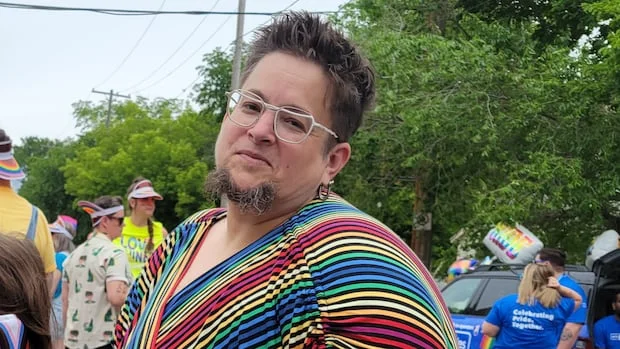
The politicization of trans and gender diverse people in the most recent Saskatchewan provincial election could also play a role in the lower support, said j wallace skelton, an associate professor of queer studies in education at the University of Regina.
“There was a lot of rhetoric, a lot of hate, a lot of harmful conversation,” skelton told Blue Sky.
Families are afraid because of the shift in attitudes, they said.
“We heard from parents in Saskatchewan that they felt less safe, that they felt their kids were less safe."
However, skelton said there is still support for gender diverse people in the province.
“We are also seeing a population that is rejecting that and saying that people's safety is more important, and people being welcomed and included is actually what we want to see happening in schools,” skelton said.
Despite shifting attitudes, skelton doesn’t think 2SLBTQ+ people leaving Saskatchewan is the answer. Pushing back against hate could help attitudes shift back the other way.
“I feel a deep personal commitment that trans and gender diverse people belong in our communities,” skelton said.
“We are everywhere. We have always existed. We need to be supported and cared for and recognized where we are.”