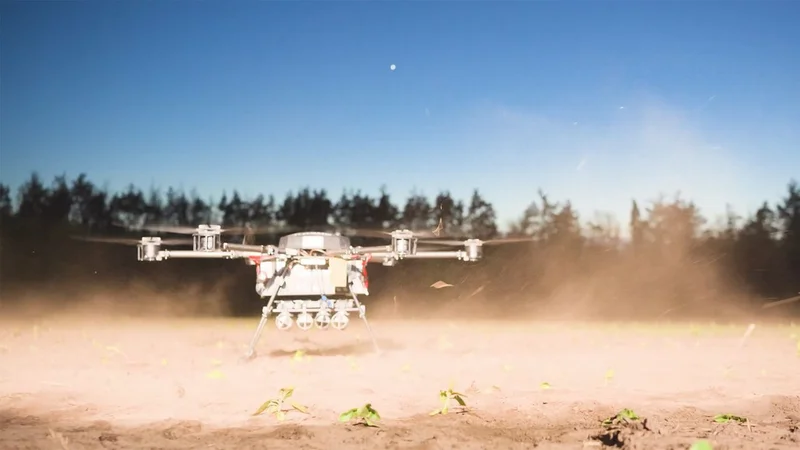
A drone that destroyed a Tupolev Tu-95MS strategic bomber at Russia's Engels-2 air base last month turns out to be a MICH 2000, a reverse-engineered copy of a Chinese aircraft Beijing refused to sell to Ukraine, according to a factory report from defense outlet Oboronka. Built by an unnamed manufacturer exclusively for the SBU's 'Alpha' special operations center, the flying-wing drone carries up to a 60 kg warhead as far as 2,000 km and costs $48,000 in its base configuration, $2,000 less than the Chinese ZTK-150 it was copied from. It’s understood that Ukrainian developers covertly photographed the Chinese production line while attending pilot training there in late 2023.
China restricted exports of civilian drones in the summer of 2023 after Ukrainian units converted airframes like the Mugin-5 PRO into deep-strike munitions. A Ukrainian development team traveled to a Chinese factory late that year, found ZTK-150s in production, and negotiated to buy the manufacturing technology, but the factory's management blocked the sale.
Intermediaries offered pilot training instead, and the team accepted. "In parallel with the training, we photographed everything that was there," one team member, whom Oboronka didn't name, said in the report, which was cleared in advance by the manufacturer and the SBU. The team flew home with eight drones.
The first Ukrainian-built prototype crashed 1 km into its maiden flight in the summer of 2024, and Russian electronic warfare downed the third test aircraft. In the type's first combat sortie that October, one of three drones was shot down and the other two fell roughly 10 meters short. Yet, Alpha ordered production anyway.
Almost nothing of the ZTK-150 remains in the current MICH 2000 beyond its outline, the manufacturer told Oboronka. Two years of work localized engines, warheads, fuselages, and rocket boosters across dozens of Ukrainian suppliers, putting domestic content at 85% of the drone's value. Fitting a jam-resistant CRPA navigation antenna, however, cuts that to 55%, because the antennas cost $20,000 to $25,000 depending on module count and only a handful of companies worldwide make them. Ukraine has been chasing jam-resistant navigation across its strike drone fleet since at least 2025.
The company builds around 6,000 drones a year across eight versions, with buyers choosing analog, digital, or Starlink communications, and reinvests roughly $1 million a month in R&D while scaling toward 10,000 units annually. Fire Point, maker of the FP-1 that flew 2,500 km to hit Russia's largest refinery, targets 100,000 drones a year, though the FP-1 serves many units and the MICH 2000 has one customer.
Alpha has launched thousands of MICH 2000s at hundreds of targets, per the manufacturer, including a Wildberries logistics hub in Ryazan oblast, an anti-Starlink electronic warfare system near Gelendzhik, and the port of Ust-Luga, where one raid put more than 20 drones over the target. The SBU said the Engels-2 strike tore the tail section off the Tu-95MS, and satellite imagery later confirmed the bomber's destruction. A successor called MICH+ drops the type's forward canards and pairs a 70 kg warhead with a 600 km range at a target price near $40,000.
Get Tom's Hardware's best news and in-depth reviews, straight to your inbox.
Luke James is a freelance writer and journalist. Although his background is in legal, he has a personal interest in all things tech, especially hardware and microelectronics, and anything regulatory.