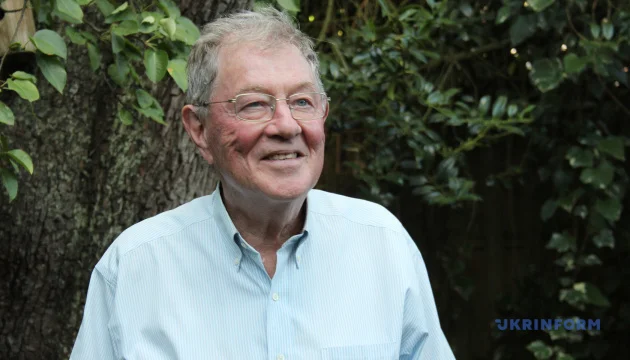
He said this in an exclusive interview with Ukrinform's correspondent in The Hague.
"We failed to understand what Putin's intentions really were. Look at what happened in 2008. After the Munich Security Conference came the NATO summit in Bucharest with that infamous non-decision. Ukraine was not granted a Membership Action Plan. NATO said at the time that Ukraine might one day become a member of the Alliance, but it offered no concrete path toward membership. In practice, that meant that Ukraine was left in a kind of gray zone between Putin and NATO. Putin concluded that Ukraine was his 'backyard.' After that, as you know, he moved into Georgia, and later he decided to move into Ukraine. So although I categorically reject the claim that NATO is responsible for this war. That is simply not true, full responsibility lies with Putin. NATO nevertheless played a certain role in this drama," he said.
According to Serry, "had NATO given a more concrete response to Ukraine's aspiration to join the Alliance in 2008, I believe this war might not have happened. But the mindset in the West at that time was different. Ukraine remained to some extent a terra incognita a country about which nobody really knew what to do. Ukraine was asking to join the European Union and NATO, but it was not taken sufficiently seriously. There were also objective reasons for that: corruption and serious internal problems within the state. At that time, the country was indeed not ready for such steps."
Read also:Ex-Dutch ambassador to Ukraine says he did not expect relations with Russia to turn into war
In his opinion, Russia's aggression against Ukraine has much deeper roots than Putin's personal decisions.
"It goes much deeper than that. In Russia there is a feeling that it has lost something that supposedly belongs to it. This is also linked to claims to the legacy of Kyivan Rus, which I consider absurd. When someone claims to be the sole legitimate heir to events that took place so long ago, I have always found that deeply problematic, especially when Russia uses it as an argument to renew its claims to Ukraine. That is exactly what Putin has done, but he is not the only one. If you look at many Russians in Russia, that feeling genuinely exists. So in a certain sense this war may have been inevitable if the Russian leadership under Putin had made it its goal to bring Ukraine back under Moscow’s control and restore an empire. In that case, the full-scale invasion appears as a logical consequence of that policy. But I never looked at this crisis in that way. As someone who later worked with NATO and the United Nations, I very much hoped that such a large war could be avoided," he said.