Click here for more articles by Kormedi.com.
Friday marked the final of the traditional three hottest days of summer, known as "sambok." As the heat of summer wears you down and your appetite and energy levels decline, a bowl of nourishing food is a welcome way to replenish your strength. While "samgyetang" (chicken soup with ginseng) and grilled eel are favorites during the summer, those looking for something different might want to try octopus or duck.
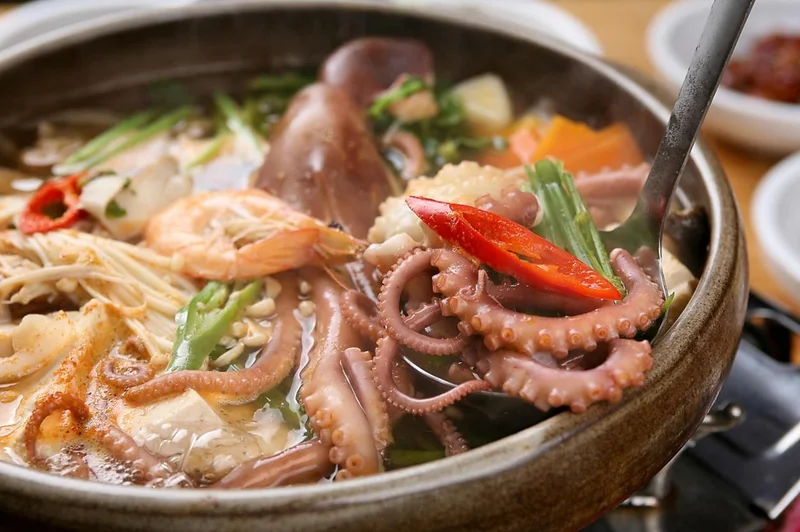
"Yeonpotang" is a clear soup made with octopus, Korean radish, napa cabbage and water parsley. The chewy octopus and fragrant water parsley add flavor, while the light broth can help revive an appetite dulled by the summer heat. "Baeksuk," meanwhile, is made by slowly simmering duck or other fowl with medicinal herbs, resulting in a rich broth and tender meat. A hearty serving can leave you feeling full and satisfied.
Here is a look at the nutritional profiles of the two summer dishes, as well as what to watch out for when managing blood sugar.
Yeonpotang: Watch sodium levels
Octopus, the main ingredient in yeonpotang, is rich in protein and low in fat. In addition to protein, which is needed to build muscles and other body tissues, octopus contains taurine, iron and phosphorus. Taurine is an amino acid abundant in shellfish and other marine invertebrates such as squid and octopus, and is involved in processes including bile acid formation and cellular function.
Another advantage is that yeonpotang is typically served with a variety of vegetables, including Korean radish, napa cabbage, water parsley and mushrooms. The broth gets its refreshing flavor from the vegetables, while the water parsley adds a subtle aroma. The dish can be a good option for those who find greasy foods too heavy.
According to nutritional data from the Ministry of Food and Drug Safety, a 1,000-gram serving of yeonpotang, including the broth, contains 542 calories, 94.9 grams of protein, 9 grams of fat and 20.2 grams of carbohydrates. However, adding noodles, dumplings or fried rice can significantly increase both carbohydrate and calorie intake.
The amount of broth consumed also deserves attention. Although yeonpotang has a clear and seemingly light broth, it is typically seasoned with salt, soy sauce and fish sauce. Drinking the broth can increase sodium intake. The ministry's data show that 1,000 grams of yeonpotang contains 2,337 milligrams of sodium, exceeding the daily nutritional reference value of 2,000 milligrams.
To reduce sodium intake, it is better to focus on the octopus and vegetables and leave some of the broth behind.
Duck baeksuk: Fat and calories rise with skin
Duck is another good source of high-quality protein. For people whose appetite and food intake have declined in the summer heat, duck can provide both protein and energy in one meal. Protein is essential for building and maintaining muscles and other body tissues. Duck also contains B vitamins involved in energy metabolism, as well as minerals such as iron and zinc.
According to nutritional data from the Ministry of Food and Drug Safety, duck baeksuk contains 470 calories, 68.8 grams of protein, 20.1 grams of fat and 3.4 grams of carbohydrates per 300 grams.
Duck baeksuk contains more protein than yeonpotang, but also considerably more calories and fat. At restaurants, a whole duck is often shared among several people, so individual intake can vary depending on how much meat and broth each person consumes.
The amount of fat and calories also depends on whether you eat only the meat or include the skin and layers of fat. It is easy to assume that duck fat is harmless because it contains unsaturated fat, but unsaturated fat still provides 9 calories per gram.
Eating a large amount of duck with the skin, followed by glutinous rice and porridge, can quickly push up the calorie count of a meal. Those watching their weight may find it helpful to portion out the amount they plan to eat and focus on leaner cuts of duck.
Bigger concern is glutinous rice, noodles and fried rice
Neither duck nor octopus contains much in the way of carbohydrates on their own. What can have a greater impact on post-meal blood sugar is what is eaten alongside these dishes, such as the glutinous rice inside duck baeksuk, or noodles, dumplings or rice often added to yeonpotang.
According to the Korean Diabetes Association's food exchange system, a typical 210-gram bowl of rice contains about 69 grams of carbohydrates. Cooked noodles contain approximately 23 grams of carbohydrates per 90 grams.
If someone eats the glutenous rice that comes with duck baeksuk, the carbohydrates can quickly add up. Likewise, adding 180 grams of cooked noodles to yeonpotang would contribute approximately another 46 grams of carbohydrates.
For those managing their blood sugar, it can help to eat the protein and vegetables first. Doing so may help prevent overeating carbohydrate-rich items later in the meal.
This article from Kormedi.com, Korea’s top health care and medical portal, is translated by a generative AI system and edited by The Korea Times.