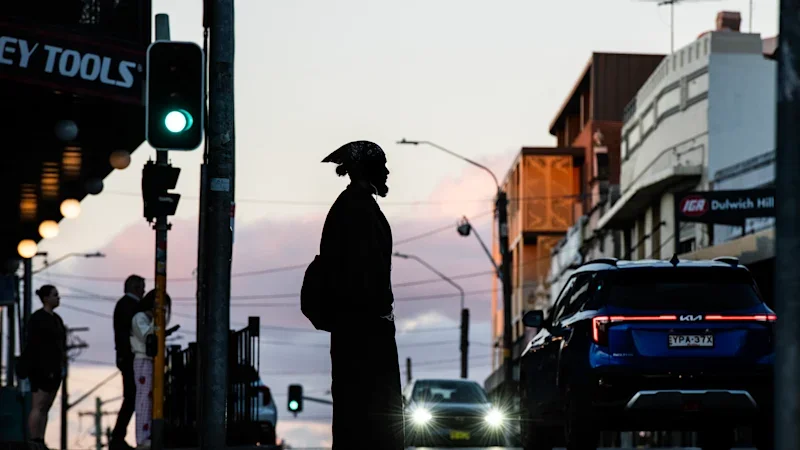
My suburb was a sleepy backwater until 2007, when we woke up one morning, shocked to find ourselves featured in the travel pages of The New York Times.
In a piece entitled “In Dulwich Hill, Sydney, Finding the World in a Few Blocks”, reporter Jennifer Gampell wrote that while “Dulwich Hill is just 10 minutes south-west of Newtown, yet it retains a charming ‘Old World’ simplicity and sense of community long since gone from nearby Sydney neighbourhoods”.
If only The New York Times had asked us, we would have said: “We know”. Successive generations of migrants have arrived in my suburb since World War II, transforming it into a multicultural oasis. At the 2021 census, 60 per cent of the residents reported having one or both parents who were born overseas. Other than English, the top languages spoken at home are Greek, Arabic, Vietnamese, Portuguese and Spanish.
The other defining event of this inner-west suburb, just seven kilometres south-west of the CBD, was the arrival of the light rail in 2014. The L1, which connects Dulwich Hill to Central in just 36 minutes, triggered a rush to buy one of the area’s well-loved Victorian, Federation or art deco houses and apartments. Now, within a few months, the new Sydenham to Bankstown metro line will open, making any city commutes even faster. Not that we’re keen on leaving our area – not for nothing do locals proudly wear T-shirts depicting Dulwich Hill landmarks with the caption “Dully Chill”.
Today, there is a small collection of shops around the railway station, but the suburb’s main retail centre is on the top of the “hill”, or ridge that runs through the suburb. These shops are found around the intersection of Canterbury and Marrickville roads, running back down Marrickville Road for several blocks. Bursting at the seams with cafes, fruit stores, a florist and bars, this area has really come into its own.
Our much-lauded eateries map the suburb’s migratory waves. There are Greek restaurants serving mouth-watering yeeros and other varieties of meat on the spit. Charcoal chicken is another popular staple, with both Lebanese and Greek varieties available. The popular Greek-run Honey and Walnut Patisserie exists to satisfy your sweet tooth. A boy I know swore it was called “Honey and Warm Up”, which would have been an apt alternative. The award-winning Gleebooks bookshop opened 16 years ago, and there’s been an explosion of new eateries, including the Lucky Chinese, Mali Ston Wine Bar, Tamaleria & Mexican Deli, Goldie’s, Abla’s Pastries, The Eate and Sushi Sapporo. There’s live music almost every night at Butchers Brew Bar.
The numerous parks in Dulwich Hill have recently been transformed by the GreenWay, which links many of them and allows residents to walk, jog, skate, scooter or cycle for exercise and recreation to neighbouring areas such as the Bay Run and the Cooks River path. It runs alongside the light rail.
Of course, nothing’s perfect. A pub without pokies, as can be found in the neighbouring suburbs of Petersham and Marrickville, would be nice. And the supermarket, while well used and generally well stocked, is – to be brutally honest – grungy and daggy, perhaps aiming to fit in with the retro hipsters infiltrating the area. Parking is also becoming increasingly tight around the retail strip, especially on Saturdays – the two open-air 1950s carparks tucked in behind the shops can’t cope with the influx of SUVs.
Another downside is that the greenness of the suburb attracts some unwelcome wild life and I’m not referring to the Saturday-night kind. My block is home to a colony of possums. They may look cute with their come-hither eyes, but in truth they are garden vandals, having killed two magnolia trees in my garden, a neighbour’s mango tree, another neighbour’s maple tree and other plants too numerous to mention. Nurseries do great business from me, buying nets and little huts to protect my plants as well as frequent replacements.
I have lived in the suburb for 30 years. The things that attracted me to the area back then continue to draw in new residents today. Proximity to the city, parks, good public transport links and Victorian and Federation housing have always been major drawcards. Being in my 20s and coming from the lower north shore, relatively affordable real estate was also a big motivating factor. Some north shore friends and relatives struggled with the idea of me setting up house on the “wrong side of the bridge”.
“Why Dulwich Hill?” one asked my mother with enforced brightness. Real estate prices – Sydney’s well-known obsession – have rocketed in my time here. An acquaintance informed me in awe that a house a few doors from me had recently sold for well over $5 million. Beyond my wildest dreams in the 1990s.
Despite the well-meaning misgivings of my circle, Dulwich Hill has a close and caring community. With time, the ageing population of the ’90s, including many Greek, Lebanese and Vietnamese people, has evolved into a younger to middle-aged one, many of whom have sympathetically highlighted the architectural features of the old homes. In our first house we were blessed with a wonderful neighbour, a middle-aged man with a collection of cats all named after different animals; one was called Toad and another, Frog. He would climb over the fence and collect the washing if we were out when it started to rain, and we would arrive home to find our basket of washing on the front porch.
The neighbours at our next house were Con and Poppy. Every Sunday, the smell of barbecued souvlaki wafted into our garden as their family got together, with foil-wrapped offerings passed to us over the fence. Con would enjoy the afternoon sun on his front veranda, listening to Greek music and news that played on community radio.
Recently, I visited Dulwich Hill’s leafy namesake, Dulwich Village in south London. This may be contentious, but I find that the Sydney counterpart is often a poor relation to its English one. Dulwich Village boasts large houses in big gardens, an exclusive private school and a lovely Sir John Soanes-designed art gallery and cafe among independent eateries and shops. While Dulwich Hill is unlikely to ever fully resemble its namesake, it has many charms of its own; it’s well worth coming over the Harbour Bridge.
Amanda Simon is a Sydney writer.