Facilitator appointed in clash over slash in Gisborne
The government has told Gisborne District Council its approach to the forestry industry over managing slash and sediment is too tough.
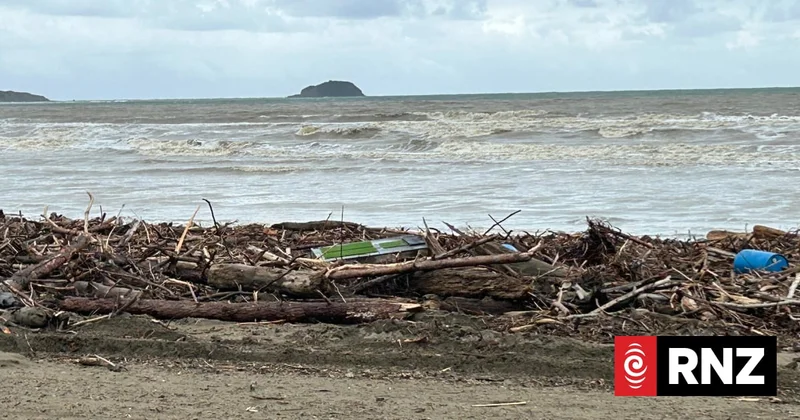
The council has been grappling with the extensive damage caused by mountains of forestry debris washing off steep hills in heavy rain, clogging rivers and covering beaches.
Last week the government put the brakes on the council's attempt to introduce new rules aimed at tackling the problem, because it didn't want money and time spent on developing plans under the old Resource Management Act when a new resource management system was being introduced.
Forestry Minister Todd McClay has now appointed a facilitator to work with the council, industry and iwi, and said he wanted the relationship between the council and the sector reset.
McClay said facilitator Doug Leeder, former chair of the Bay of Plenty Regional Council, will provide advice directly to him about what was needed.
The minister said he was aware of growing sector-wide concern about the council's approach to land use change, including its use of draft enforcement orders on wood debris and sediment management.
"Stronger compliance measures may well be necessary, however they must be workable and proportionate, and they must not undermine progress towards land transition.
"Forestry and wood processing matter enormously to Tai Rāwhiti and to the people employed in them. Industry is telling me it faces decisions it considers unworkable and costly, and growing uncertainty about the future of the sector in the region.
"I am advised this is affecting the willingness of investors to pursue processing ventures, both in Tai Rāwhiti and elsewhere in the country."
The forestry industry welcomed the move. New Zealand Forest Owners Association chief executive Dr Elizabeth Heeg said Doug Leeder's appointment provided an opportunity to make progress on difficult questions around land use, woody debris and forestry-related environmental issues.
"Tai Rāwhiti needs to see decision-making that recognises where land use has to change, while allowing forestry to continue on land where it remains appropriate.
"Bringing government, Gisborne District Council, iwi, communities and industry together with an independent facilitator gives us a practical way to work through those issues."
Ngāti Porou Forests chairman Whaimutu Dewes said decisions about land use had long-term consequences for iwi landowners and communities.
"For iwi landowners, there is a responsibility to look after the whenua for generations to come but also to create opportunities for our people on Monday. Forestry supports whānau by generating employment and providing income from whenua to sustain our communities.
"Bringing iwi, communities, government, Council and industry together gives us a better chance of making decisions that achieve both."
Gisborne District Council has been approached for comment.
In 2024, Todd McClay established the Tai Rāwhiti Forestry Action Group (TFAG) to allow the government and council to work closely with the sector to remove slash from the district.
The minister said the group had reduced risk across 173km of river network and removed almost 40,000 cubic metres of wood debris from high-risk locations.