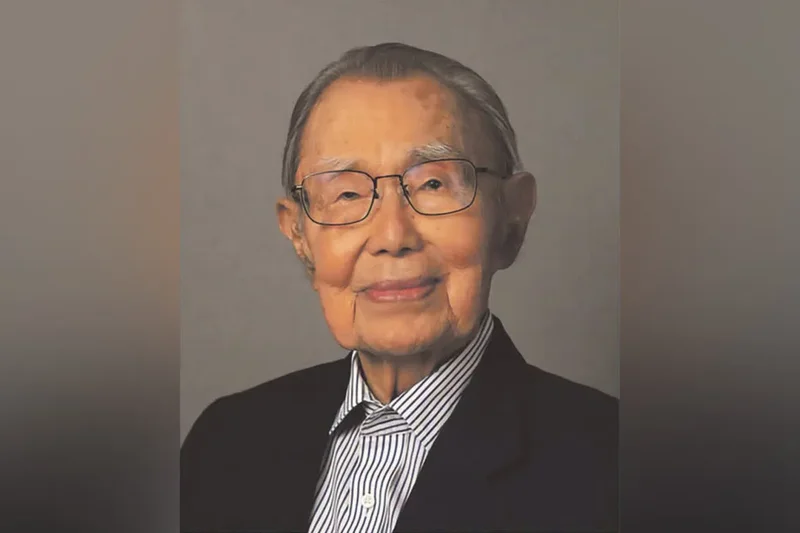
Tang See Chim, former Chua Chu Kang MP, dies at 94
AI generated
SINGAPORE - Tang See Chim, the long-serving MP for Chua Chu Kang constituency who championed the cause of farmers facing resettlement in Singapore’s early years, died on Aug 15 at 94 years old.
Prime Minister Lawrence Wong, in social media posts, said Singapore has lost one of its pioneers who served the country with dedication and integrity in its formative years.
As MP for Chua Chu Kang from 1966 to 1988, Tang had a deep commitment to his residents, and supported them through a period of rapid development and resettlement, said PM Wong.
“Beyond politics, he made important contributions to the Labour Movement and the legal fraternity,” he added. “Mr Tang served Singapore with dedication and integrity.”
Tang, a lawyer by profession, was invited to join the People’s Action Party in 1962 after returning to Singapore from his studies in Britain. During an oral history interview in 2010, he described this as a “natural progression from student politics in England”, where he was involved in the Malayan Students’ Union.
He started out helping then-Minister for Finance Goh Keng Swee in his Kreta Ayer constituency, and was later fielded in Chua Chu Kang in the 1966 by-election triggered by the Barisan Sosialis boycott of Parliament.
He was MP for the constituency for 22 years until his retirement from politics in 1988. In his public service career, he held the roles of Parliamentary Secretary for Finance, Minister of State for Finance, and Deputy Speaker of Parliament at various times.
In his oral history interview in 2010, Tang had said he was very apprehensive about being fielded in Chua Chua Kang, which was a Barisan stronghold.
The rural constituency made up some 10 per cent of the land area of Singapore and faced many challenges, such as the lack of roads, water and even electricity, he noted.
After winning the 1966 election unopposed, he worked to bring in more amenities, becoming the first constituency to initiate the “gotong royong” self-help approach to developing the mostly rural area, he said.
With money from the then Urban Rural Services Committee, Tang and his constituents saw to the building of laterite routes, paving the rural mudtracks with metal-rich soil, he said. This brought more connectivity to the area that was then served only by Lim Chu Kang and Chua Chu Kang Roads, often covered in potholes and accessible only to large lorries.
After the establishment of town councils under the Town Councils Act of 1988, the Urban Rural Services Committee was revamped into the Community Improvement Projects Committee focused on local estate improvements.
As Chua Chua Kang MP, Tang fought for the welfare of farmers who made up the majority of his constituents.
Many of them had been affected by the resettlement that was being carried out in Singapore’s early days as the Government worked to solve the housing crisis and pursue urban development, with some resettled multiple times.
In his oral history recording, he described them as the “unsung heroes” in Singapore’s development process, for the sacrifices they had to make.
When pig farming, which caused severe pollution, was being phased out in the 1980s, Tang helped the farmers in his constituency send a petition to the Prime Minister’s Office. This brought the farmers a reprieve of three to five years before they had to move out of the area.
He also fought for adequate and prompt compensation for the farmers being displaced, pointing out in Parliament that some farm structures such as pigsties and chicken runs were left out in the assessments for compensation.
Speaking in Parliament in July 1986 in an adjournment motion on resettlement problems in Chua Chu Kang, Tang said: “Farmers and people in Chua Chu Kang have made their sacrifices. I think it is because of their cooperation that we could develop the Jurong Industrial Estate so efficiently and so smoothly.
“I think in that development they have made significant contributions,” he added. In 1987, Chua Chu Kang accounted for more than half of the 3,000 resettlement cases in Singapore.
In a social media post on Aug 16, Deputy Prime Minister Gan Kim Yong said Tang dedicated many years of his life to public service, and that his contributions and commitment to the residents will always be remembered.
Minister for Trade and Industry (Energy and Industry) Tan See Leng said in a social media post that Tang had continued to attend community events even into his later years
“His longstanding dedication to CCK will be remembered,” said Tan, who is an MP for Chua Chu Kang GRC.
After leaving politics in 1988, Tang returned to legal practice and served as legal consultant at David Lim & Partners LLP, as well as chairman of the Law Society’s disciplinary committee from 1993 to 2004.
Tang contributed to the legal framework governing institutions such as Dover Park Hospice and helped draft the constitution for PAP foundation, the ruling party’s philanthropic arm, said former ambassador Pang Cheng Lian.
He also served on corporate boards, public committees and advisory panels, according to his bio on the David Lim & Partners LLP website.
In a LinkedIn post about Tang’s passing, the law firm said Tang was “a source of wisdom, perspective, and quiet encouragement” and was an invaluable mentor to generations of lawyers and leaders.