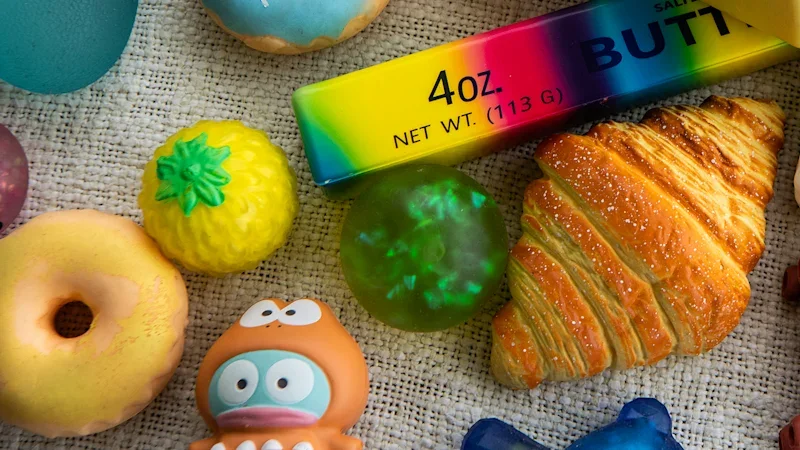
Dumplings, capybaras, blocks of butter, sea creatures, ice cubes and cats. Squishy toys are soft, cute, deeply satisfying and stress-relieving to squeeze, fun to trade, and, in a world of screens, a decidedly analog and innocent hobby.
From the US and the UK to Australia, they have become a viral toy trend, so desired by school kids everywhere that they have been selling out around the country. This has led to the rise of “fake” squishies that look harmless, but may be highly toxic.
When my squishy-obsessed six- and eight-year-olds told me that “counterfeits” hold less street cred among the kids – but, they’ll take them anyway – I assumed it was marketing bunk, a bit like generic medication versus the patented ones. Same, same, but different labels.
Only the fake squishes all pop within days (hours!) of buying them, so my concern, aside from money instantly down the drain, was the landfill.
It turns out that is not the only serious concern.
Why counterfeit squishy toys are dangerous
The US-based Consumer Product Safety Commission issued a warning last week about fake and counterfeit squishy toys that don’t comply with safety standards and “may pose serious risks to children.”
They warned that, if the squishy tears and water beads inside are ingested, they can cause intestinal blockages and choking. Other unknown filling materials may present chemical exposure, inhalation, or ingestion hazards. They can also cause chemical burns if they are heated and the contents explode.
It follows warnings in the UK that fake squishes have been found to contain toxic chemicals and high levels of Benzene, which is carcinogenic.
A 2019 study by Danish and Swedish environmental agencies found squishes commonly contained volatile organic compounds DimethylFormamide, Triethylenediamine, Styrene, Toluene and Cyclohexanone.
“While we do not know the exact amount of volatile compounds being released by unregulated squishy toys, based on the chemistry of the foams and prior work on squishy toys, the most likely risks from the vapours are of eye and respiratory tract irritation and possibly damage to mucous membranes over time,” says molecular pharmacologist Dr Ian Musgrave of Adelaide University.
He adds that all Australian toys manufactured and imported into Australia must comply with strict regulations on volatile organic compound release and safety labelling.
While this is true in theory, manufacturers of fakes may not comply with these standards, says Oliver Jones, a professor of analytical chemistry at RMIT.
“Safe chemicals are usually more expensive,” says Frederic Leusch Professor in the School of Environment and Science at Griffith University.
“So [manufacturers] may use a cheaper, perhaps more hazardous version of the chemical in a country where environmental law and regulations might not be as high.”
What has the ACCC said?
A spokesperson from the Australian Competition & Consumer Commission (ACCC) said: “The ACCC administers a range of mandatory product safety standards and bans for certain products that are designed to help keep consumers safe from unsafe products.”
They added that they are liaising with domestic and international regulators as well as online marketplaces and businesses in relation to chemicals in children’s toys, including squishy toys.
The issue is that chemical legislation in Australia relies on importers to do the right thing and ensure their products don’t contain banned or unsafe levels of chemicals, Leusch explains.
“But [regulators] don’t really have the manpower or the ability to check that,” he says.
Regulations for toys also don’t consider the way a child might use the toy.
“We’ve got very strict standards in Australia for foods, and with very strict limits on the kinds of chemicals you can find in foods, but if a product isn’t intended for ingestion then ... the concentrations and types of chemicals that you can find in there can be much higher,” he explains.
“Squishes contain a whole range of really nasty things. They’re not intended to be chewed, but we’ve all been kids, right?”
So what do we do?
For starters, be mindful of the products that we’re buying, Leusch says.
Jones says: “Look for the safety testing/warning data on the package and check for spelling mistakes. If they have a strong ‘chemical’ smell that is also a red flag, that is not normal.”
The ACCC has also published guidance about squishy toys, including to avoid products with a strong chemical smell, leaking contents or small parts that could detach, and to immediately throw away damaged toys and to look for clear safety information, including ingredient, material or supplier information where available.
Make the most of your health, relationships, fitness and nutrition with our Live Well newsletter. Get it in your inbox every Monday.