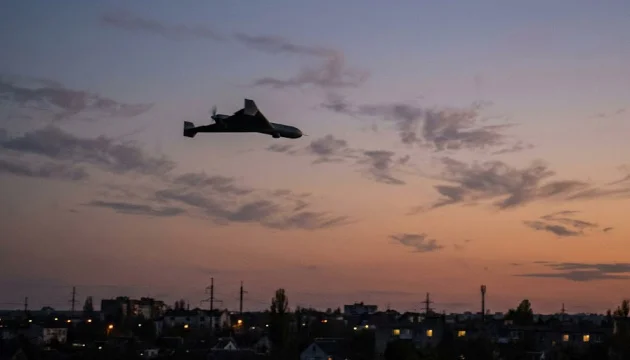
Using leaked documents and satellite images, The Telegraph identified at least 59 new launch rails – mechanical guide tracks used in the takeoff of fixed-wing drones in lieu of a traditional runway – along Russia's border with Belarus and Ukraine, Ukrinform reports.
Some of the drone hubs have been repurposed from military bases and civilian airports, while additional launch pads have been carved out of Russia's countryside.
Moscow has been upgrading its version of the Iranian Shahed drone at pace, deploying newer high-speed jet variants capable of reaching targets almost 1,000 kilometers away, the report said.
Read also:Pletenchuk: Russia changes its tactics for drone strikes in Odesa region
August 2026
August 2026
Credit: vantor
Imagery analyzed by DroneSec, a drone intelligence firm, found that about 20 of the newly fitted rails appeared to be of an extended length, indicating their ability to launch the Kremlin's latest long-range attack drones.
The imagery revealed a significant increase in the presence of the hi-tech drones, with enough storage at one base for more than 1,000 drones to be kept on site at one time.
At a number of key sites, further launch rails are under construction, highlighting Moscow's ambition to increase its drone threat.
Open-source tracking data show that seven of the ten sites identified by The Telegraph were used during some of Moscow's recent bombardment of Kyiv.
Analysts warn that the rapidly evolving technology could also be turned on Europe in the event of a war, with some of the bases putting Russia's most powerful drones in range of Warsaw.
Illustration: telegraph.co.uk
Ukrainian Air Force spokesperson Yurii Ihnat said earlier that Russia was increasing its use of jet-powered drones in attacks against Ukraine. In July, Russian forces used five times as many of these drones as in June, while in some attacks they accounted for up to two-thirds of the total number of UAVs deployed.
Headline photo: AI