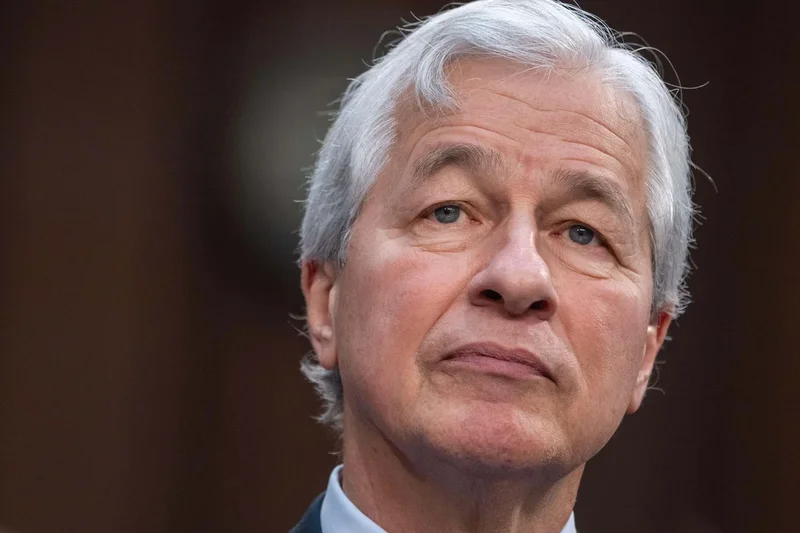
The boss of JP Morgan has warned the new chancellor against raising taxes on bank profits in the autumn Budget.
Reports suggest Jamie Dimon told John Healey in a phone call that higher taxes on the financial sector, while potentially popular with the public, could harm the government and its economic growth ambitions, as it could reduce investment, send jobs elsewhere and lower income for high earners who in turn spend in the wider economy.
Mr Dimon cited a decline in finance roles in New York that he partly blamed on the city’s tax burden, according to the Financial Times.
The paper cited a person briefed on the conversation saying Mr Dimon, one of the world’s most respected voices in the financial sector, warned against a windfall levy on bank profits or wider tax rises on wealth.
Mr Healey is reportedly due to have conversations with other bank executives in the coming days. At the end of July, the chancellor confirmed Wednesday 28 October as the date for his first Budget, after replacing Rachel Reeves.
And there have been repeated calls from within the UK’s financial sector to not allow rumour and speculation to damage business and consumer prospects in the run-up to this year’s fiscal event, as was the case last year.
Businesses held off spending due to uncertainty around incoming taxes, while some people withdrew money from their pensions early over fears that they would be subject to tax in future - which was ultimately not the case.
The influential chief executive of the US investment banking giant has previously sounded warnings against raising taxes on the industry and criticised the UK’s corporation tax surcharge for banks.
Some groups, including the Trades Union Congress (TUC), are calling for the Government to increase the windfall levy from the current rate of 3% to at least 8%, which it said would raise £9 billion for the Treasury over four years.
Earlier this month, Mr Dimon said in an interview for the Master Investor Podcast that he “always thought it was wrong”, adding: “JP Morgan did not damage the UK… I just thought it lacked principle to punish a company that had nothing to do with the crisis, and is still there 16-17 years later.”
Referring to the potential for the surcharge to be hiked, Mr Dimon said: “If the Government decides to do it then there’s nothing I can do, but it will over time cause decisions to be made that they may not like.”
“If you have an uncompetitive tax system, capital leaves your country and… goes to other countries”, he warned, referring to an exodus of companies from London’s stock markets in the past two years.
“I wouldn’t want to see that, if I was running a country,” he said, stressing that he wants “to see the UK thrive”.
Mr Healey will deliver his first Budget as Chancellor on October 28, following his appointment by Prime Minister Andy Burnham last month.
The former defence secretary is faced with the challenge of finding more money to fund Mr Burnham’s devolution priorities and increased defence spending, as well as new cost-of-living measures such as cutting VAT from energy bills and reducing business rates for pubs.
Experts, including the National Institute of Economic and Social Research (Niesr), have warned Mr Healey that he will need to either raise taxes or cut spending elsewhere as pressure on the public finances has left no room for extra borrowing.
Mr Healey has promised plans would be “built on fiscal discipline” and meet the fiscal rules set by previous chancellor Rachel Reeves.