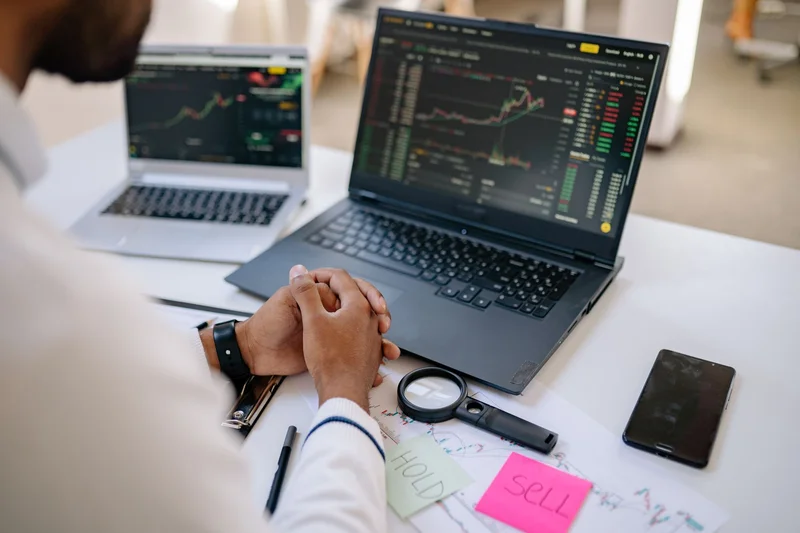
At 3 a.m. Bitcoin drops 6% in eleven minutes and a cascade of liquidations rolls through the perp books. Your phone lights up. You open the chart, and you feel completely clear-headed.
That feeling is the problem.
Some of my worst discretionary decisions came in exactly that state. Not panicked. Not emotional in any way I could have named at the time — just quietly, confidently wrong at an hour when I had no business deciding anything.
What 14 nights of six hours actually does
In 2003, Hans Van Dongen and David Dinges published a study that should be required reading for anyone trading a 24-hour market. Forty-eight healthy adults were assigned to 4, 6, or 8 hours in bed per night for 14 straight nights, with their cognitive performance measured throughout.
Focus on the six-hour group, because six hours is what a lot of traders actually get. By the end of the two weeks, their performance deficits were in the same range as going two full nights without any sleep at all.
Here's the part that lands harder. Their subjective sleepiness — how tired they reported feeling — climbed for a few days and then flattened out. Their measured performance kept falling in a straight line for all 14 days.
So the distance between how impaired they were and how impaired they felt grew wider every night. They'd adapted to the feeling. Not to the deficit.
Read that back with a trading account attached to it. A trader on night nine of six-hour sleep isn't ignoring a warning signal. He isn't getting one.
The bias has a direction
You could argue that a tired trader just makes noisier decisions, and noise cancels out over enough trades. It doesn't work that way.
A Duke team led by Vinod Venkatraman scanned sleep-deprived subjects while they made economic choices and published the results in the Journal of Neuroscience in 2011. Activity rose in the brain regions that weigh potential gains. Response to potential losses went down.
Sleep-deprived people don't choose randomly. They reach harder for upside and stop flinching at downside — which is a fairly precise description of the trader who doubles his size at 3 a.m. and can explain exactly why it made sense.
Fatigue almost never announces itself as fatigue. It shows up as conviction. As a setup that suddenly looks obvious, or a reason today's trade is the exception the risk rule wasn't written for.
Why traders file this in the wrong folder
Most people put sleep under health, somewhere near diet and the gym. It belongs in the risk section of your plan, next to position sizing and max drawdown.
Crypto makes this worse than any other market. Liquidity is thinnest roughly between 03:00 and 06:00 UTC, and thin books are where moderate volume produces outsized moves and cascading liquidations. The market's most violent and least representative hours are scheduled for precisely when you're least equipped to judge them.
I know traders who set price alerts specifically so they'll be woken up. They've built an alarm system whose only function is to hand them a decision at the worst hour of their day, in the thinnest book of the week.
The second mistake is the more expensive one: believing you can tell when you're too tired to trade. Van Dongen's result says you can't. Self-assessment is the exact instrument that sleep loss breaks, and it breaks in the direction of feeling fine.
Decide it while you're rested
So stop assessing in the moment. Decide in advance.
Write down the hours in which you're allowed to make a discretionary decision, and write them down on a day you slept well. Mine sit in the middle of the day, and nothing after 10 p.m. counts as a decision window. Outside it there's no judgment call available, because there's no judgment on offer.
That rule costs me trades. I've watched moves happen at 4 a.m. that I would have taken. I'd still rather miss them than enter one at an hour when my brain is quietly overweighting the upside and I can't feel it happening.
This is one of the reasons I stopped trading discretionarily. A system doesn't get worse at 3 a.m. — it takes the same signal at the same size whether I slept eight hours or four, and it doesn't need me conscious to do it.