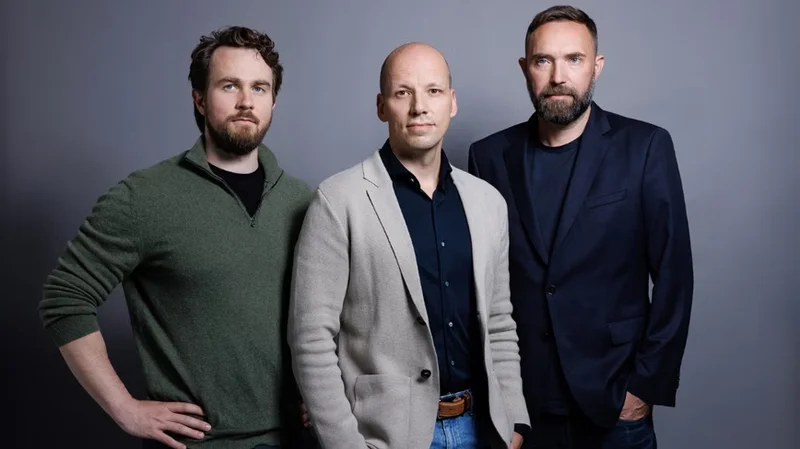
Helsing, the Munich startup that has become Europe’s best-funded defence-AI company, is pushing into Asia, and it has found an unlikely guide.
The German firm has enlisted Japan’s Rakuten, a name better known for e-commerce and mobile phones, to help broker the sale of its unmanned systems to Japan’s Ground Self-Defence Forces.
At the centre of the effort is the HX-2, a compact AI-guided strike drone that Japan’s military is putting through field trials due to run until the end of September.
Alongside the drone, Helsing sells AI software for battlefield analysis, underwater surveillance and combat aircraft, the software-first arsenal that has made it one of Europe’s most valuable tech firms and a poster child for the continent’s rearmament.
The conglomerate is positioning itself as a broker that can walk foreign defence startups through Japan’s notoriously opaque procurement system, and it has done this before, having helped the Ukrainian drone-software firm Swarmer show its tech to Japanese units.
In a market where the paperwork can be as formidable as the competition, a trusted local name is worth a great deal.
The timing is deliberate. Japan is in the middle of its biggest military build-up in decades, driven by an increasingly assertive China and a war in Ukraine that has rewritten every assumption about drones, and it eased its long-standing arms-export and procurement rules earlier this year.
That has thrown open a market foreign weapons-makers could barely touch before, and Helsing is far from the only one now circling it.
Tokyo has committed to lifting defence spending toward levels not seen in the postwar era, and every yen of that budget is a magnet for exactly the kind of autonomous, software-led kit the war in Ukraine has made fashionable.
A company built on online shopping and mobile networks recasting itself as a matchmaker for weapons startups is a measure of how far the defence boom has spread beyond the traditional primes, pulling in financiers, cloud providers and consumer-tech names chasing a market suddenly awash with government money.
Across Europe and Asia alike, capital and engineers are pouring into anything that promises an edge on a modern battlefield.
Founded only in 2021, it raised billions this year, ranks among Europe’s most valuable private tech firms, and has become a primary supplier of drones to Ukraine with Berlin’s backing.
Its pitch, that modern warfare is increasingly won by software and autonomy rather than sheer hardware, has made it the continent’s clearest bet that AI belongs at the heart of defence.
That reputation is not spotless, though. Earlier this year Ukraine paused further orders of the HX-2 after technical problems in the field, a reminder that the distance between an impressive AI demo and a reliable battlefield weapon can be wide. Japan’s own trials, with another month left to run, will be watched closely for exactly that reason.
The Japan move also fits a company expanding on every front. Helsing has been building an AI submarine, striking an alliance with Mistral on military AI, and casting itself as a pillar of Europe’s scramble to rearm.
Selling into Asia extends that ambition well beyond NATO, and quietly turns a European champion into a would-be global arms supplier.
Whether the Rakuten partnership converts trials into contracts is still unknown, and Japan remains a cautious buyer with a long procurement memory.
But the very fact that a European AI startup barely five years old is testing strike drones for the Japanese army, with an e-commerce giant as its fixer, captures how fast the business of war is being remade, and how eagerly its new players are rushing in.
Get the TNW newsletter
Get the most important tech news in your inbox each week.