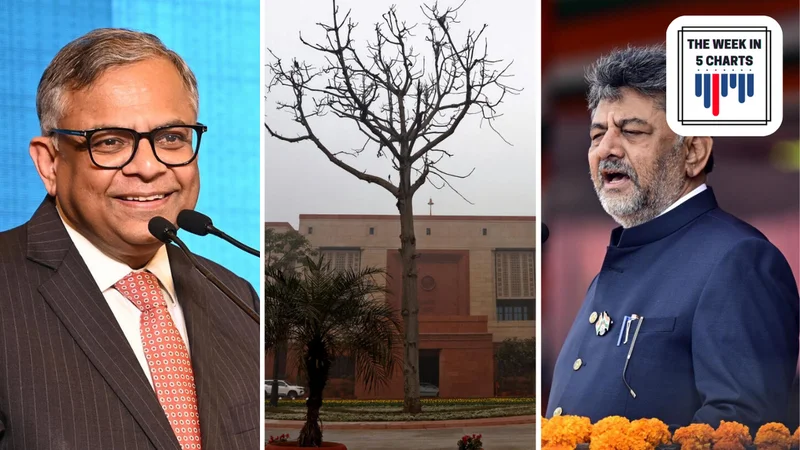
(1) Monsoon session of the Parliament concludes with low productivity
The Monsoon session of the Parliament concluded on Thursday (August 13, 2026) with the productivity of the session in both Houses taking a hit due to a multitude of disruptions. The productivity in Lok Sabha reached a new low of just 15%, which is the lowest in the three NDA-terms, equalling the low of the winter session in 2016.
The Rajya Sabha witnessed a productivity of 33%, which is the lowest since the budget session in 2023 (24%).
This Monsoon Session witnessed no Question Hour and several bills being passed without debate - except the Public Examination (Prevention of Unfair Means) Amendment Bill, 2026 also known as the anti-paper leak legislation - amid repeated disruption over Opposition’s protests on the NEET paper leak, Ram Temple donations theft, Union Home Minister Amit Shah’s presence in the Parliament and his statement on the police crackdown on students’ protests, among others.
(2) N. Chandrasekaran to step down as chairman of Tata Sons
The chairman of Tata Sons, N. Chandrasekaran, said on Wednesday (August 12, 2026) that he has resigned following the lack of board approval for his reappointment amid tensions with the charity arm that controls the salt-to-aviation Tata Group.
Chandra, as he is widely known, said the decision followed months of deadlock over his reappointment, triggered by a single director withholding support for an extension of his tenure.
Mr. Chandrasekaran has spent 40 years with the Tata Group and nine critical years at the helm of the conglomerate, becoming the first non-Parsi to hold the post. His announcement sparked a sell-off in Tata Group stocks, led by Tata Consultancy Services, which fell 3.71% on the BSE.
Here is a brief look at his career:
(3) Lebanon abolishes death penalty
Lebanon’s parliament on Tuesday (August 11, 2026) voted to abolish the death penalty, making it the first country in the Arab world to replace capital punishment with life imprisonment with aggravated hard labour. The legislation will come into effect after it is signed by the President and published in the Official Gazette.
According to the latest report by Amnesty International on death sentences and executions, nearly three-quarters of the world’s countries had abolished the death penalty in law or practice as of December 2025. Some countries that have abolished capital punishment in practice have retained it in law but have not carried out executions for at least 10 years.
Some countries have abolished the death penalty only for “ordinary crimes”. This means capital punishment may still be permitted for exceptional offences, such as certain crimes under military law or offences committed in exceptional circumstances.
(4) Karnataka Cabinet: Ministers allocated portfolios
After days of deliberations, the D.K. Shivakumar-led Congress government finally managed to allocate ministries on the eve of the Monsoon Session to 19 newly inducted Ministers. Two senior Ministers, who had expressed unhappiness over their earlier allocations, were also given different portfolios.
The Chief Minister has retained the Law and Parliamentary Affairs besides all other unallocated portfolios.
Here is the full list:
(5) Powerful magnitude 7.7 earthquake kills at least 53 in Indonesia
At least 53 people have been killed after a magnitude 7.7 earthquake struck Indonesia early on Saturday (August 15, 2026), the nation’s disaster mitigation agency has said.
They added that more than 130 people had been injured, many with broken bones. Hundreds of buildings in the region have been damaged by the quake and the dozens of aftershocks that followed.
Saturday’s quake was the Southeast Asian nation’s deadliest since a 2022 quake killed hundreds in West Java.
More than 3,300 people in Indonesia’s eastern Sikka region self-evacuated or were in a sports arena, according to the country’s national disaster mitigation agency, known as BNPB.
Published - August 17, 2026 04:02 pm IST