WASHINGTON — Launch services provider SEOPS has added a second dedicated rideshare mission after seeing high demand for one announced less than three months ago.
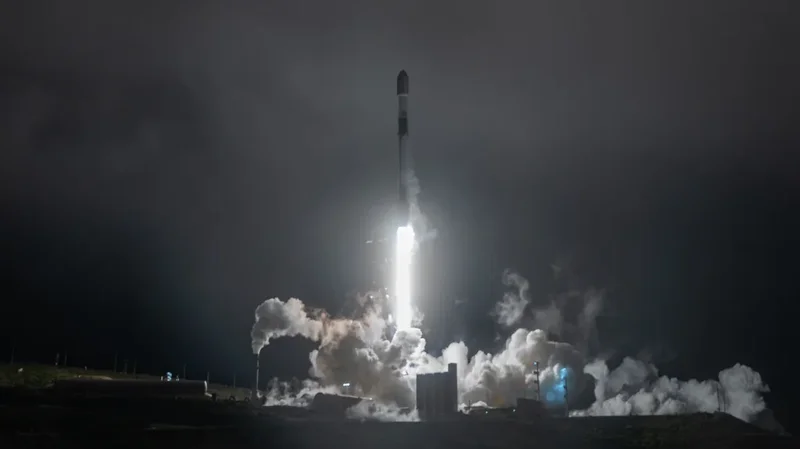
The company announced Aug. 17 it will fly a second Waymaker rideshare mission on a Falcon 9. This mission, called Waymaker-1, will carry payloads to a mid-inclination orbit in early 2028.
SEOPS announced in May it had purchased a dedicated Falcon 9 mission to sun-synchronous orbit. That mission, now called Waymaker-2, remains scheduled for launch in late 2028. The mission is “90-plus percent sold out,” Evan Hoyt, president of SEOPS, said in an interview.
“We started looking at how we can best serve the demand we are seeing, and at this point, it became really clear that mid-inclination was the next right option,” he said.
The new Waymaker-1 mission will use a Falcon 9 that SEOPS originally ordered for a geostationary transfer orbit, or GTO, rideshare mission called Darkstar-1. SEOPS purchased that launch in November 2024 with plans to launch it in late 2028.
“The backlog for GTO is there and growing, but most of the programs we’re finding are having delays,” Hoyt said, projecting a GTO rideshare mission wouldn’t be ready until 2029. “This allows the GTO program to continue to mature and allows us to serve a big chunk of the market in the transition that we’re in now.”
That transition stems from concerns that SpaceX will wind down its own dedicated rideshare programs on Falcon 9, with industry officials saying the company is not taking reservations for rideshare launches after late 2028 or early 2029. Many satellite operators have relied on those missions for regular and affordable access to orbit, and SEOPS has been among the companies that have arranged launches on them.
Those concerns have left satellite operators scrambling for alternative means to launch their spacecraft and created opportunities for SEOPS and others. German launch services provider Exolaunch, which has secured spots on SpaceX rideshare missions for hundreds of smallsats, announced in May it purchased two Falcon 9 launches for its own dedicated rideshare missions in late 2027 and 2028.
“There’s demand for everything in low Earth orbit, and it’s only on the rise,” Hoyt said. That requires customers to be willing to book launches years in advance, even if they are uncertain what satellites they will launch.
“We’re saying you have to get ahead of your sales curve a little bit,” he said. “We understand there’s some risk there, but with the market and the unknowns what they are, you’ve got to get ahead of launch early.”
Customers he has talked with “don’t seem to be operating in any kind of panic” about securing rides to orbit but are more willing to book well in advance. “They’re just responding to what they see and what they assess the market’s doing.”
Hoyt said that SEOPS envisions a regular series of Waymaker missions in the future, but expanding beyond the Falcon 9. The company is in talks with several other launch companies, which he did not disclose, about flying dedicated rideshare missions.
“Customers in the future will come and have their choice of vehicle, their choice of time and date and of destination,” he said. “It will be a portfolio of offerings. That’s our goal and what we believe is the future.”