While many learners pass their matric with good marks, some find themselves trapped by career-limiting subject pairings that ultimately betray their career ambitions. This is another critical issue that demands urgent public conversation and must be addressed through institutionalised career guidance.
With the recent conclusion of National Science Month, a commendable initiative formulated to promote Stem and deepen the democratisation of science envisioned in the white paper on science, technology and innovation. However, offering Stem subjects in basic education remains an area of concern. The concern is rooted in South Africa’s history, where science was weaponised to disadvantage marginalised populations through policies grounded in pseudoscientific ideas, such as eugenics and race science. This limited the economic and intellectual development of people of colour. As a result, the impact has been generational and it is felt today by large quarters of the South Africa population. The systemic legacy persists and has taken a new form in basic education.
The Curriculum Assessment Policy Statement (Caps) requires learners to take either core mathematics, mathematical literacy or technical mathematics as one of their four compulsory subjects. The offering of the subjects is left to the school to decide; learners take what the school offers. The problem arises when schools offer subject pairings that disadvantage learners trying to meet the admission criteria of institutions of higher education and learning.
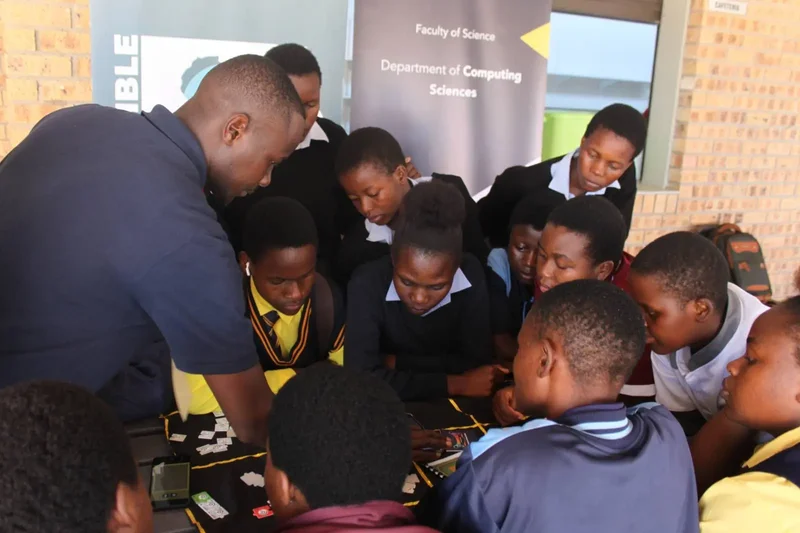
As someone who has spent most of my young adult life employed in higher education and training spaces (HE&T), some of the subject choices of learners starting from grade 10 are concerning. During open days and career awareness activities that I facilitated, I learnt that learners are taking up economics, mathematical literacy and physical sciences as their core subject pairing.
The national assessment criteria framework prohibits the pairing of physical sciences with mathematical literacy because they present a learning and content absorption barrier. For example, some topics of physical sciences in grade 12 assume that learners have competency in functions and equations taught in grade 11 core mathematics. Even though the pairing of the subjects adds value to admission point scores (APS) for learners who wish to pursue programmes outside the scientific realm, it gives false hope to those with ambitions within it.
If such subject pairings are not offered with the intention of channeling learners into scientific disciplines or viable career paths, why are schools offering them? This kind of arrangement essentially deceives learners. It is disappointing to tell excited learners on open days that their prospects of being admitted into science programmes are limited because of mismatched subject pairings.
This is also true for the South African National Defence Force (SANDF) Military Skills Development System (MSDS). Given the limited space in institutions of HE&T, the SANDF is a popular alternative for school-leavers. However, because most of its programmes are technical and do not readily accept mathematical literacy, leaving many learners stranded by subject choices made without prior career guidance.
One of the root causes of the problem is the lack of meaningful career counselling in grades 8 and 9. Careers and career choices are squeezed into the life orientation syllabus, which only has two hours of instructional time a week. The strict adherence to the annual teaching plan (ATP) and limited time exposure reduces the topic to a mere classroom-based exercise rather than a continuous and meaningful conversation with learners. Consequently, learners discover late about the incompatibility of their subjects with the admission requirements of institutions of HE&T.
By contrast, in the United Kingdom, career guidance is institutionalised. Schools are linked to qualified and trained career advisers who provide workshops and guidance to learners before they choose either the academic or technical pathway. The use of external career advisers enables conversations outside the classroom without the restrictions of the ATP schedule as outlined in the Caps document.
The consequences of the systemic flaws are felt far beyond the classroom. In many villages, there is only one high school. When the schools offer limiting subject pairings or phase out Stem subjects, the impact is felt across the entire community. Professionals, such as nurses who grew up and still live in the villages, are trusted figures who volunteer information about patient care and medication outside their working hours. In an era defined by heightened misinformation and disinformation, the need to empower communities with science professionals is more critical than ever.
There is an urgent critical need for effective monitoring and consequence management for non-compliant schools with national assessment criteria regulations. Training for school principals and district officials should include the use of AI tools to cross-reference subject pairings with the admission criteria at institutions of HE&T in real time and flag career-limiting subject pairings early. The tools are cost-effective and time-efficient, capable of providing a comprehensive picture of desired subject pairings without the need to manually screen dozens of university prospectuses. Furthermore, school governing bodies must be capacitated to hold schools accountable and report such cases
Amos Rakgoale writes in his personal capacity. He is a scientific officer at the University of the Western Cape and holds a master of science degree from the University of Cape Town